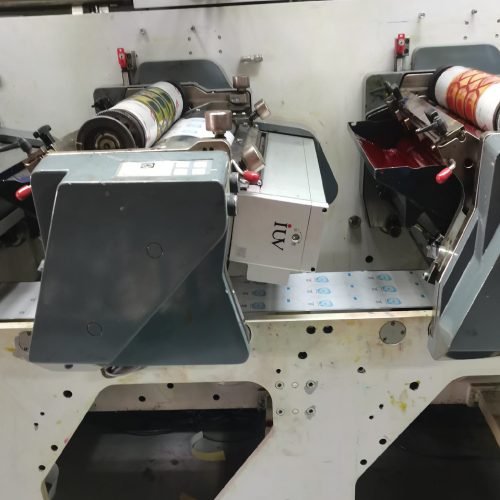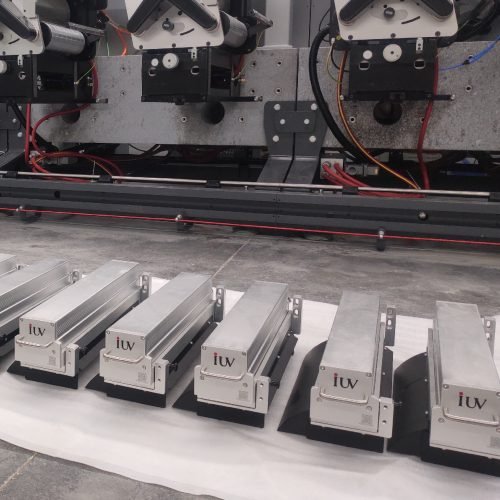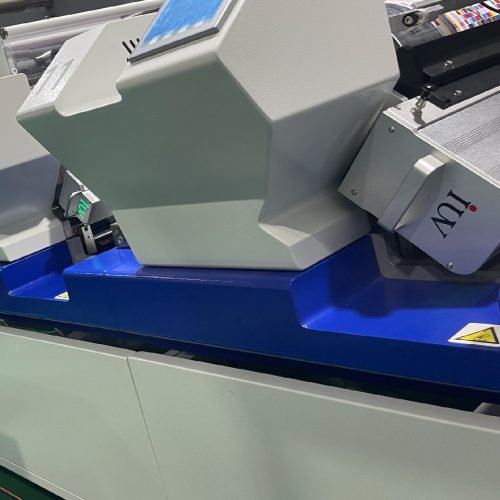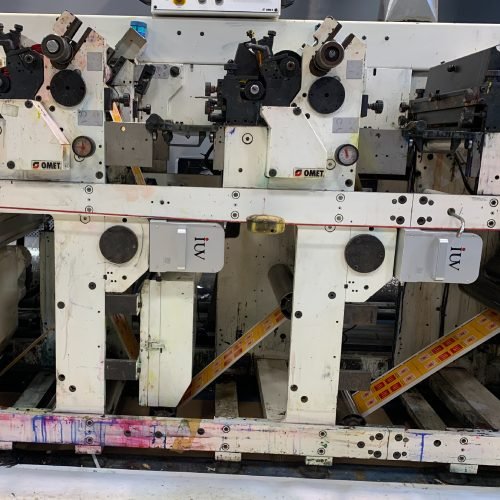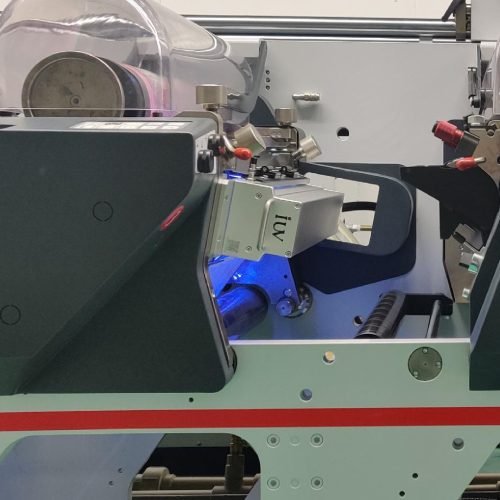
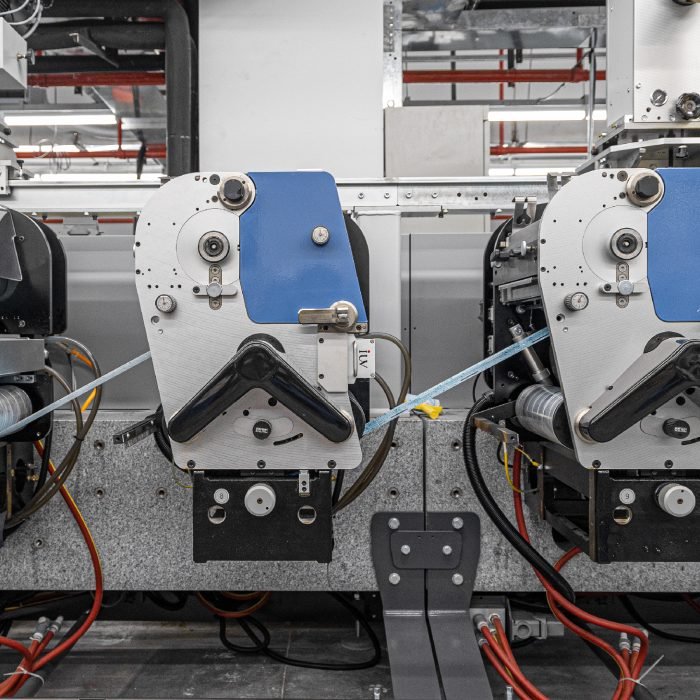
In label and narrow web printing, curing performance is often discussed in terms of power, speed, and chemistry. Yet one of the most important factors behind real production consistency is curing uniformity. A UV LED system can have sufficient nominal output and still produce unstable results if that output is not delivered evenly across the print width and consistently through the production run.
Curing uniformity affects much more than whether the ink dries to the touch. It influences adhesion, gloss, scuff resistance, color stability, dot retention, die-cutting behavior, lamination performance, and long-run repeatability. In many label plants, the most frustrating print defects are not caused by total curing failure. They are caused by partial or uneven curing that only becomes visible under converting stress or end-use conditions.
This is why curing uniformity should be treated as a core engineering parameter in UV LED printing, not just a secondary performance characteristic. In flexographic, offset, and hybrid narrow web applications, uniformity is what turns theoretical lamp capability into dependable manufacturing quality.
Why Uniform Curing Matters More Than Peak Irradiance
A common mistake in evaluating UV LED systems is focusing too heavily on maximum irradiance values. High peak output can be valuable, especially for dense inks, opaque whites, and difficult coatings. But if the delivered energy varies too much across the web or changes during production, the curing result becomes inconsistent regardless of the peak number.
In label printing, consistency is often more important than raw intensity. A press running slightly lower but highly uniform energy will usually outperform a system with stronger nominal output but poor distribution. That is because polymerization behavior depends on what the printed layer actually receives, not what the lamp is theoretically capable of producing at one measurement point.
For converters, this means the most useful question is not simply how powerful the lamp is. The better question is how evenly and reliably it cures under real production conditions.
Curing Uniformity Begins with Optical Distribution
At the most basic level, curing uniformity depends on how optical energy is distributed across the substrate. In a UV LED system, this distribution is shaped by the diode layout, lens or window design, working distance, reflector geometry where applicable, and the mechanical positioning of the curing head relative to the web.
If these elements are not well balanced, some areas of the print width may receive more effective energy than others. In practical terms, that can create edge weakness, centerline overexposure, localized undercure bands, or inconsistent cure behavior that only affects certain lanes or graphics.
In narrow web printing, where multi-lane production and high registration precision are common, even small cross-web differences can have a significant production impact. Uniformity is therefore not only a hardware quality issue. It is a print quality issue.
Why Ink Film Thickness Changes the Meaning of Uniformity
Uniform lamp output does not automatically guarantee uniform curing if the ink film itself is not consistent. In flexographic and label printing, the curing system acts on a printed layer whose thickness may vary due to anilox selection, plate condition, impression settings, substrate texture, or graphic design.
A heavier film build requires more energy to achieve the same level of polymerization as a lighter film. This means a curing system may appear uniform on an instrument while still producing non-uniform cure performance across the job if the ink load changes significantly from lane to lane or image to image.
That is why curing uniformity should always be assessed in the context of actual print structure. In production, the goal is not only even light distribution. It is even curing response across the real ink architecture being printed.
Why Opaque Whites and Dense Colors Expose Uniformity Problems Faster
Certain print layers are far more sensitive to non-uniform curing than others. Opaque whites, dense blacks, metallic systems, tactile varnishes, and high-build coatings often reveal uniformity weaknesses much faster than light process colors. These layers either block more light, build thicker films, or require a more demanding polymerization profile.
In label production, opaque white is one of the most common stress tests for curing uniformity. A system that appears acceptable on standard process work may show weak cure at the edges, inconsistent adhesion, or variable rub resistance when printing a dense white flood. The same applies to black solids or heavily pigmented brand colors.
This is why curing uniformity should never be judged only on easy jobs. It should be evaluated using the kinds of demanding layers that expose real process limits.
Why Working Distance Is a Major Variable in Narrow Web UV LED Performance
One of the most overlooked contributors to curing uniformity is the distance between the LED head and the printed substrate. In UV LED systems, optical performance is highly sensitive to this gap. If the head is too far away, peak irradiance drops and edge distribution may weaken. If the gap is inconsistent across the width, the curing result may become uneven even if the lamp itself is functioning correctly.
In narrow web printing, this issue can become more pronounced when running substrates with curl, gauge variation, unsupported films, or poor web stability. A mechanically unstable web does not present a constant target to the curing system, and that instability can translate directly into cure inconsistency.
This is why curing uniformity is partly a web handling issue. Stable optical geometry requires stable substrate presentation.
Why Thermal Stability Supports Optical Stability
Although UV LED systems are considered cooler than conventional mercury UV, thermal behavior still has a direct effect on curing uniformity. LED diodes are sensitive to operating temperature, and if thermal management becomes uneven across the head, output distribution can drift.
For example, if one area of the cooling path performs less effectively than another, diode temperature may rise unevenly across the array. Over time, this can create output variation from one side of the lamp to the other. The change may be subtle at first, but in high-precision label production, even small differences can affect cure behavior and print reliability.
This is why curing uniformity should not be treated as a purely optical issue. It is also a cooling and thermal balance issue. A stable optical field depends on a stable thermal field behind it.
Why Surface Contamination Can Distort Cross-Web Cure Performance
In real printing environments, UV LED optics are exposed to contamination from ink mist, coating aerosols, silicone transfer, adhesive vapors, dust, and general press residue. This contamination rarely builds up in a perfectly uniform way. More often, it develops in localized areas based on airflow, web path, substrate type, and press layout.
When contamination forms unevenly across the lamp window or protective optics, the result is not simply lower output. It is distorted curing uniformity. One section of the web may receive slightly less effective energy than another, and the press may begin showing inconsistent adhesion or rub resistance that is difficult to diagnose.
This is especially problematic in label production because localized curing weakness may only affect certain label lanes or design zones. Without a uniform optical path, even a high-quality curing system can produce unstable production results.
Why Uniformity Must Be Evaluated Under Production Speed, Not Static Conditions
A UV LED system may look highly uniform when measured in a static setup, but production conditions introduce additional variables that change the curing result. Web speed, substrate flutter, print heat, environmental drift, ink behavior, and machine vibration all influence what happens during a live run.
This is why curing uniformity should never be assessed only in a stopped or idealized condition. The true test is whether the system remains even and stable while the press is running at realistic commercial speed. In narrow web production, the process environment is dynamic, and the curing field must remain controlled under those dynamics.
A system that is uniform in theory but unstable in motion will not deliver dependable print quality in the long term.
Why Converting Operations Often Reveal Uniformity Problems First
One of the most important realities of UV LED printing is that cure inconsistency does not always show immediately at press exit. A label may look acceptable visually and still contain non-uniform polymerization across the web. In many cases, the first real signs appear later during converting.
Die-cutting, matrix stripping, rewinding, slitting, lamination, and overvarnishing all place mechanical stress on the printed structure. If one side of the web or one section of the image has weaker cure than another, that imbalance may show up as scuffing, blocking, edge lift, adhesive interference, or finishing inconsistency.
This is why curing uniformity should always be judged by downstream performance as well as press-side appearance. In label manufacturing, converting behavior is often the most honest indicator of whether curing was truly uniform.
Why Different Printing Processes Demand Different Uniformity Priorities
Flexographic printing, narrow web offset, hybrid label production, and UV varnish applications do not all place the same demands on curing uniformity. In flexo, thicker ink films and anilox-driven transfer variation often make film build consistency a central issue. In offset, thin film precision and trapping behavior may make image stabilization more critical. In coating applications, surface continuity and crosslink completeness may be the main concern.
This means curing uniformity should not be defined in only one way. The practical meaning of uniform cure depends on the process, chemistry, and product requirement involved. What matters is whether the curing field supports the functional demands of the job being produced.
For converters working across multiple label and narrow web processes, this is why curing assessment must be application-specific rather than purely hardware-based.
Why Process Integration Determines Whether Uniformity Is Sustainable
A UV LED curing system does not operate independently from the rest of the press. Its uniformity in production is influenced by upstream ink transfer, web path control, thermal environment, substrate presentation, maintenance discipline, and process repeatability.
That is why the most reliable narrow web operations do not treat curing uniformity as a one-time equipment qualification. They treat it as a controlled process outcome that must be maintained through setup discipline, optical cleanliness, cooling stability, and substrate-aware operation.
Uniformity that exists only on installation day is not enough. In real label production, the value lies in maintaining that uniformity through daily commercial use.
Uniform Curing Is What Makes UV LED Production Predictable
The real commercial value of curing uniformity is predictability. When the curing field is even and stable, print quality becomes easier to maintain, troubleshooting becomes faster, job transfer between shifts becomes smoother, and downstream finishing becomes more reliable.
That is especially important in modern label printing, where converters are expected to handle short runs, multiple SKUs, premium substrates, and demanding brand color requirements with minimal waste. In those environments, curing uniformity is not a luxury. It is a production requirement.
A UV LED system that cures uniformly allows the rest of the process to perform with greater confidence and less correction. That is what makes it valuable beyond its energy profile or hardware specification.
Conclusion
Curing uniformity is one of the most important technical factors in LED UV systems for label and narrow web printing. It directly influences adhesion, print consistency, surface performance, converting reliability, and overall process stability.
In flexographic, offset, and hybrid UV applications, uniform curing depends on more than lamp output alone. It depends on optical distribution, ink film consistency, working distance, cooling balance, contamination control, substrate behavior, and real production conditions.
For converters aiming to improve print reliability and reduce hidden process variability, curing uniformity should be treated as a central performance benchmark. When it is properly engineered and consistently maintained, UV LED curing becomes not only efficient, but truly dependable.