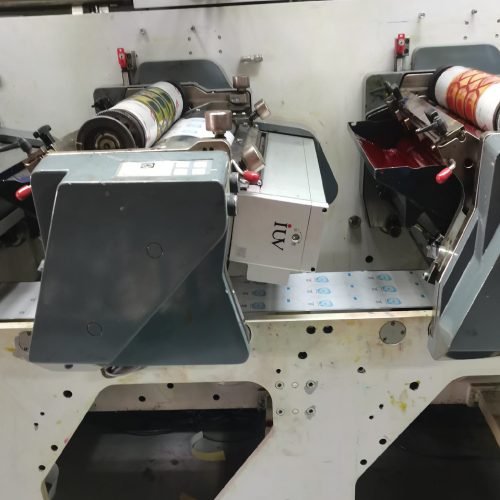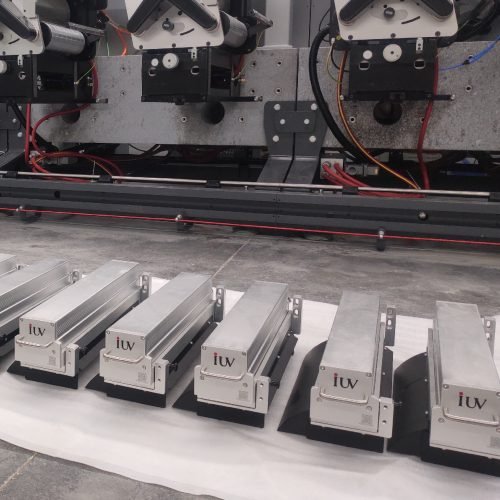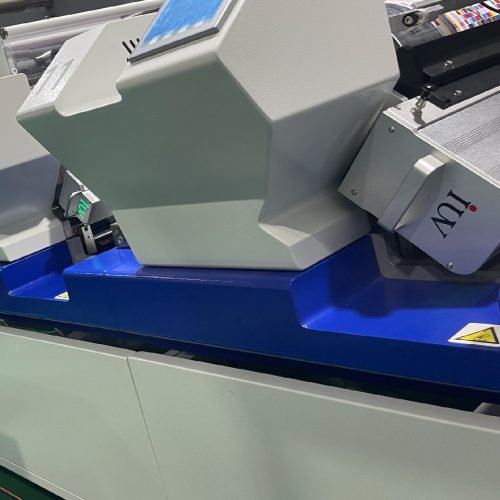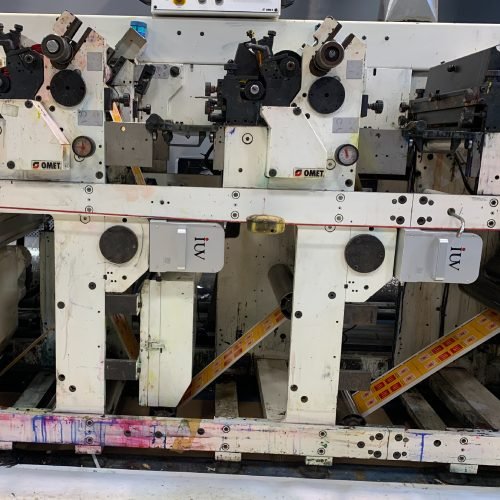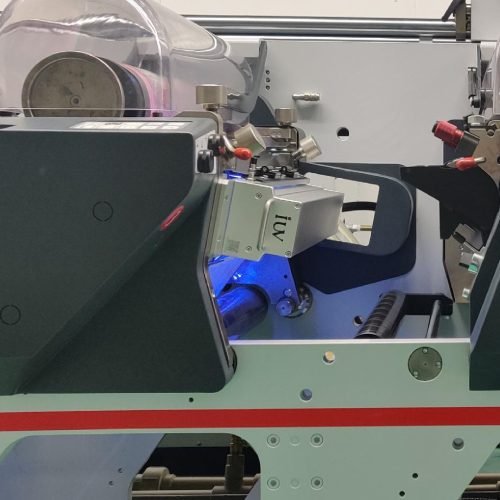
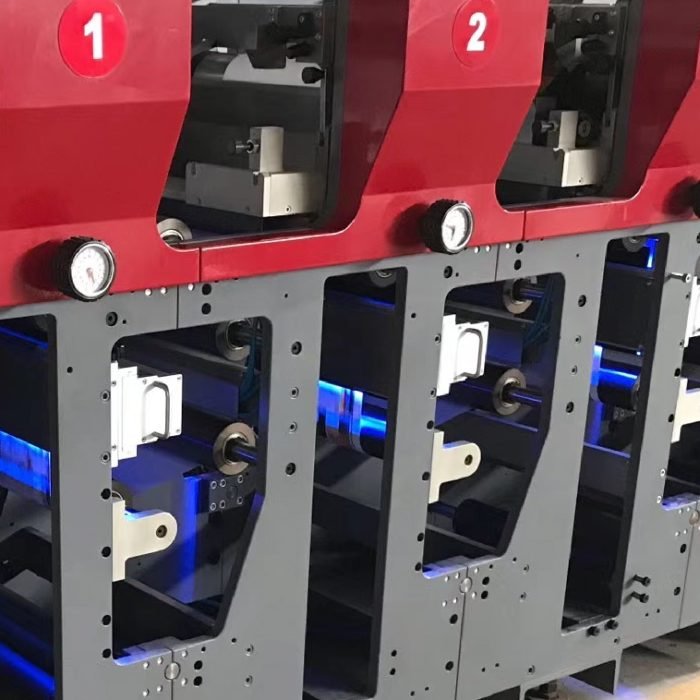
The food and beverage industry operates under a microscope – every label must withstand moisture, chemical exposure, and mechanical stress while maintaining crisp graphics. This demands printing solutions that balance speed, precision, and material compatibility. Enter LED curing systems, quietly revolutionizing how converters approach label production across flexographic, offset, and narrow web platforms.
Flexographic printing dominates pressure-sensitive labels for bottled beverages. Traditional mercury-arc UV curing often struggled with heat-sensitive films and thin facestocks. LED arrays emitting at 385-405nm wavelengths enable cold curing, preventing PET distortion and adhesive ooze. A craft beer label printer recently achieved 18% faster line speeds by switching to LED-curable inks on polyethylene substrates – the reduced heat allowed immediate die-cutting without cooling phases.
Sheetfed offset operators handling premium wine labels face different challenges. Metallic inks and coatings require precise curing to prevent bronzing effects. LED systems provide spectral tuning options that mercury lamps can’t match. By adjusting peak wavelengths, printers achieve complete polymerization across thick ink films without overcuring adjacent areas. One Napa Valley converter reduced ink waste by 23% after implementing variable-intensity LED units for spot varnish applications.
Narrow web hybrid presses illustrate LED’s versatility. A single press might transition from printing vodka bottle sleeves on polyester to ice cream container labels on polypropylene. LED curing handles these substrate jumps without reconfiguring lamp arrays. The instant on/off capability eliminates energy waste during job changeovers – a critical advantage for short-run specialty foods.
Three technical advantages separate modern LED systems from legacy curing methods:
1) Spectral precision targeting specific photoinitiators reduces unwanted ink interactions
2) Modular designs allow staggered arrays matching web widths from 10″ to 52″
3) Air-cooled operation eliminates ozone production in food facility environments
Material science developments continue expanding LED’s reach. New cationic ink formulations cure at 395nm while resisting amine blush – crucial for labels exposed to refrigeration condensation. Low-migration inks certified under Swiss Ordinance and EuPIA guidelines now cure effectively at 12W/cm², enabling food-safe printing without post-treatment.
Energy metrics tell a compelling story. A typical 10″ LED array draws 3.2kW compared to 15kW for equivalent mercury systems. When multiplied across multiple print stations and 24/7 operations, the cost difference becomes staggering. More importantly, LED’s directional output requires fewer reflectors, reducing maintenance downtime from quartz envelope replacements.
The sustainability angle resonates with eco-conscious brands. LED systems contain no mercury, eliminating hazardous waste disposal concerns. Their 20,000 hour lifespan versus 1,000 hours for mercury lamps translates to fewer landfill contributions. Some converters leverage these stats when pursuing Cradle-to-Cradle certification for clients.
Pressroom managers note unexpected benefits. Without infrared radiation warping thin substrates, operators achieve tighter register control. The absence of ozone means no more expensive ventilation upgrades – a key factor for urban facilities with space constraints. One Toronto printer retrofitted two legacy presses with LED units, recouping costs through energy savings in 14 months while expanding into heat-sensitive synthetic papers.
As digital hybrid presses gain traction, LED curing becomes the linchpin. Inkjet heads depositing variable data require immediate curing to prevent smearing. LED’s millisecond-response capability enables inline finishing without buffer zones. A European contract packager recently integrated LED-curable inkjet modules with rotary die-cutters, slashing production time for personalized nutrition labels by 40%.
The future points toward smarter curing integration. New systems incorporate spectral sensors that adjust output based on ink film thickness detected by inline cameras. This closed-loop approach prevents undercuring while optimizing energy use. Another development – dual-wavelength LEDs (365nm 395nm) – addresses adhesion challenges on difficult substrates like untreated polyolefins.
For converters hesitating about adoption, consider the total cost picture. While LED units carry higher upfront costs, the ROI manifests through reduced energy bills, lower HVAC loads, eliminated lamp disposal fees, and increased uptime. Factor in growing brand preference for sustainable manufacturing partners, and the business case strengthens further.
Label printers navigating SKU proliferation and shorter runs need technology that adapts instantly. LED curing provides that flexibility while future-proofing operations against tightening environmental regulations. As substrate diversity grows and brand owners demand faster turnarounds, this technology shifts from optional upgrade to operational necessity.
The quiet hum of LED arrays now underpins modern label production – a testament to engineering that solves multiple challenges without fanfare. From extending material possibilities to enabling greener operations, these systems have redefined what’s achievable in food and beverage packaging decoration.