Achieving Flexo Printing Success: The Art of Ink Formulation and LED UV Output
Flexographic printing, especially in the narrow web sector, demands precision. Achieving vibrant, durable labels and packaging hinges on a critical interplay. This balance lies between the careful formulation of your inks and the specific output of your LED UV curing systems. Getting this right is not just about aesthetics; it’s about performance, efficiency, and client satisfaction.
The Science Behind UV Curable Flexo Inks
UV curable inks are a marvel of modern chemistry. They contain photoinitiators that react to specific wavelengths of UV light. This reaction triggers a rapid polymerization process. The ink essentially transforms from a liquid to a solid film almost instantaneously. This offers significant advantages over traditional solvent or water-based inks. Drying times are drastically reduced, allowing for faster print speeds. VOC emissions are virtually eliminated, making them an environmentally friendlier choice.
Understanding LED UV Curing Technology
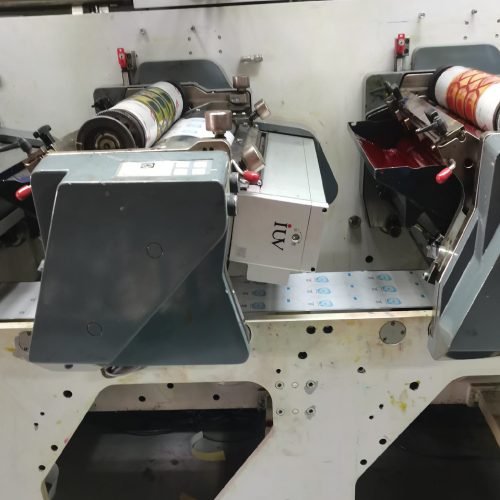
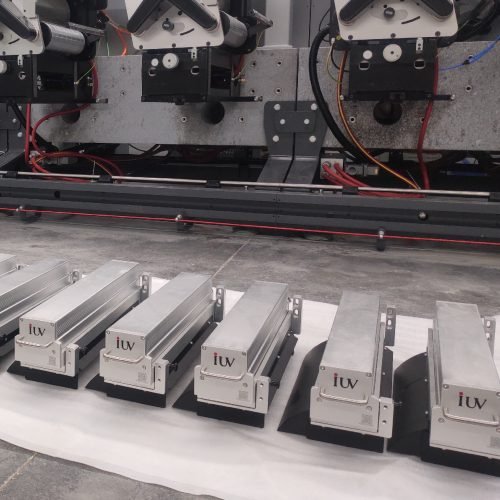
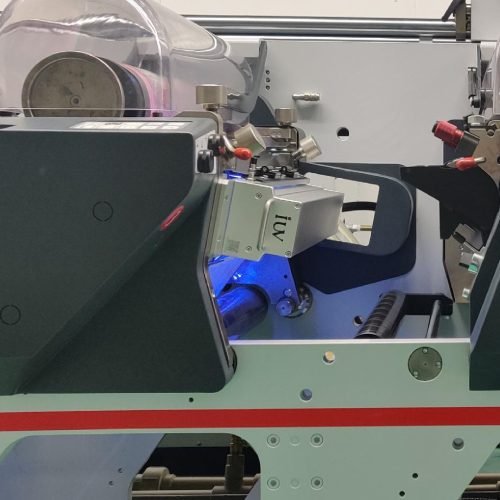
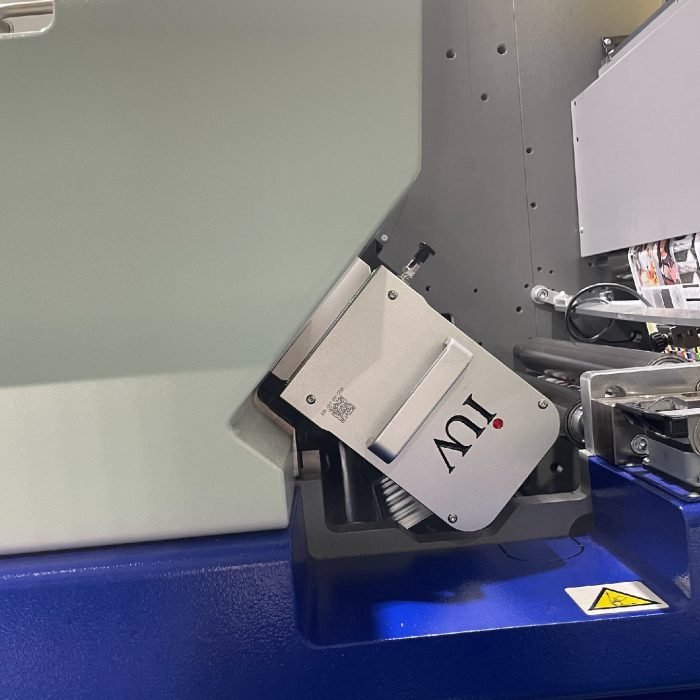
LED UV curing is a game-changer for flexo printing. Unlike traditional mercury vapor lamps, LEDs offer a more focused and consistent light output. They emit specific wavelengths, typically in the UVA range (365nm, 385nm, 395nm, 405nm). This targeted emission is key. It means your ink formulation must be precisely matched to the LED’s spectral output. The energy delivered, measured in irradiance (mW/cm²), also plays a vital role. Higher irradiance generally means faster curing. However, it must be balanced to avoid ink issues.
The Crucial Ink-LED Synergy
The heart of successful flexo printing with LED UV lies in this synergy. Your ink formulators must consider the specific LED wavelength they are targeting. Different photoinitiators are sensitive to different wavelengths. An ink designed for a broad-spectrum mercury lamp might not cure effectively under a narrow-band LED system. Conversely, an ink optimized for a 395nm LED might over-cure or yellow under a different output.
Key Ink Formulation Considerations for LED UV
When formulating inks for LED UV flexo printing, several factors demand attention.
- Photoinitiator Selection: This is paramount. The chosen photoinitiators must efficiently absorb the specific wavelengths emitted by your LED lamps. A mismatch here leads to under-curing. This results in poor rub resistance, poor adhesion, and potential ink migration issues. Often, a blend of photoinitiators is used to capture a broader range of the LED’s output for optimal efficiency.
- Pigment Load and Type: Pigments can absorb and scatter UV light. High pigment loads, especially in opaque or dark colors, can shield the photoinitiators beneath the surface layer. This can lead to incomplete curing of the bulk ink film. Careful selection of pigment particle size and concentration is necessary. Consider how the pigment interacts with the specific UV wavelengths.
- Oligomer and Monomer Balance: These are the backbone of the ink. Their viscosity and reactivity influence curing speed and film properties. The right balance ensures a tough, flexible, and well-adhered ink film after curing. Too much reactivity can lead to brittleness. Too little can result in a soft, easily damaged surface.
- Additives: Flow agents, slip agents, and other additives can impact curing. Some additives can absorb UV light, hindering the photoinitiator’s reaction. Their compatibility with the LED system and minimal interference with the curing process are vital.
Optimizing LED UV Output for Your Inks
Matching your LED UV output to your ink formulation is equally important.
- Wavelength Alignment: Ensure your LED lamps emit at wavelengths your ink is designed to cure. This is the most fundamental check. If you are using a 395nm LED lamp, your ink must contain photoinitiators that are highly active at 395nm.
- Irradiance Levels: The power output of your LEDs, or irradiance, dictates how quickly the photoinitiator can react. Higher irradiance generally means faster curing, allowing for higher press speeds. However, excessively high irradiance can sometimes lead to surface cure while the underside remains uncured, or can cause excessive heat build-up and ink yellowing. Work with your ink supplier to determine the optimal irradiance for your specific ink and desired print quality.
- Dose (Energy per Unit Area): Curing is a function of both irradiance and exposure time. Dose is calculated as Irradiance × Time. A consistent dose is critical for reproducible results. Ensure your press speed and LED power settings deliver the correct total UV dose required by the ink.
- Uniformity: Uneven irradiance across the print width can lead to inconsistent curing. This results in variations in ink properties, such as gloss and resistance, across the label. Modern LED systems are designed for excellent uniformity, but it’s worth verifying.
- Cooling: While LEDs run cooler than mercury lamps, they still generate heat. Proper cooling of the LEDs themselves is essential for their longevity and consistent performance. The heat radiated towards the substrate can also be a factor, especially for heat-sensitive materials.
Troubleshooting Common Issues
When problems arise, suspecting a disconnect between ink and LED output is a good starting point.
- Poor Adhesion/Rub Resistance: This often points to under-curing. Possible causes include incorrect photoinitiator package for the LED wavelength, insufficient irradiance, or too short an exposure time (low dose).
- Ink Migration/Food Safety Concerns: Under-cured inks are more prone to migration. Ensuring complete cure through proper photoinitiator selection and adequate UV dose is vital, especially for food packaging.
- Ink Yellowing or Brittleness: This can indicate over-curing or excessive heat. It might be too high an irradiance, too long an exposure time, or an ink formulation not suited for the intensity of the UV output.
- Surface Tackiness: The ink feels sticky after curing. This is a classic sign of incomplete surface cure, often due to insufficient UV energy reaching the ink surface or a photoinitiator package that isn’t optimal for the LED output.
Collaboration is Key
Achieving true flexo printing success with LED UV technology is a collaborative effort. Printers, ink manufacturers, and equipment suppliers must work hand-in-hand. Sharing information about ink formulations, LED specifications, and press performance is invaluable. This partnership allows for the fine-tuning required to optimize both ink and UV output. The result is consistently high-quality, durable, and visually appealing printed products. Mastering this balance unlocks the full potential of modern narrow web flexography.