The demand for high-quality, durable labels continues to grow across various industries. As brand owners seek innovative ways to enhance product appeal and provide essential information, label printers are constantly exploring advanced printing technologies. One significant area of development is UV curing, specifically LED UV curing, which offers distinct advantages, especially when dealing with delicate or heat-sensitive substrates common in label applications.
Understanding Heat-Sensitive Substrates in Label Printing
Label printing often involves a diverse range of materials. Many of these, such as certain plastics (like some types of PET or PVC), thin papers, and even some coated stocks, possess a low heat tolerance. Traditional curing methods, such as thermal curing or even some older UV lamp technologies, generate significant heat. This heat can cause these sensitive substrates to warp, shrink, bubble, or even degrade, leading to poor print quality, adhesion issues, and ultimately, unusable labels. For applications like food packaging, pharmaceuticals, or electronics, where label integrity is paramount, this presents a considerable challenge.
The Evolution of UV Curing: From Mercury Lamps to LEDs
For decades, mercury vapor lamps have been the standard for UV curing in the printing industry. These lamps emit UV light across a broad spectrum, including a considerable amount of infrared radiation, which translates to heat. While effective for many applications, their inherent heat generation makes them unsuitable for many modern label printing requirements.
The advent of LED UV curing technology has been a game-changer. Light Emitting Diodes (LEDs) emit UV light at specific, narrow wavelengths. Crucially, LEDs produce very little infrared radiation, meaning they generate minimal heat during the curing process. This low-heat output is the key differentiator that makes LED UV curing ideal for heat-sensitive substrates.
How LED UV Curing Works for Labels
UV curing involves a photochemical reaction. When UV light of the correct wavelength strikes a UV-curable ink or coating, it initiates a rapid polymerization process. Monomers and oligomers within the ink or coating cross-link, transforming the liquid material into a solid, durable film almost instantaneously.
In LED UV curing systems, the LEDs are precisely engineered to emit UV light at wavelengths that are highly efficient at initiating this polymerization. For label printing, common LED wavelengths include 365nm, 385nm, 395nm, and 405nm. By matching the LED wavelength to the specific photoinitiators in the UV-curable ink or coating, printers can achieve optimal curing performance with significantly less heat input compared to traditional methods.
Advantages of LED UV Curing for Heat-Sensitive Label Applications
The benefits of employing LED UV curing technology for labels printed on heat-sensitive substrates are numerous and impactful:
- Preservation of Substrate Integrity: This is the primary advantage. The low heat output prevents warping, shrinking, or damage to delicate materials. This ensures dimensional stability and maintains the aesthetic appeal of the label.
- Enhanced Print Quality: With minimal substrate distortion, registration becomes more precise. This is critical for multi-color labels, fine text, and intricate graphics, especially in narrow web flexographic and offset printing. The sharp, defined dot gain achievable with LED UV curing contributes to superior print fidelity.
- Improved Ink and Coating Performance: LED UV curing provides a highly consistent and controllable cure. This leads to better adhesion, increased rub and scratch resistance, and excellent chemical resistance for the printed labels, even on challenging surfaces.
- Energy Efficiency: LEDs are significantly more energy-efficient than mercury lamps. They consume less power and have a much longer operational lifespan, reducing both energy costs and the frequency of lamp replacements.
- Instant On/Off Capability: LEDs can be switched on and off instantaneously, unlike mercury lamps that require warm-up and cool-down periods. This translates to less wasted energy when the press is stopped or idling and quicker job changeovers.
- Environmental Benefits: LED systems do not contain mercury, making them an environmentally friendlier option. Their lower energy consumption also contributes to a reduced carbon footprint.
Applications in Narrow Web Printing
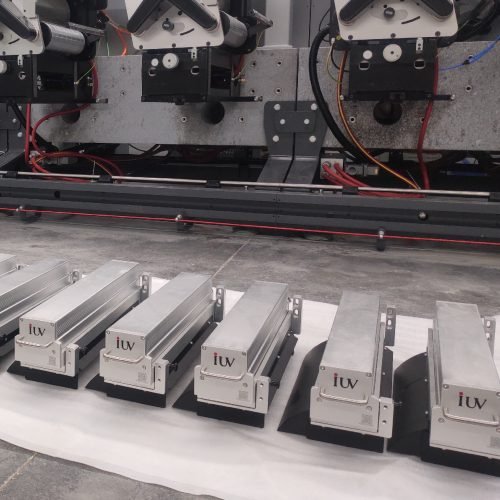
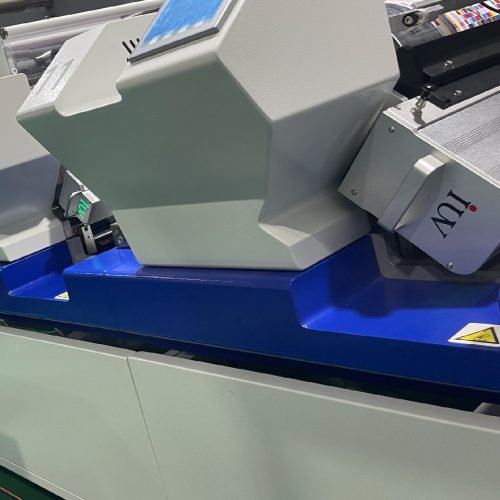
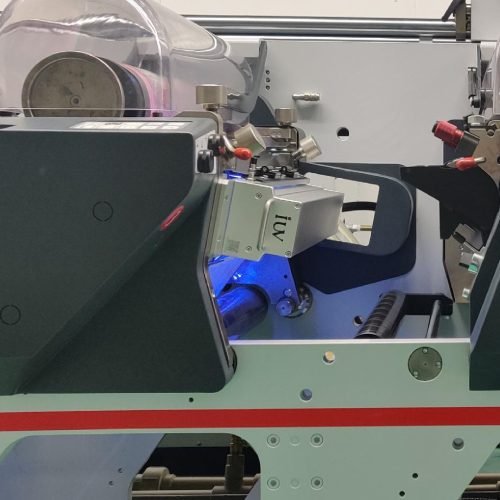
Narrow web printing, predominantly used for labels and flexible packaging, is an ideal environment for LED UV curing. Presses in this segment, whether flexographic, offset (like dry offset), or digital, can be easily retrofitted or specified with LED UV curing units.
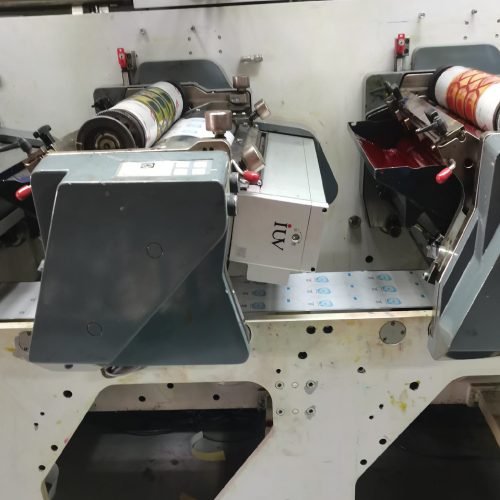
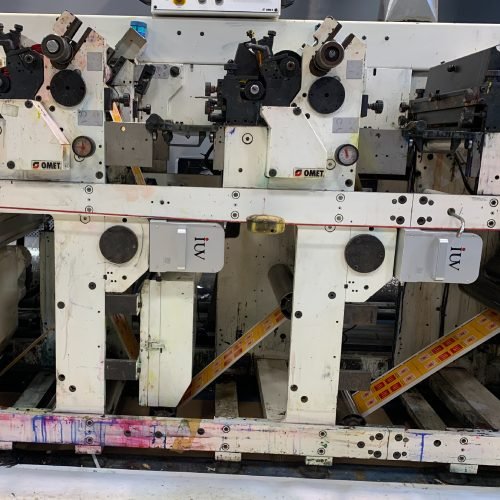
In flexographic label printing, LED UV curing units can be placed between print stations. This allows for in-line curing of inks and coatings on heat-sensitive films and papers. The ability to cure quickly and without excessive heat means printers can run at higher speeds while maintaining print quality and substrate integrity.
Offset label printing, particularly dry offset, also benefits greatly. Similar to flexo, LED UV units can be integrated between stations. This is crucial for applications where vibrant colors and sharp detail are required on materials that cannot withstand high temperatures.
Ink and Coating Considerations for LED UV Curing
When transitioning to or optimizing LED UV curing for heat-sensitive labels, selecting the right inks and coatings is paramount. Photoinitiators, the compounds that absorb UV light and initiate polymerization, must be specifically formulated to be responsive to the narrow wavelengths emitted by LEDs.
Printers must work with ink manufacturers to ensure their UV-curable formulations contain photoinitiators that efficiently absorb at the specific LED wavelengths being used (e.g., 365nm, 395nm). Modern ink formulations are readily available that are optimized for LED curing, offering excellent adhesion, color vibrancy, and durability on a wide range of label stocks, including those that are heat-sensitive.
The Future of Label Printing with LED UV
The trend towards faster, more sustainable, and higher-quality label production continues. LED UV curing technology is at the forefront of this evolution, particularly for applications involving heat-sensitive substrates. Its ability to deliver a high-quality cure with minimal heat input addresses a critical challenge in modern label printing.
As the technology matures and becomes more cost-effective, its adoption is expected to accelerate. Printers who embrace LED UV curing for their heat-sensitive substrate needs will find themselves well-positioned to meet the growing demands for sophisticated, durable, and visually appealing labels across a multitude of market sectors. This technology is not just an advancement; it’s becoming a necessity for label printers looking to push the boundaries of what’s possible.