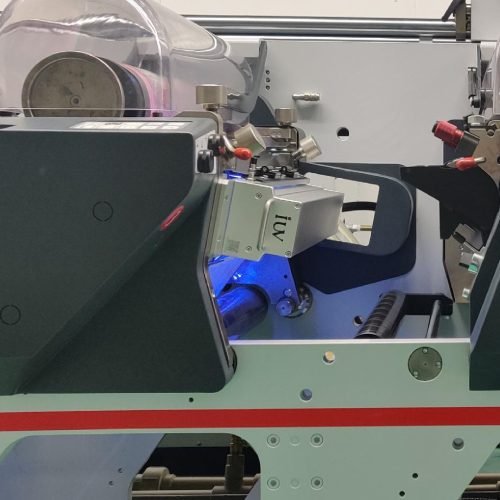
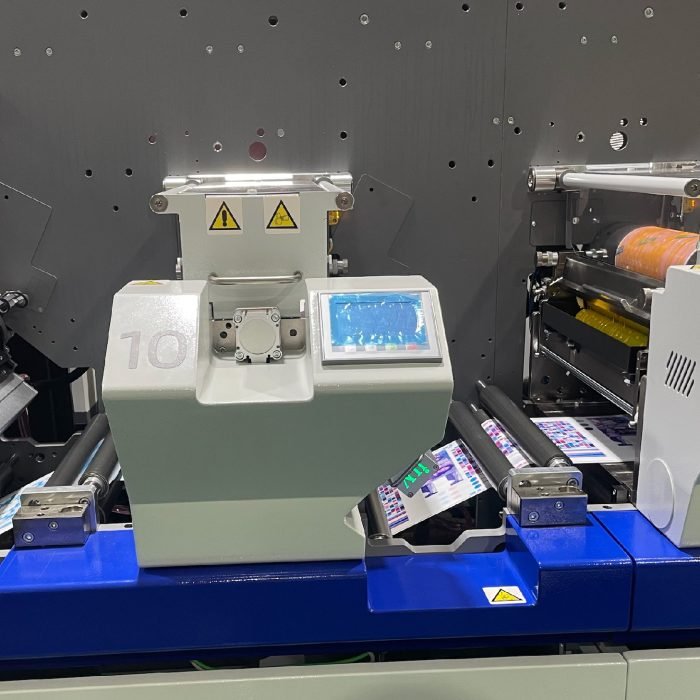
When it comes to printing, achieving truly opaque white ink is a persistent challenge. Traditional methods often require multiple passes, leading to increased production time, material waste, and higher costs. This is where the advancements in LED UV curing technology offer a powerful solution, especially for high-opacity white ink applications in narrow web printing.
The demand for vibrant, high-quality labels and packaging continues to grow. Brands need their products to stand out on crowded shelves, and a crisp, opaque white is often the foundation for eye-catching designs. This white layer can serve as a base for subsequent colors, ensuring they pop with brilliance, or it can be a design element in itself, providing a clean, premium look. However, achieving this opacity with standard curing methods has always been a balancing act.
The Challenge of Opaque White Ink
White inks, by their nature, are formulated with pigments that scatter light, making them appear opaque. Titanium dioxide (TiO2) is the most common pigment used, and its high refractive index is what gives white ink its hiding power. However, this same scattering property can also interfere with the curing process. UV-curable inks rely on photoinitiators that absorb UV light and initiate a polymerization process, hardening the ink. When white pigments are present in high concentrations, they can absorb or reflect a significant portion of the UV energy before it reaches the photoinitiators.
This leads to several common problems:
- Incomplete Curing: The ink surface may appear cured, but the lower layers remain uncured or under-cured. This can result in ink rub-off, poor adhesion, and reduced chemical resistance.
- Yellowing: Over-exposure to heat from traditional mercury vapor lamps, or even prolonged exposure to the wrong UV spectrum, can cause the white ink to yellow, compromising the desired bright white appearance.
- Increased Passes: To compensate for poor curing and achieve sufficient opacity, printers often resort to multiple printing passes, doubling or tripling production time and ink consumption.
- Substrate Limitations: Some substrates, especially those that are sensitive to heat or have a porous surface, can present difficulties with traditional curing methods.
LED UV Curing: A Game Changer for White Ink
Light Emitting Diode (LED) UV curing systems have revolutionized the printing industry, offering distinct advantages over traditional mercury vapor lamps. For high-opacity white ink applications, these advantages become even more pronounced.
LEDs emit UV light at specific, narrow wavelengths. This targeted emission means that the energy is delivered precisely where it’s needed, to activate the photoinitiators in the ink. Unlike mercury lamps, which produce a broad spectrum of UV light and significant heat, LEDs generate very little heat. This is a critical factor when working with white inks.
Key Benefits of LED UV for High-Opacity White
- Efficient Curing of Pigmented Inks: LED systems can be precisely tuned to the absorption peaks of the photoinitiators used in white inks. This allows for more efficient energy transfer, even through the dense white pigment. The result is faster, more thorough curing, all the way to the substrate.
- Reduced Heat and No Yellowing: The minimal heat output from LED lamps prevents the yellowing often associated with traditional UV curing. This ensures that the bright, clean white appearance is maintained, which is crucial for aesthetic appeal and brand integrity.
- Instant On/Off Capability: LEDs can be switched on and off instantaneously. This not only saves energy when the press is stopped but also helps prevent heat build-up on the substrate and ink, further mitigating the risk of yellowing and substrate distortion.
- Longer Lamp Life and Lower Maintenance: LED systems have a significantly longer operational life compared to mercury lamps, often tens of thousands of hours. This reduces downtime for lamp replacement and associated maintenance costs.
- Environmental Advantages: LEDs are mercury-free, aligning with increasing environmental regulations and sustainability initiatives within the printing industry. They also consume less energy overall.
- Consistent Output: LEDs offer a stable and consistent UV output over their lifespan, ensuring predictable curing performance job after job, which is vital for maintaining print quality.
Applications in Narrow Web Printing
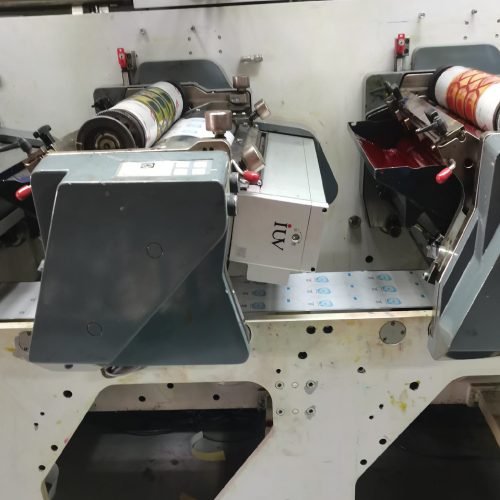
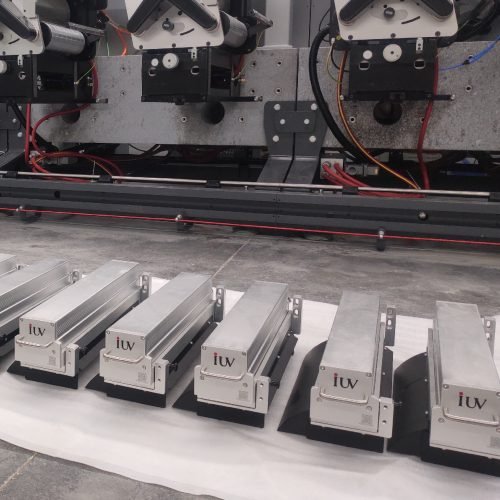
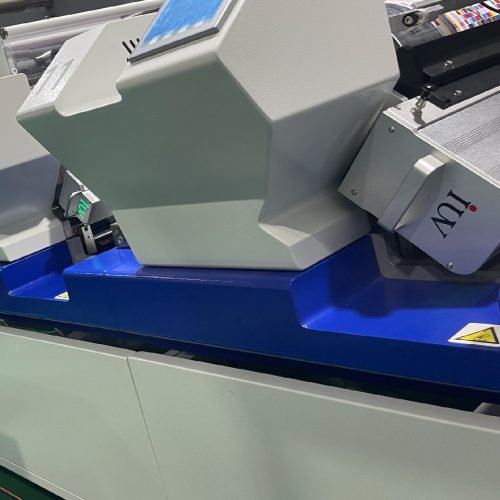
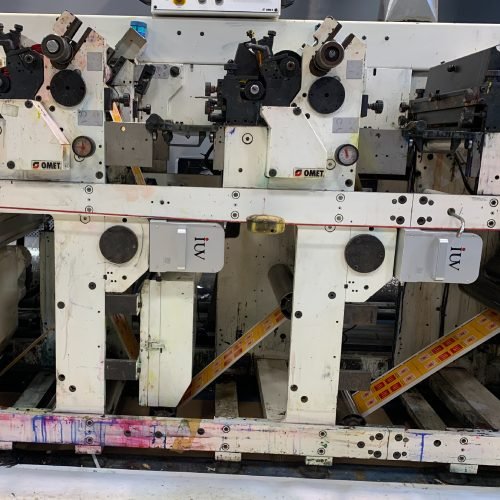
Narrow web printing, commonly used for labels and flexible packaging, is an area where LED UV curing for high-opacity white ink truly shines. Presses in this sector are increasingly designed with integrated LED UV curing units.
Flexographic Printing: In flexography, the transfer of ink to the substrate relies on raised image plates. Achieving a solid, opaque white underprint on clear or colored films is a standard requirement. LED UV systems allow flexo printers to achieve this with a single pass, improving throughput and reducing waste. The precise control over curing also ensures excellent ink adhesion, even on challenging filmic substrates.
Offset (Lithographic) Printing: For narrow web offset presses, particularly those used for high-quality labels and specialty applications, LED UV curing is essential for achieving consistent, opaque white. This is crucial for brands that demand a premium look and feel, where the white serves as a foundation for other print layers or as a standalone design element. The rapid curing enables faster press speeds without compromising ink integrity.
Digital Printing: While less common for high-opacity white ink in traditional narrow web digital, advancements in digital technologies are emerging. Where digital presses do employ UV curing, LED systems offer the same benefits of efficient, low-heat curing, enabling high-quality white print on a wider range of substrates.
Selecting the Right LED UV System for White Ink
Choosing the correct LED UV curing system involves understanding several key parameters:
- Wavelength: For white inks, wavelengths in the 365 nm, 385 nm, or 395 nm range are often preferred, as they align well with the absorption characteristics of common photoinitiators used in these formulations.
- Irradiance (Power Density): This is the amount of UV energy delivered per unit area, typically measured in W/cm². Higher irradiance means faster curing. The required irradiance will depend on the ink formulation, substrate, and press speed. For high-opacity whites, higher irradiance is often beneficial.
- Dose (Energy Density): This is the total amount of UV energy delivered over time (irradiance x exposure time). It’s the ultimate measure of how much energy the ink receives.
- Cooling System: While LEDs generate less heat than mercury lamps, efficient cooling is still crucial to maintain optimal operating temperatures for the diodes and ensure consistent performance. Air cooling is common for many narrow web applications, but water cooling may be necessary for higher power requirements or higher press speeds.
- Integration: The LED curing system must be compatible with your existing press setup. This includes physical dimensions, power requirements, and control interfaces.
Ink Formulation and LED UV Compatibility
It’s not just the curing system; the ink formulation itself plays a critical role. Modern UV-curable inks designed for LED curing are specifically engineered to work with the narrower spectral output of LEDs. When selecting inks for high-opacity white applications, look for formulations that are explicitly stated as “LED curable” and designed for high pigment loading. Collaboration with ink manufacturers is key to identifying the best options that balance opacity, cure speed, adhesion, and flexibility for your specific application.
The Future of White Ink Printing
The evolution of LED UV curing technology continues to push the boundaries of what’s possible in printing. For high-opacity white ink applications, particularly within the demanding environment of narrow web flexo and offset printing, LED UV systems offer a superior solution. They provide the speed, quality, and efficiency that modern printers and brand owners demand.
By embracing LED UV curing, printers can overcome the historical challenges associated with white inks, achieve brighter, cleaner whites, improve adhesion and durability, reduce waste, and ultimately enhance their competitive edge. The investment in LED technology is an investment in the future of high-performance printing.