The intricacies of light, particularly ultraviolet (UV) light, play a pivotal role in modern printing. Specifically, the wavelengths of LED UV light used for curing inks and coatings are not arbitrary. They are scientifically selected to achieve optimal results across various printing applications, from the detailed demands of narrow web labels to the robust needs of offset lithography. Understanding this spectrum is key to unlocking enhanced print quality, improved efficiency, and greater substrate compatibility.
The Foundation of UV Curing
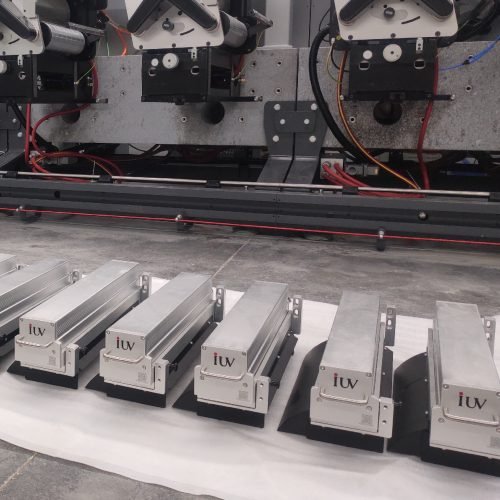
At its core, UV curing is a photochemical process. When UV light of specific wavelengths strikes a photoinitiator within an ink or coating, it triggers a rapid polymerization reaction. This reaction transforms the liquid ink or coating into a solid, durable film almost instantaneously. Traditional mercury vapor lamps have long been the workhorses for UV curing, emitting a broad spectrum of UV light. However, the advent of Light Emitting Diodes (LEDs) has revolutionized this field, offering a more controlled and efficient approach.
Why Wavelengths are Critical in Printing
The effectiveness of UV curing hinges on matching the emitted UV wavelength to the absorption characteristics of the photoinitiators present in the ink or coating formulation. Different photoinitiators are sensitive to different parts of the UV spectrum. If the emitted wavelength does not align with the photoinitiator’s absorption peak, the curing process will be inefficient, leading to under-cured ink, poor adhesion, and surface defects. This is particularly relevant in high-speed printing environments where milliseconds matter.
The Dominant LED UV Wavelengths in Printing
In the realm of LED UV curing for printing, several specific wavelengths have emerged as industry standards due to their efficacy and versatility:
- 365 nm (Nanometers): This is a widely used wavelength, especially for general-purpose UV curing. It is effective for a broad range of photoinitiators and is well-suited for many standard UV inks and coatings. It offers good penetration, which can be beneficial for thicker ink layers.
- 385 nm: This wavelength is another popular choice, often preferred for its efficiency with certain types of photoinitiators. It strikes a balance between surface cure and through-cure, making it adaptable to various applications.
- 395 nm: Increasingly prevalent, 395 nm is highly effective for curing a wide array of UV-curable materials. It is known for its strong absorption by many modern photoinitiators and can offer rapid cure speeds. This wavelength is often favored for its ability to cure thicker coatings and achieve excellent surface hardness.
- 405 nm: While sometimes used in specific niche applications, 405 nm is generally at the longer edge of the typical UV curing spectrum. It’s more common in areas like 3D printing and some graphic arts applications where specific resin chemistries are employed. Its UV-A classification means it has less energetic photons, requiring specific photoinitiator systems.
Impact on Different Printing Processes
The choice of LED UV wavelength has tangible effects across various printing sectors:
Narrow Web and Label Printing
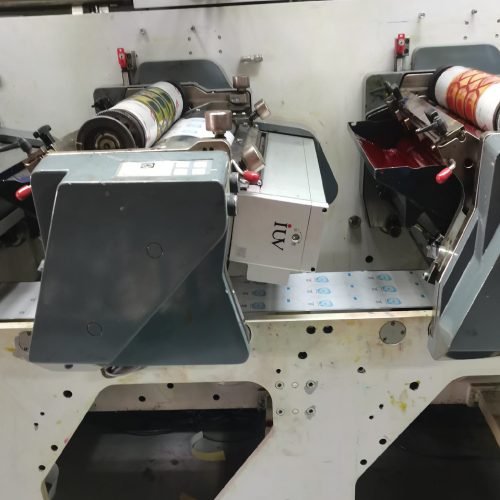
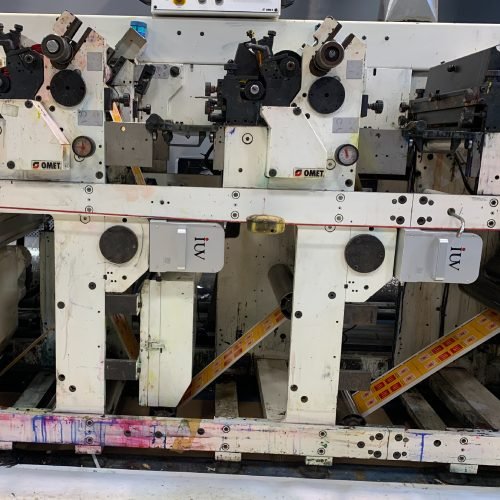
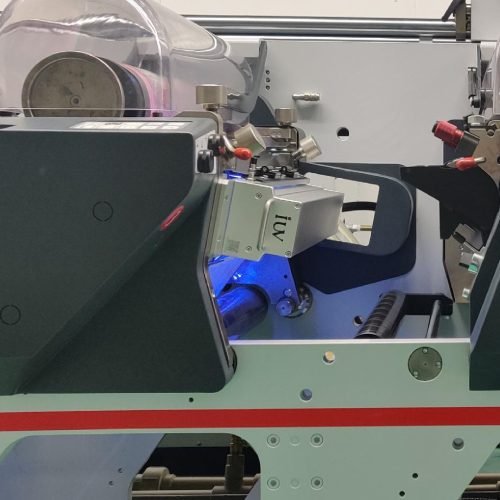
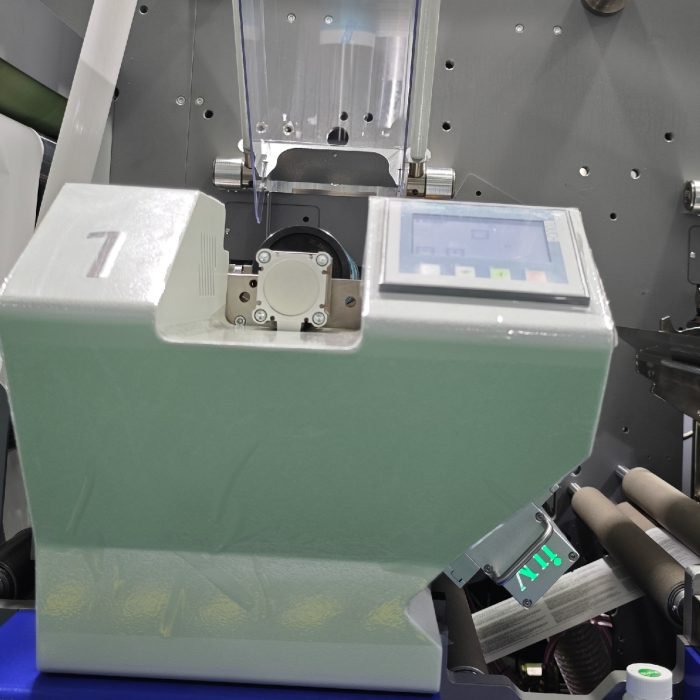
In narrow web printing, where labels and flexible packaging are produced, speed and precision are paramount. LED UV curing allows for immediate handling of printed materials, significantly boosting throughput.
- 365 nm and 385 nm: These wavelengths are commonly used for standard label applications. They provide a good balance for curing typical UV flexo inks and overprint varnishes.
- 395 nm: This wavelength is gaining traction in narrow web for its ability to cure high-build coatings and specialized varnishes quickly and effectively. It is also beneficial for applications requiring excellent scratch and chemical resistance. The precise control of LED emitters at 395 nm ensures consistent cure even at high web speeds, preventing ghosting or incomplete curing.
Flexographic Printing (Flexo)
Flexography, used for everything from food packaging to corrugated board, benefits greatly from LED UV.
- 365 nm, 385 nm, and 395 nm: These wavelengths are all employed, depending on the specific ink system and substrate. For thinner ink layers on flexible films, a rapid cure is needed to prevent ink transfer and ensure sharp dot reproduction. For thicker applications on corrugated, through-cure is essential. The targeted emission of LEDs ensures that energy is delivered precisely where it’s needed, minimizing heat transfer to sensitive substrates.
Offset Lithography (Sheetfed and Web)
Offset printing, particularly for commercial and publication work, utilizes UV curing for enhanced durability and faster turnaround times.
- 365 nm and 395 nm: These wavelengths are prevalent in offset. Sheetfed printers often use them for high-quality commercial jobs that require immediate finishing. Web offset printers benefit from the instant cure to allow for immediate folding and binding without smudging. The consistent energy output of LEDs ensures uniform curing across the entire sheet or web, critical for maintaining color fidelity and gloss levels.
Screen Printing
While historically a domain for mercury lamps, screen printing is increasingly adopting LED UV for its advantages.
- 365 nm and 395 nm: These are common choices for curing thicker ink layers in screen printing, which are typical for graphics, industrial applications, and textiles. LED UV offers a cooler cure than mercury lamps, which is advantageous for heat-sensitive substrates often used in screen printing. The directional nature of LED light also helps achieve a more uniform cure on textured surfaces.
The Advantages of LED UV in Modern Printing
The shift towards LED UV technology, and the careful selection of wavelengths, brings several compelling benefits to the printing industry:
- Energy Efficiency: LEDs consume significantly less power than traditional mercury lamps. They also emit light directionally, meaning less energy is wasted.
- Longevity: LED lamps have a much longer operational lifespan compared to mercury lamps, reducing maintenance and replacement costs.
- Instant On/Off: LEDs can be switched on and off instantly without affecting their lifespan, leading to further energy savings and improved operator safety.
- Low Heat Emission: LEDs generate minimal infrared radiation (heat). This is crucial for printing on heat-sensitive substrates like thin plastics, foils, and delicate papers, preventing distortion or damage.
- Specific Wavelength Control: LEDs emit light in a narrow band of wavelengths. This precise control allows formulators to design inks and coatings with photoinitiators precisely tuned to the LED output, maximizing cure efficiency and minimizing waste.
- Environmental Benefits: Reduced energy consumption contributes to a smaller carbon footprint. The absence of mercury, a toxic substance found in traditional lamps, also makes LED systems more environmentally friendly.
- Improved Curing Performance: When matched correctly, specific LED wavelengths can achieve faster cure speeds, better through-cure, and superior surface properties like scratch and chemical resistance. This leads to higher quality prints and reduced waste.
Selecting the Right Wavelength
The selection of the optimal LED UV wavelength depends on several factors:
- Ink/Coating Formulation: The type of photoinitiators used is the primary driver. Formulators specify which wavelengths their products are designed to cure most effectively.
- Substrate: The material being printed on can influence the required cure depth and temperature tolerance.
- Printing Process and Speed: Faster printing speeds generally require more energetic or efficiently absorbed wavelengths for rapid polymerization.
- Desired End Properties: For applications requiring extreme durability or specific surface characteristics, certain wavelengths might offer superior results.
In conclusion, understanding the UV spectrum, particularly the specific wavelengths emitted by LED UV systems, is not a technicality but a critical component of successful modern printing. The precise wavelengths of 365 nm, 385 nm, and 395 nm offer printers the tools to achieve faster, more efficient, and higher-quality results across a diverse range of applications, solidifying LED UV technology’s place as a cornerstone of the industry.