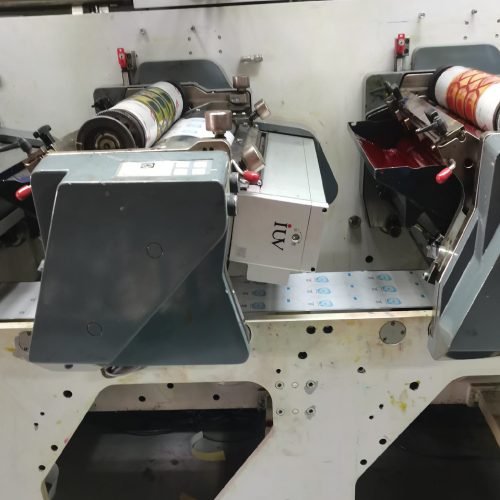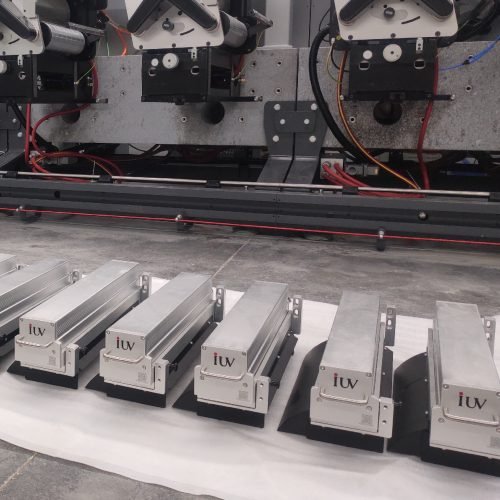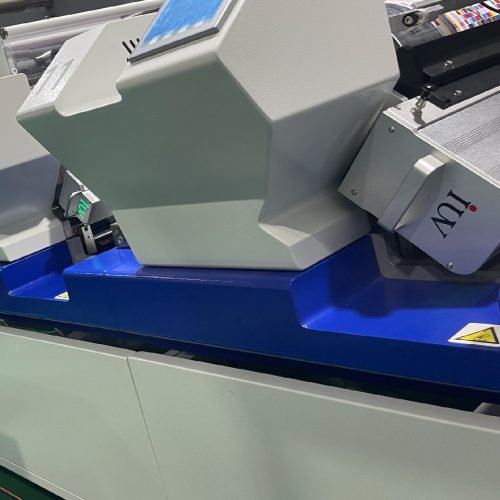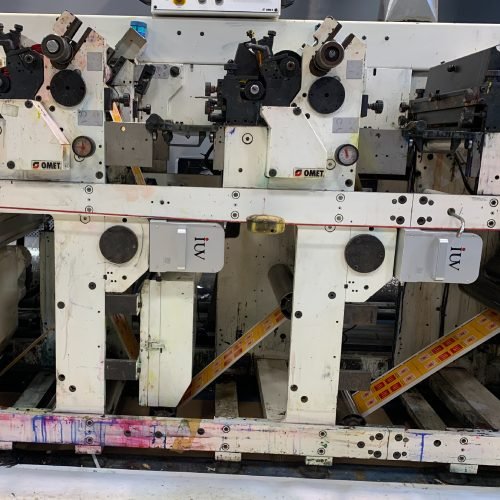
The quest for superior print quality is a perpetual driver in the narrow-web printing industry. Labels, in particular, demand crisp lines and defined graphics to make a product stand out on the shelf. For years, printers have grappled with achieving consistently sharp edges, a challenge that impacts both aesthetic appeal and functional performance. While ink formulation and press mechanics play a significant role, the curing process itself holds a substantial key. This is where the evolution towards LED UV curing systems presents a compelling advantage, particularly in delivering cleaner, sharper edges on narrow-web presses.
Understanding Edge Definition in Printing
Edge definition refers to the clarity and precision with which the ink transitions from printed areas to unprinted substrate. Poor edge definition can manifest as fuzzy, feathered, or uneven lines, often referred to as \”ink spread\” or \”bleeding.\” In narrow-web applications, where designs can be intricate and labels small, these imperfections become highly visible.
Several factors contribute to less-than-ideal edge definition:
- Ink Rheology: The viscosity and flow characteristics of the ink.
- Substrate Porosity: How readily the ink is absorbed into the material.
- Ink Transfer: The efficiency of ink moving from the printing plate to the substrate.
- Drying/Curing Mechanism: The method used to solidify the ink.
Traditionally, thermal drying and mercury-vapor UV curing have been the dominant methods. However, both present limitations when it comes to achieving the ultimate in edge sharpness.
The Limitations of Traditional Curing Methods
Thermal Drying relies on evaporating solvents from the ink. This process is often slow and can lead to ink migration or spreading as the solvents move through the ink layer and into the substrate before complete drying. This inherent mobility of wet ink makes achieving sharp edges a constant battle.
Mercury-Vapor UV Curing, while faster than thermal drying, has its own set of challenges for edge definition. These lamps emit a broad spectrum of UV light, including heat-generating infrared radiation. This heat can cause the ink to expand slightly before curing, leading to feathered edges. Furthermore, the curing process is not always instantaneous across the entire ink film. If the lamp intensity isn\’t perfectly uniform or if the web speed varies, uneven curing can occur, impacting edge crispness. The heat generated can also affect sensitive substrates, causing shrinkage or distortion, which indirectly influences how ink sits on the surface.
The LED UV Advantage: Instant, Focused Curing
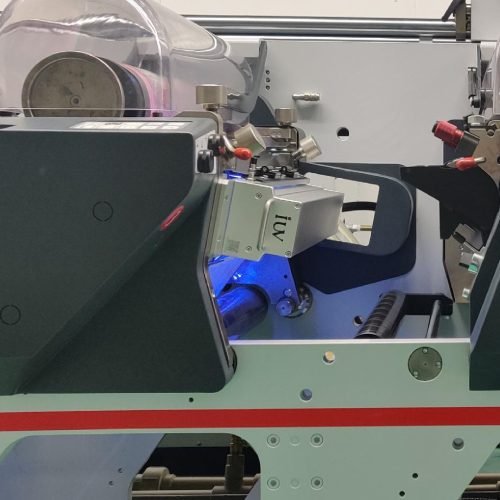
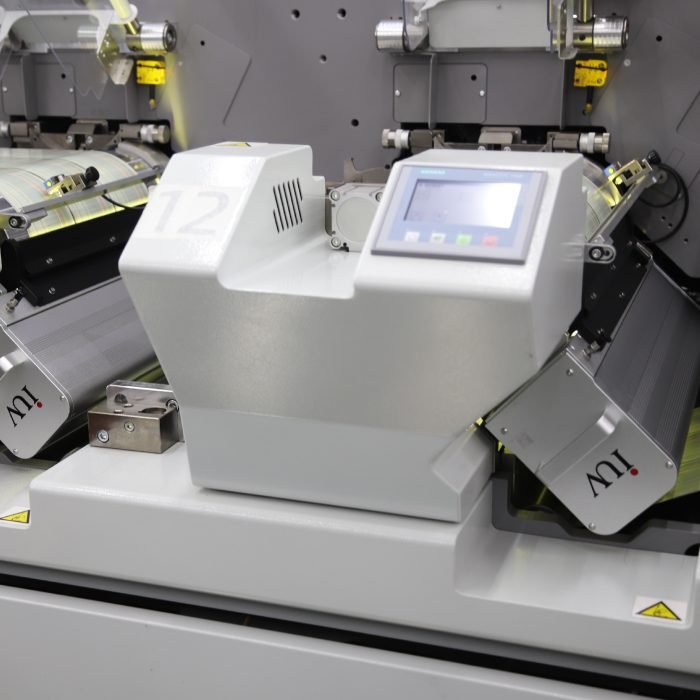
LED UV curing systems operate on a fundamentally different principle. Instead of a broad-spectrum lamp, they utilize an array of light-emitting diodes (LEDs) that emit UV light at very specific wavelengths. This focused emission offers several critical benefits for achieving sharper edges.
Firstly, instantaneous curing is a hallmark of LED UV. When the ink is exposed to the targeted UV light, the photoinitiators within the ink cure almost instantly. This rapid solidification locks the ink in place before it has any significant opportunity to spread or migrate. Think of it like setting a jelly: the faster it sets, the less it can flow and lose its shape.
Secondly, minimal heat generation is a significant differentiator. Unlike mercury lamps, LEDs produce very little infrared radiation. This means the ink and substrate remain cooler throughout the curing process. Lower temperatures prevent the ink from expanding and the substrate from distorting, both of which can compromise edge definition. The ink is essentially cured in its original, precisely transferred position.
How This Translates to Cleaner, Sharper Edges
The combination of instant, focused curing and minimal heat directly translates into superior edge definition. Here’s a breakdown:
- Reduced Ink Spread: With immediate curing, the ink molecules are locked into place the moment they are applied. There\’s no time for the ink to flow outwards, resulting in significantly cleaner, crisper lines and dot edges.
- Enhanced Detail Reproduction: Fine details, small text, and intricate graphics benefit immensely. The sharp edges ensure that these elements remain legible and well-defined, even at high print speeds.
- Improved Color Consistency: Precise curing helps maintain the intended ink film thickness and density across the printed area. This contributes to more uniform color reproduction and prevents the \”halo effect\” that can sometimes surround printed elements with poor edge definition.
- Substrate Stability: The lower heat output of LEDs protects sensitive substrates. This means less risk of shrinkage, warping, or delamination, all of which can indirectly lead to uneven ink application and blurry edges. This is particularly important for thin films and foils commonly used in narrow-web packaging and labeling.
LED UV in Narrow-Web Applications: A Perfect Match
Narrow-web presses, by their nature, operate at high speeds and often handle demanding print jobs. The tight tolerances and intricate designs common in label printing make them ideal candidates for LED UV technology.
- Flexographic Printing: In flexo, where a raised image carrier transfers ink, achieving precise dot gain and sharp shoulder definition is crucial. LED UV curing\’s ability to instantly lock ink minimizes dot gain and prevents ink from spreading up the sides of the raised image. This results in brighter highlights and cleaner shadows.
- Offset (Lithographic) Printing: For narrow-web offset, consistent ink transfer and precise trapping of colors are paramount. LED UV ensures that each ink layer cures rapidly, allowing for excellent color-over-color registration and sharp transitions between different ink films.
- Specialty Printing: Whether it\’s varnishes, metallic inks, or functional coatings, LED UV offers consistent curing across a wide range of formulations. This consistency is vital for achieving the desired visual and tactile effects with sharp, defined edges.
Beyond Edge Definition: Additional Benefits
While sharper edges are a significant advantage, the benefits of LED UV extend further, making it a compelling upgrade for narrow-web printers:
- Energy Efficiency: LEDs consume significantly less power than traditional mercury lamps, leading to reduced energy costs.
- Longer Lifespan: LED lamps have a much longer operational lifespan, minimizing downtime for replacements and reducing maintenance costs.
- Instant On/Off: LEDs can be switched on and off instantaneously, which is ideal for short print runs and reduces energy waste when the press is stopped.
- Wider Substrate Compatibility: The low heat output allows for printing on a broader range of heat-sensitive materials.
- Environmental Considerations: LEDs do not contain mercury, making them a more environmentally friendly option.
The Future of Print Quality is Sharp
The pursuit of pristine print quality on narrow-web presses is an ongoing endeavor. While every element of the printing process contributes, the curing technology plays a pivotal role, especially in defining the sharpness of printed edges. LED UV curing systems offer a technological leap forward, providing faster, cooler, and more precise ink solidification.
For printers focused on producing labels and other narrow-web products with exceptional visual appeal and crisp detail, adopting LED UV technology is not just an upgrade; it\’s a strategic investment in superior edge definition. The ability to deliver cleaner, sharper edges consistently means higher quality output, greater customer satisfaction, and a distinct competitive advantage in today\’s demanding print market.