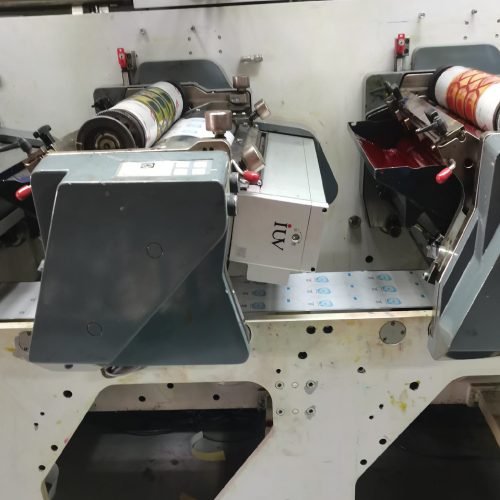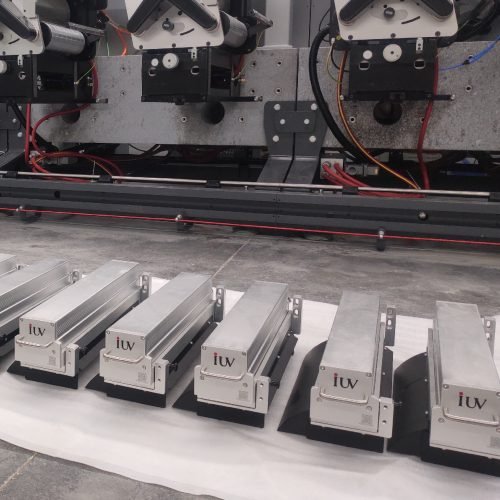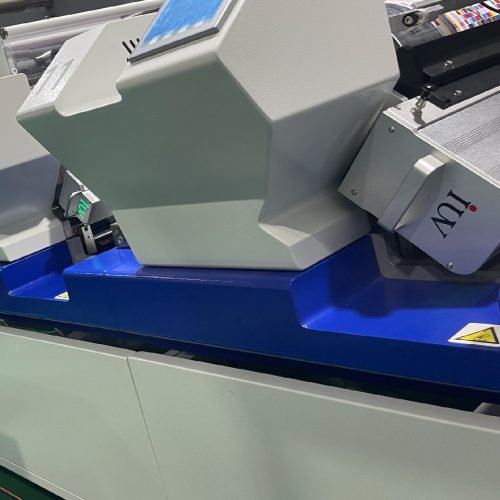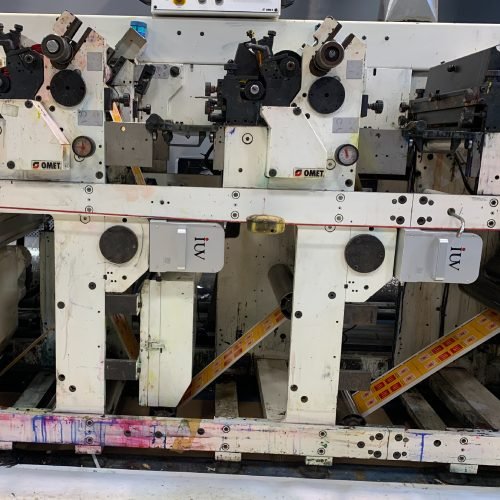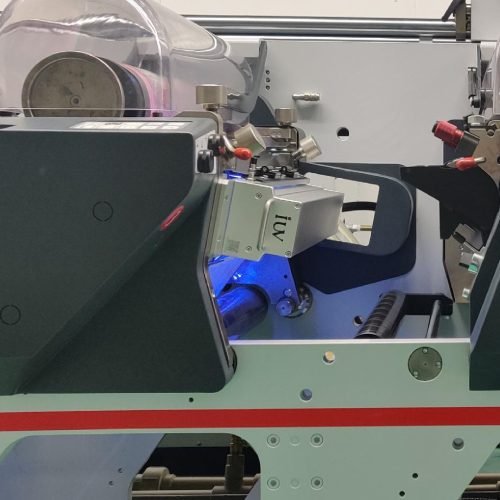
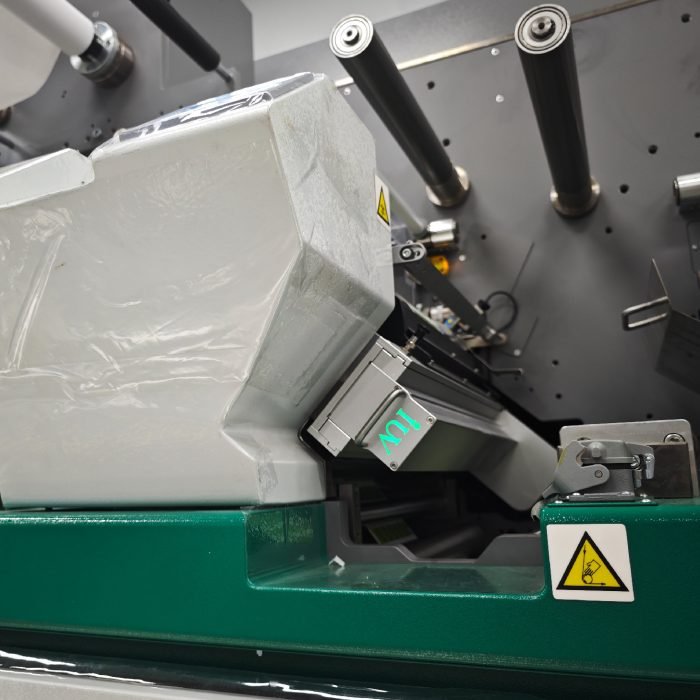
Achieving consistent and robust adhesion on a wide variety of substrates is a persistent challenge in the printing industry. While traditional curing methods have served for years, the demand for printing on increasingly diverse and difficult-to-adhere-to materials—such as certain plastics, foils, and specially coated papers—necessitates more advanced solutions. This is where sophisticated LED UV curing systems emerge as a transformative technology, offering precise control and superior performance, particularly for label printing, flexography, and offset printing applications.
The Substrate Conundrum in Modern Printing
The modern printing landscape is characterized by an ever-expanding array of substrates. Each material presents unique surface properties that can impede ink and coating adhesion. Porous substrates readily absorb inks, leading to potential fading and poor print quality. Non-porous, low-surface-energy materials, like many polyolefins (polypropylene and polyethylene) and certain PET films, repel inks and coatings, causing issues like scratching, delamination, and premature failure of the printed product.
These adhesion challenges are particularly pronounced in niche printing sectors. In narrow-web label printing, for example, labels are often applied to containers with complex shapes and exposed to varied environmental conditions. For flexographic printing, widely used for packaging and labels, the high-speed nature of the process demands rapid ink setting and strong adhesion to ensure durability. Similarly, offset printing, while known for its high print quality, can struggle with adhesion on non-traditional substrates without proper preparation and curing.
Understanding the Limitations of Conventional Curing
For decades, mercury vapor lamps have been the standard for UV curing. While effective for many applications, they come with several inherent limitations. These lamps emit a broad spectrum of UV light, including a significant amount of heat and infrared radiation. This heat can cause substrate distortion, especially with sensitive materials. Furthermore, mercury lamps are energy-intensive, have a limited lifespan, and require regular maintenance and replacement. Their broad emission spectrum also means that energy is often wasted on wavelengths that are not efficiently utilized by UV-curable inks and coatings.
The curing process itself is a chemical reaction. UV-curable inks and coatings contain photoinitiators that absorb UV light. This absorption triggers a chain reaction, polymerizing the monomers and oligomers into a solid, cross-linked film. Incomplete polymerization, often a consequence of insufficient UV energy or improper wavelength delivery, directly translates to poor adhesion. The uncured or under-cured components remain mobile, failing to create a strong bond with the substrate.
The Advent of LED UV Curing Technology
Light Emitting Diode (LED) UV curing technology represents a paradigm shift. Instead of broad-spectrum mercury lamps, LED systems utilize solid-state diodes that emit UV light at specific, narrow wavelengths. The most common wavelengths for UV curing are in the UVA range, typically 365 nm, 385 nm, 395 nm, and 405 nm.
This specificity is a game-changer for adhesion on difficult substrates. By targeting the precise wavelengths that photoinitiators are most sensitive to, LED systems deliver highly efficient energy transfer. This leads to faster, more complete polymerization, forming a robust, cross-linked ink or coating layer that bonds powerfully to the substrate.
Key Advantages of LED UV for Adhesion
The benefits of employing advanced LED UV curing systems for adhesion enhancement are multifaceted:
- Precise Wavelength Control: As mentioned, the ability to select specific UV wavelengths that optimally activate photoinitiators is paramount. This targeted approach ensures that the curing energy is utilized efficiently, leading to superior polymerization and thus, enhanced adhesion. Printers can select LED systems with wavelengths that precisely match their ink and coating formulations, maximizing curing speed and ink film integrity.
- Lower Heat Emission: Unlike mercury lamps, LED UV systems generate very little infrared radiation. This results in significantly lower heat transfer to the substrate. This is crucial when printing on heat-sensitive films, thin plastics, and foils, where excessive heat can cause warping, bubbling, or material degradation. Maintaining a cooler substrate surface promotes better ink laydown and reduces the risk of adhesion failure due to substrate damage.
- Instant On/Off Capability: LEDs can be switched on and off instantaneously. This eliminates warm-up and cool-down times associated with mercury lamps. For the printing process, this means immediate curing at the point of application, preventing ink spread or migration before it\’s fully cured. It also allows for energy savings, as the lamps are only active when printing is occurring.
- Consistent Energy Output: LED emitters provide a stable and consistent UV output throughout their lifespan. This predictable performance ensures uniform curing across the entire print run. Inconsistent curing, often seen with aging mercury lamps, can lead to variable adhesion, with some areas performing poorly. The consistent energy delivery from LEDs guarantees repeatable, high-quality results.
- Longer Lifespan and Reduced Maintenance: LED UV lamps have an operational lifespan measured in tens of thousands of hours, far exceeding that of mercury lamps. This significantly reduces downtime for lamp replacement and associated maintenance costs, contributing to a lower total cost of ownership.
Optimizing LED UV Curing for Challenging Substrates
To maximize adhesion on difficult substrates using LED UV technology, several factors must be carefully considered:
- Ink and Coating Formulation: The selection of UV-curable inks and coatings is critical. These formulations must be designed to work effectively with specific LED wavelengths. Manufacturers now offer specialized inks and coatings formulated with photoinitiator packages optimized for LED curing. When printing on low-surface-energy plastics, for example, inks with higher surface tension and adhesion promoters are essential.
- Substrate Surface Preparation: Even with advanced LED UV curing, preparing the substrate surface can significantly improve adhesion. For very challenging substrates like polyethylene and polypropylene, methods such as corona treatment or plasma treatment can increase the surface energy, making it more receptive to inks and coatings. This increased surface energy ensures better wetting and mechanical interlocking of the cured ink film with the substrate.
- UV Dose and Irradiance: The \”UV dose\” (total energy applied) and \”irradiance\” (power density) are key parameters. Irradiance refers to the intensity of the UV light, while dose is the total exposure over time. While LEDs provide high irradiance at specific wavelengths, ensuring sufficient total UV dose is crucial for complete polymerization. This is achieved by optimizing the speed of the printing press in relation to the LED output. Too little energy will result in under-cured ink and poor adhesion; too much can sometimes lead to surface defects or discoloration, though this is less common with LEDs due to their specific wavelength output.
- Distance and Uniformity: The distance between the LED curing unit and the substrate, as well as the uniformity of the UV light across the entire print width, are vital. LEDs typically have a shorter effective curing distance compared to mercury lamps. Maintaining an optimal, consistent distance ensures that the irradiance remains high and uniform. Advanced LED heads are designed with optics to provide a very even light distribution.
Applications in Narrow-Web, Flexo, and Offset Printing
Narrow-Web Label Printing: In this sector, LED UV curing is revolutionizing the ability to print on a vast range of label stocks. Whether it\’s prime labels for food and beverage packaging, durable labels for industrial applications, or cosmetic labels requiring aesthetic perfection, LED UV ensures robust adhesion even on films like BOPP, PET, and vinyl. The lower heat allows for printing on thin films without distortion, and the precise curing minimizes ink migration, which is crucial for food-contact applications.
Flexographic Printing: For flexo printers, especially those in the packaging industry, LED UV offers enhanced performance. The rapid curing at high press speeds is indispensable. It allows for immediate handling of printed webs without smudging or blocking, and significantly improves adhesion to difficult film and foil substrates common in food packaging and other flexible packaging applications. This translates to reduced waste and increased throughput.
Offset Printing: While traditionally reliant on heatset or conventional UV curing, offset printers are increasingly adopting LED UV. This is particularly beneficial when printing on plastics, synthetic papers, and pre-coated stocks for commercial applications, packaging inserts, and specialty items. LED UV enables offset printers to expand their substrate capabilities without compromising on print quality or adhesion performance.
The Future of Adhesion: Continued Innovation
The synergy between advanced LED UV curing systems and optimized ink/coating formulations is paving the way for unprecedented adhesion on even the most challenging substrates. As the technology matures, we can expect further refinements in LED output, broader wavelength options, and even more intelligent control systems that adapt curing parameters in real-time.
For printers seeking to expand their service offerings, improve product durability, and reduce operational costs, investing in advanced LED UV curing technology is no longer just an option—it\’s becoming a necessity. By understanding the interplay between substrate properties, curing technology, and formulation, printers can unlock new possibilities and achieve superior adhesion that stands the test of time and environment.