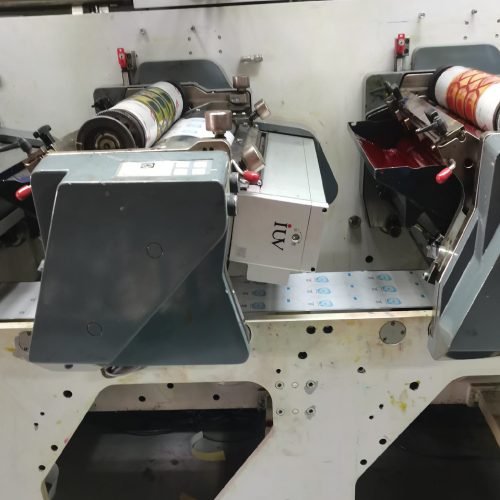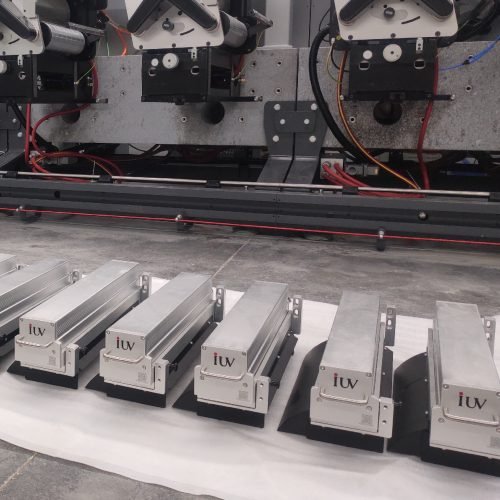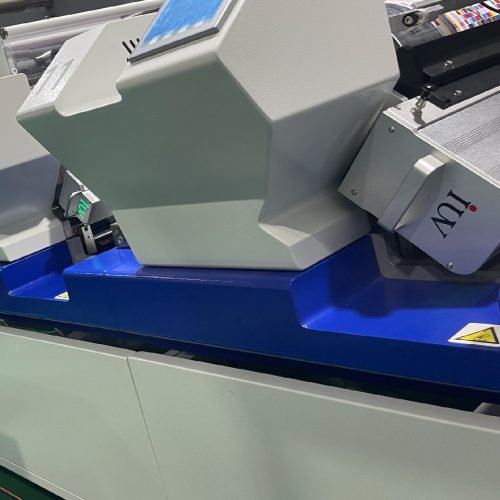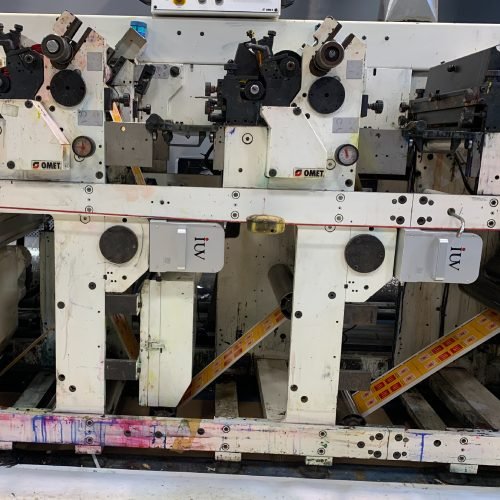
Achieving precise color reproduction in multi-color printing isn’t just about the inks; it’s critically dependent on how those inks are cured. For label, flexographic, and offset printing applications, especially within the narrow web sector, the curing process is a make-or-break factor for vibrant, accurate colors that last. Traditional methods often struggle to keep pace with the demands for speed, efficiency, and environmental responsibility. This is where high-intensity LED curing systems enter the arena, revolutionizing how we achieve multi-color printing accuracy.
The Color Challenge in Multi-Color Printing
Multi-color printing, by its very nature, relies on the precise layering and interaction of different ink colors. Whether it’s CMYK, spot colors, or special effects inks, each layer must be perfectly cured before the next is applied. Any compromise in this process can lead to:
- Color Shifting: Incomplete or uneven curing can alter the spectral properties of the ink, leading to noticeable shifts in hue and saturation.
- Ink Migration: If ink isn’t fully cured, it can remain somewhat mobile, potentially transferring to subsequent layers or even the underside of the printed web. This is disastrous for color fidelity and can cause processing issues.
- Poor Adhesion: Inadequate curing often results in weak ink adhesion, impacting durability and the overall quality perception.
- Dot Gain Issues: In process printing, especially flexography and offset, improper curing can exacerbate dot gain, leading to muddier images and loss of fine detail, which directly affects color accuracy.
These issues are amplified in high-speed narrow web printing where production demands are relentless. The margin for error is slim, and consistency is paramount.
Understanding UV Curing: The Foundation
Before delving into LEDs, a brief look at UV curing is instructive. Ultraviolet (UV) curing uses lamps that emit UV light to initiate a photochemical reaction in UV-curable inks, coatings, and adhesives. This reaction causes the liquid ink to polymerize rapidly, transforming it into a solid, durable film. Traditional UV lamps, like mercury vapor lamps, emit a broad spectrum of UV light. While effective, they have drawbacks:
- High Heat Generation: They produce significant heat, which can impact sensitive substrates and increase energy consumption.
- Short Lamp Life: Mercury lamps have a limited operational lifespan and require regular replacement.
- Ozone Production: They can generate ozone, necessitating ventilation systems.
- Slow Start-up: They require a warm-up period to reach full intensity.
The Emergence of High-Intensity LED Curing
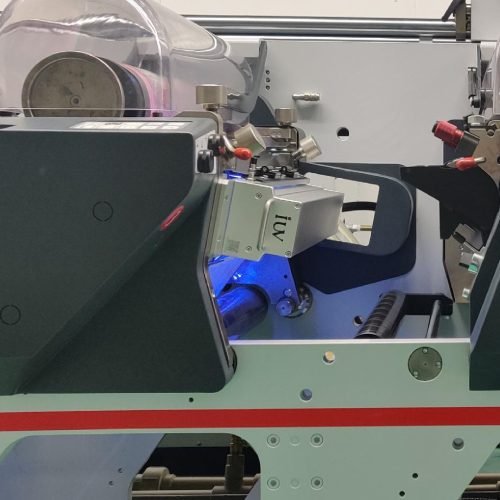
High-intensity Light Emitting Diode (LED) UV curing systems represent a significant technological leap. Instead of relying on a broad spectrum, LEDs emit UV light at specific wavelengths, most commonly in the UVA range (365 nm, 385 nm, 395 nm, 405 nm). This targeted emission is a game-changer for printing accuracy.
The “high-intensity” aspect refers to the power output of these LED arrays. Modern systems are designed to deliver a concentrated, powerful beam of UV energy directly to the ink. This intensity is key to achieving rapid and complete polymerization, even with demanding ink formulations.
Benefits of High-Intensity LED Curing for Multi-Color Printing Accuracy
The advantages of employing high-intensity LED curing for multi-color printing are multifaceted and directly address the challenges of achieving precise color reproduction:
1. Uniform and Targeted Curing
LEDs emit light in a very narrow spectral band. This means the UV energy is delivered precisely where it’s needed to initiate the photoinitiators in the ink. The uniformity of the beam across the width of the printing press ensures that each printed dot and color layer receives consistent energy. This leads to:
- Predictable Polymerization: The ink cures evenly, minimizing variations that cause color shifts.
- Reduced Dot Gain: Consistent curing supports better ink transfer and reduces the tendency for ink to spread, preserving fine detail and color fidelity.
- Enhanced Color Saturation: Fully cured inks exhibit their true saturation and vibrancy, leading to richer, more accurate colors.
2. Instant On/Off and Precise Control
Unlike traditional lamps, LEDs switch on and off instantaneously. This offers unprecedented control over the curing process:
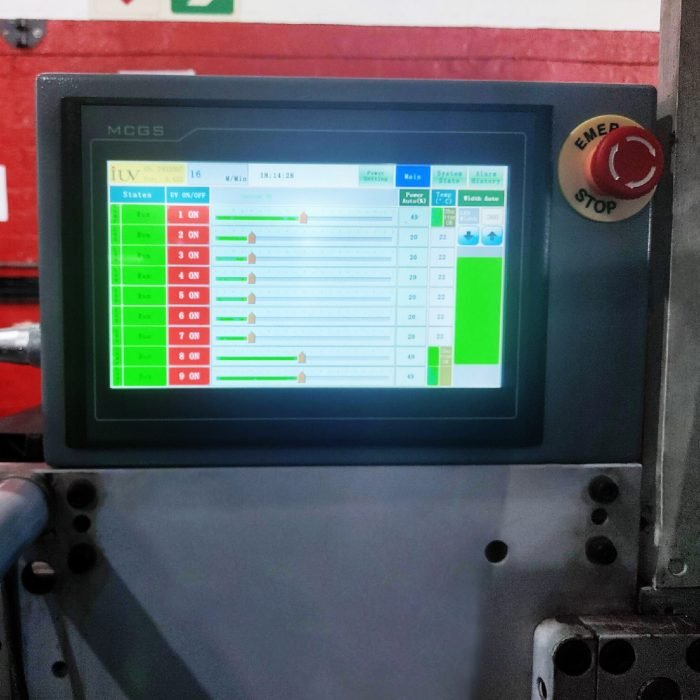
- Curing Only When Needed: LEDs can be turned on just as the ink passes under the curing unit and off immediately after. This minimizes unnecessary energy exposure to the substrate and reduces heat buildup, crucial for sensitive materials.
- Optimized for Multi-Layer Printing: In multi-color printing, where inks are applied sequentially, the ability to precisely time curing for each layer is invaluable. This prevents over-curing of earlier layers while ensuring subsequent layers cure perfectly.
3. Wavelength Specificity and Ink Formulation
The specific wavelengths emitted by LEDs (e.g., 365 nm, 395 nm) can be matched to the absorption spectra of specialized photoinitiators in UV-curable inks. This efficiency means that less energy is wasted, and the polymerization process is highly effective. For multi-color printing, this allows formulators to create inks with optimized curing profiles for each specific color or ink layer, further enhancing accuracy.
4. Reduced Heat and Substrate Integrity
High-intensity LED systems generate significantly less infrared (IR) radiation and overall heat compared to mercury lamps. This is a major advantage for printing on thin films, heat-sensitive plastics, and other delicate substrates commonly used in label printing. Reduced heat buildup means:
- No Substrate Distortion: Prevents warping or shrinking of the material, maintaining registration accuracy between colors.
- Preservation of Ink Properties: Extreme heat can sometimes affect the final color or performance of inks. LEDs mitigate this risk.
5. Energy Efficiency and Environmental Benefits
LEDs are far more energy-efficient than traditional UV lamps. They consume less power for the same amount of effective UV output. Furthermore, their long lifespan (often 20,000-30,000 hours or more) reduces waste and replacement costs.
- Lower Operating Costs: Significant savings on electricity bills.
- Reduced Carbon Footprint: Contributes to more sustainable printing operations.
- No Mercury: Eliminates hazardous waste associated with mercury lamp disposal.
6. Speed and Throughput
The high intensity and efficiency of LED curing allow for faster printing speeds. This means presses can run at higher velocities without compromising ink cure and, by extension, color accuracy. This is a critical advantage in competitive markets like narrow web label printing.
Application in Specific Printing Processes
The impact of high-intensity LED curing systems is felt across various printing technologies:
- Narrow Web Flexographic Printing: Flexo is a dominant force in label and flexible packaging. LED curing ensures precise color control on a wide range of substrates, from film to paper. The ability to cure inks instantly between print stations is crucial for maintaining tight registration and vibrant colors in multi-layer designs.
- Offset Printing (Sheet-fed and Web-fed): In offset, especially for high-quality graphics and packaging, color accuracy is paramount. LED curing provides a clean, efficient method for hardening inks, preventing smudging and enabling immediate post-print finishing. For narrow web offset, the space-saving and energy efficiency of LEDs are significant advantages.
- Digital Printing (Inkjet): While not always categorized with traditional multi-color processes, UV inkjet relies heavily on rapid curing. High-intensity LEDs enable the printing of vibrant, durable graphics in a single pass, with each ink drop curing almost instantaneously upon hitting the substrate.
Key Considerations for Implementing LED Curing
When considering high-intensity LED curing systems for your multi-color printing operations, several factors warrant attention:
- Wavelength Selection: Ensure the LED wavelength is optimized for your specific ink formulations. Different inks have different photoinitiator requirements.
- Irradiance Levels: Understand the required irradiance (power density) for your inks and production speeds. High-intensity systems offer greater flexibility here.
- Uniformity: Look for systems designed for consistent energy distribution across the full web width.
- Cooling Systems: While LEDs produce less heat than mercury lamps, robust cooling is still necessary to maintain optimal LED performance and longevity.
- Ink Compatibility: Work with ink manufacturers to ensure your chosen inks are formulated for LED curing.
The Future of Color Accuracy
The evolution of printing technology is intrinsically linked to advancements in curing. High-intensity LED curing systems are not merely an alternative to older technologies; they are an enabler of higher quality, greater efficiency, and more sustainable practices. For printers aiming to achieve the highest levels of multi-color printing accuracy, especially in the demanding realms of narrow web, flexo, and offset, investing in advanced LED curing is becoming not just an option, but a necessity. The precision, control, and efficiency offered by these systems pave the way for sharper graphics, richer colors, and a competitive edge in today’s market.