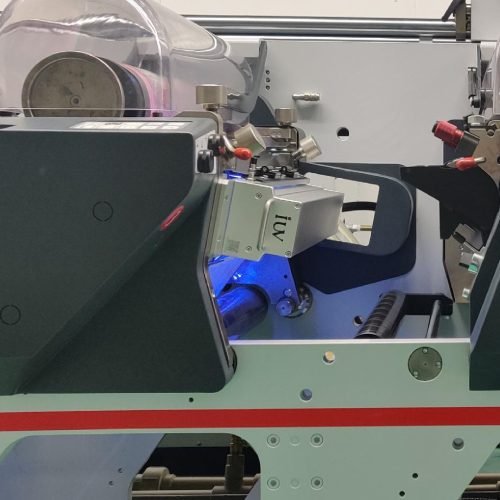
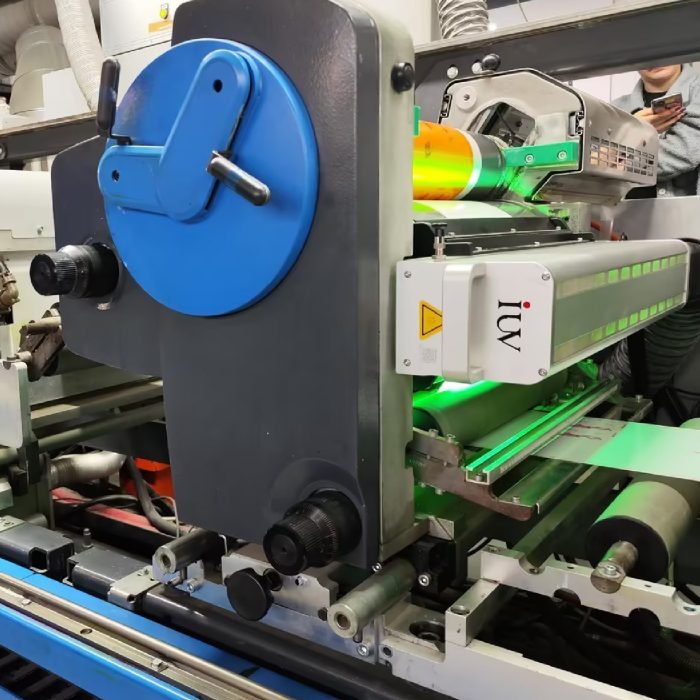
Modern print converting lines demand efficiency and speed. The pressure to deliver high-quality output while minimizing operational costs is constant. This is where innovative LED UV curing technology steps in, offering a compelling solution for a range of printing applications. From narrow web label printing to wider format applications, the advantages of LED UV are reshaping how we approach print production.
The shift towards LED UV technology isn’t just about incremental improvements; it represents a significant leap forward in curing processes. Traditional UV curing systems, often relying on mercury lamps, come with inherent drawbacks. These include high energy consumption, significant heat generation, and the need for frequent lamp replacement. Furthermore, mercury lamps have environmental considerations that are increasingly being scrutinized. LED UV, on the other hand, operates on a fundamentally different principle, offering a cleaner, more efficient, and often more effective alternative.
The Core Advantages of LED UV Curing
At its heart, LED UV curing offers a more targeted and efficient way to initiate the polymerization process in inks and coatings. Instead of a broad spectrum of UV light, LEDs emit specific wavelengths precisely matched to the photoinitiators in UV-curable inks. This precision leads to several key benefits.
Firstly, energy efficiency is a major draw. LED systems consume considerably less power compared to their mercury vapor predecessors. This translates directly into lower electricity bills, a significant factor for high-volume print operations. The energy saved is not just a cost-saving measure; it also reduces the overall carbon footprint of the printing process.
Secondly, reduced heat generation is another crucial advantage. Mercury lamps produce a substantial amount of infrared radiation, which heats the substrate. This can be problematic for heat-sensitive materials, leading to distortion or even damage. LED UV lamps emit very little infrared radiation, allowing for the processing of a wider range of substrates, including thin films and delicate papers, without compromising their integrity. This also means less demand on cooling systems within the press, further contributing to energy savings.
Thirdly, the longevity and instant on/off capabilities of LED UV systems are game-changers. LED lamps have a much longer operational lifespan, often tens of thousands of hours, drastically reducing maintenance downtime and replacement costs associated with mercury lamps. The ability to switch LEDs on and off instantaneously also means no warm-up or cool-down time is required, contributing to greater press availability and faster job changeovers. This instant response is invaluable in high-speed printing environments where every second counts.
LED UV in Narrow Web Label Printing
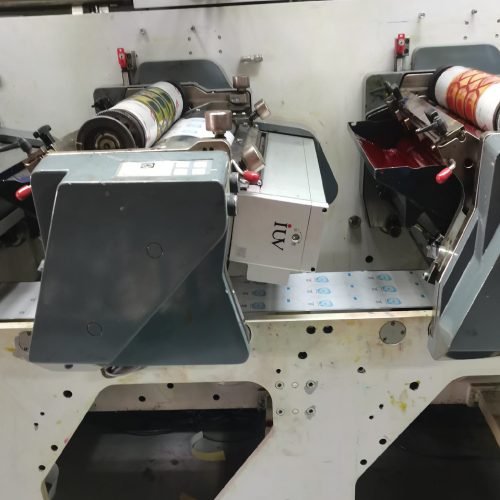
Narrow web label printing is a prime area where LED UV technology has found significant adoption. The demand for high-quality, durable labels, often produced in short to medium runs, perfectly aligns with the strengths of LED UV.
In flexographic printing, the dominant technology for labels, UV-curable inks are widely used. When combined with LED UV curing, flexo presses can achieve impressive speeds. The precise wavelength control of LEDs ensures thorough curing of inks, even on challenging substrates like BOPP, PET, and foils. This rapid curing means that inks are immediately dry and ready for subsequent processing steps, such as die-cutting or rewinding, without the risk of smudging or ink transfer.
The reduced heat output from LED UV systems is particularly beneficial in narrow web printing where the web is often moving at high speeds and can be susceptible to heat-induced issues. This allows printers to maintain tighter tolerances and achieve sharper print quality, essential for intricate label designs and fine text. Furthermore, the reduced energy consumption aligns with the industry’s growing focus on sustainability, a factor increasingly important to brand owners.
Expanding Horizons: LED UV in Other Print Sectors
While narrow web label printing has been a fast adopter, the benefits of LED UV are extending to other areas of print converting.
Sheetfed Offset Printing: For shorter runs and faster turnaround times, LED UV offers a compelling alternative to conventional heatset or infrared drying. Sheetfed presses equipped with LED UV can achieve instant curing of inks, allowing for immediate stacking of printed sheets and faster finishing operations. This is especially advantageous for commercial printers handling a diverse range of jobs, from brochures to packaging. The ability to print on non-absorbent substrates without extensive ink setting times opens up new possibilities for creative print applications.
Wide Format Printing: While not strictly “narrow web,” the principles of LED UV curing are also being applied effectively in wider format printing, including UV inkjet. Here, the precise curing of ink droplets as they are jetted onto the substrate is critical for achieving sharp image quality and durability. LED UV inkjet systems offer fast, efficient curing without damaging the substrate, making them ideal for applications such as signage, displays, and industrial printing.
Tag Printing: Similar to label printing, tag production often involves printing on specialized materials and requires durable, quick-drying inks. LED UV curing is well-suited for tag printing presses, ensuring that inks are fully cured for immediate handling and application. This is especially important for tags used in demanding environments where resistance to scuffing and chemicals is necessary.
The Science Behind the Efficiency: Wavelength Specificity
The effectiveness of LED UV curing stems from its precise control over the UV spectrum. Traditional mercury lamps emit a broad range of UV wavelengths, including UVA, UVB, and UVC, as well as visible light and infrared radiation. While this broad spectrum can initiate polymerization, it is also responsible for much of the unwanted heat and energy waste.
LED UV systems, conversely, are engineered to emit light within very narrow wavelength bands. The most common wavelengths used in UV curing are around 365 nm, 385 nm, 395 nm, and 405 nm. These specific wavelengths are chosen because they are highly efficient at activating the photoinitiators present in UV-curable inks and coatings. When the LED emits light at these precise wavelengths, the photoinitiators absorb the energy and release free radicals, which then initiate the rapid cross-linking of monomers and oligomers, forming a solid, cured film.
This targeted approach means that less energy is required to achieve full cure. The absence of significant infrared output also means that the substrate is exposed to less heat, preserving its physical properties. This is a critical consideration for printers working with a variety of materials, from thin plastic films to heat-sensitive papers.
Integration and Future Trends
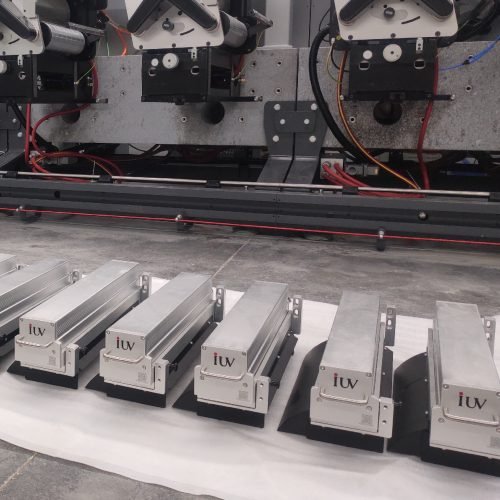
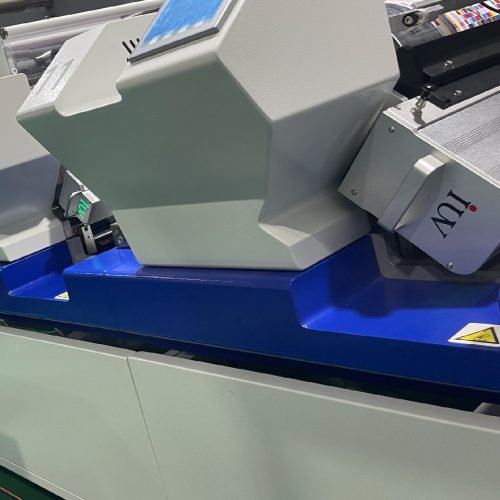
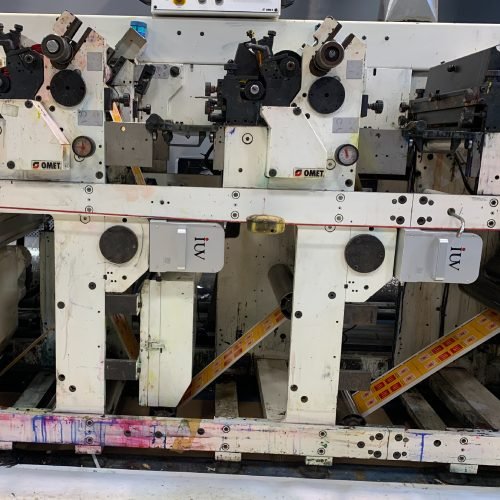
Integrating LED UV curing systems into existing or new print converting lines is becoming increasingly straightforward. Manufacturers offer modular systems that can be retrofitted onto older presses or specified as part of new equipment. The footprint of LED UV systems is often smaller than traditional UV units, which can be an advantage in pressrooms with space constraints.
The future of LED UV in print converting is bright. Ongoing research and development are focusing on even more efficient LED arrays, new ink formulations optimized for specific LED wavelengths, and the integration of advanced monitoring and control systems. We can expect to see further advancements in areas such as:
- Higher Power Density LEDs: Pushing curing speeds and enabling faster press speeds.
- Broader Wavelength Options: Catering to an even wider range of specialized ink and coating formulations.
- Smart Curing Systems: Utilizing sensors and feedback loops to optimize curing parameters in real-time, ensuring consistent quality and minimizing energy usage.
- Sustainability Focus: Continued emphasis on the environmental benefits of LED UV, aligning with global efforts to reduce energy consumption and waste in manufacturing.
The adoption of LED UV technology in modern print converting lines is not just a trend; it is a strategic move towards greater efficiency, reduced operational costs, and improved environmental performance. For printers looking to stay competitive and meet the evolving demands of the market, embracing these innovations is a clear path forward. The high-speed, low-energy capabilities of LED UV are unlocking new levels of productivity and quality across a spectrum of printing applications.