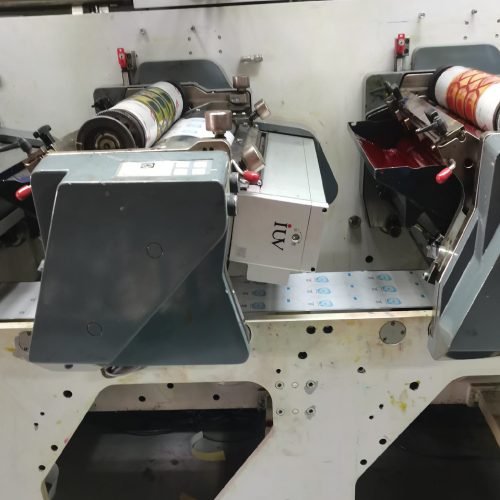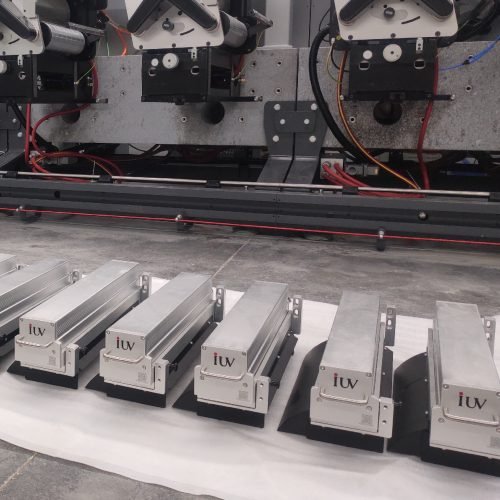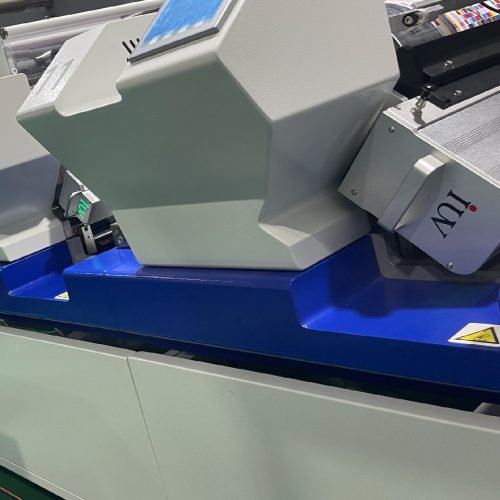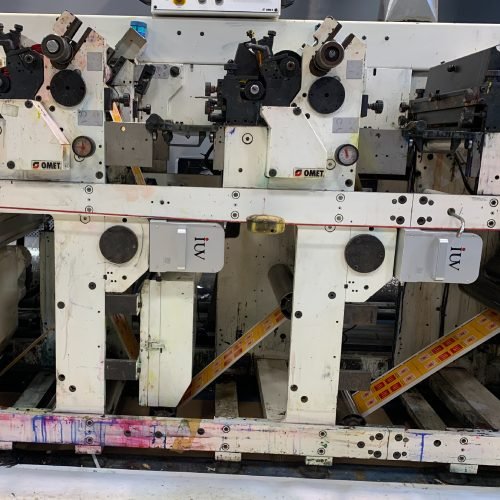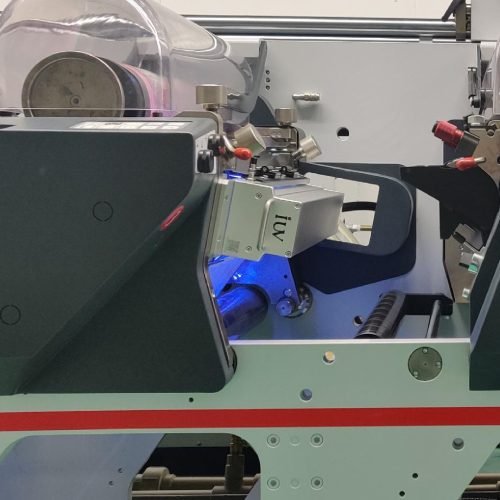
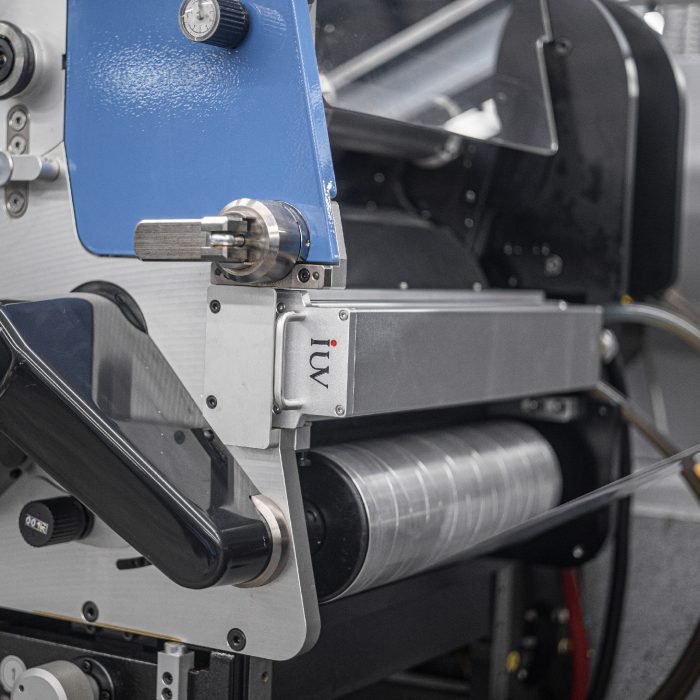
This review examines the real-world performance of LED UV curing in label press production. It focuses on label printing, flexography, gravure, and narrow-web formats. The discussion combines practical pressroom experience with the science of LED curing, UV chemistry, and substrate behavior. The goal is to help print operations decide how LED UV curing performs in day-to-day production and what optimization steps yield the best results.
Understanding LED UV Curing in Label Printing
LED UV curing uses high-intensity light in the ultraviolet range to polymerize UV-curable inks and coatings. LED emitters operate at specific wavelengths, typically around 395 to 405 nm. The advantages over traditional mercury lamps include instant on/off, lower heat input, and longer lamp life. In label production, LED UV can enable faster job changeovers, more substrate options, and quieter operation on press. However, real-world outcomes depend on ink formulation, substrate surface energy, and the curing system’s spectral matching to the ink chemistry.
Substrates, Inks, and Adhesion Considerations
- Substrates: Labels use paper, PE, PP, PET, foil, and specialty films. LED UV curing performs best when the substrate surface energy is properly prepared. Corona or plasma treatment often improves ink adhesion and print gloss on difficult plastics.
- Inks and coatings: UV-curable inks and clear coats must align with LED spectral output. In flexography and gravure, ink chemistry varies in viscosity, pigment load, and photoinitiator package. A good match minimizes cure-through and minimizes pinholes. For narrow-web applications, ink rheology and regulator settings must prevent accumulation on anilox or gravure cylinders.
- Adhesives: When printing labels, multiple adhesive systems may be used. In many cases, LED UV inks must cure without compromising adhesive performance. Some formulations require tailored photoinitiators to avoid uncured residues that can affect lamination or die-cut quality.
Flexographic (柔版) Label Printing with LED UV
- Cure speed and process latitude: In flexo, LED UV often delivers rapid cure at modest line speeds. The absence of heat helps protect sensitive substrates and reduces distortion in thin label films. Real-world practice shows that higher pigment load or clear coatings may demand longer exposure or higher dose. Operators tune lamp power and exposure time per job to maintain consistent gloss and color.
- Print quality: Edge definition, dot integrity, and color saturation depend on ink transfer, plate resolution, and anilox cell morphology. LED UV can preserve fine halftones when the ink chemistry is optimized for cure efficiency without excessive surface tack. Pinholes often correlate with trapped air or ink viscosity; pre-drying or tack management is sometimes needed for challenging press runs.
- Maintenance: LED arrays require minimal warmth, but their output can drift with cooling efficiency. Regular cleaning of the LED window and reflective surfaces helps maintain uniform cure. Power pairs and heat exchangers should be monitored to avoid hotspots that could affect substrate warping.
Gravure (胶板印刷) with LED UV
- Ink transfer and uniform curing: Gravure inks rely on engraved cylinders to deposit ink. LED UV can cure gravure inks quickly, reducing setoff and improving throughput. Cure uniformity across wide web requires careful tuning of lamp intensity along the web path. Ink film thickness and color density influence cure through performance.
- Dwell time considerations: Gravure often benefits from controlled dwell at cure stations. Too low a dose can leave surface tack or insufficient abrasion resistance. Too high a dose might cause gloss overbuild or yellowing in certain colorants. In practice, gravure lines with LED UV must balance dose with the substrate’s dimensional stability.
- Image stability: With LED UV, color stability over time remains strong, provided that inks are chemically compatible and photoinitiators are matched to the lamp spectrum. This is especially important for process colors and solid areas in high-visibility labels.
Narrow-Web Printing and UV LED
- Throughput benefits: Narrow-web presses frequently emphasize quick changeovers and tight register. LED UV’s fast start-up and low heat help minimize cooling downtime between jobs. This translates to shorter idle times and higher overall productivity for small-to-medium batches.
- Substrate spectrum: Narrow-web label stock diversity—from treated papers to plastic films—benefits from LED UV’s ability to cure at lower substrate temperatures. However, some high-gloss or matte coatings may demand adjustments in coating chemistry or ink load to avoid glare or orange-peel effects.
- Quality control: Inline metering and real-time color control are essential to maintain consistent appearance across jobs. Because LED UV can cure quickly, there is less time for post-press issues to manifest, but that also means pre-press optimization must be thorough.
Quality Metrics: Color, Gloss, and Cure Uniformity
- Color and contrast: A well-tuned LED UV system should deliver vibrant process colors with good solid coverage. Ink film thickness, pigment choice, and photoinitiator efficiency determine the maximum color depth achievable without compromising cure. Monitor color drift across runs and adjust exposure to compensate for lamp aging.
- Gloss uniformity: LED UV generally produces high gloss on many substrates, but it can accentuate surface defects if the ink film is uneven. Achieving uniform gloss requires consistent ink laydown, even anilox cell transfer, and stable press temperatures.
- Cure-through and haze: For label stock with print-through or back-side show-through, ensure the LED UV dose is sufficient to cure through the full ink film. In some cases, adding a clear overprint or a quick post-dry step reduces haze and improves durability.
- Surface tack and scuff resistance: Post-cure tack can trap dust or affect die-cutting efficiency. Ensure the cure dose and photoinitiator chemistry minimize residual surface tack. Proper cooling and printing speed alignment help achieve robust abrasion resistance.
Productivity, Energy, and Reliability
- Energy efficiency: LED UV systems consume energy more efficiently than traditional lamps, especially at steady-state operation. The absence of heat improves operator comfort and reduces thermal load on the pressroom. Over the life of a press, energy savings can be meaningful.
- Start-up times and uptime: Instant-on capability reduces warm-up delays. This is particularly valuable for quick-change label runs and short-run production. LED UV units typically have longer lifespans with lower maintenance than mercury lamps, lowering total cost of ownership.
- Downtime considerations: While LED LEDs require less frequent replacement, they still need periodic inspection of optics, cooling, and power supplies. Keep spare modules and a simple preventive maintenance schedule to avoid unexpected stoppages.
Practical Guidance for Adopting LED UV in Label Production
- Prepress alignment: Work closely with ink suppliers to ensure ink chemistry matches the LED spectrum. Validate cure through with a range of substrates and alphas. Test for pinholing, gloss variation, and color accuracy across target colors.
- Substrate preparation: Treat challenging surfaces to promote adhesion. Ensure surface energy is sufficient and that the substrate does not warp under cure conditions. For sensitive films, consider gradual heat management strategies or a light glue-dry step before die-cutting.
- Process calibration: Establish a baseline dose curve for each substrate and ink system. Record line speed, lamp intensity, and exposure time per job. Use inline sensors or spot checks to detect any shift in curing uniformity during long runs.
- Coatings and varnishes: If using UV topcoats or functional coatings, confirm compatibility with the LED UV system. Some coatings require higher dose or different photoinitiators to achieve full cure and maintain gloss.
- Quality control routines: Implement colorimeters and gloss meters at defined intervals. Track cure-through, adhesion, and scuff tests to catch deviations early. Maintain a log of press conditions for reproducibility.
Operational Pitfalls to Avoid
- Incompatibility with older inks: Some legacy UV inks may not respond well to LED wavelengths. Avoid integrating LED curing without validating with the specific ink system.
- Uneven cure due to lamp aging: LED arrays degrade gracefully, but output can drift. Regular calibration and maintenance prevent cure variance across the web.
- Temperature management: While LED UV produces less heat, edge heating can occur. Ensure adequate cooling of LED panels and surrounding components to protect substrate stability.
Real-World Takeaways and Trends
- Better substrate flexibility: LED UV expands the range of substrates usable in label production, including heat-sensitive films and some coated papers. This flexibility supports new label applications and coatings.
- Faster changeovers: The combination of low heat and quick cure reduces setup times and enables higher job-turnaround efficiency on flexo and narrow-web lines.
- Continuous improvement: Ink vendors are refining photoinitiator packages for LED wavelengths, improving cure speed at lower doses. This reduces energy use while preserving color fidelity and durability.
Conclusion
The real-world performance of LED UV curing in label press production shows clear benefits for color quality, productivity, and substrate versatility across label printing, flexography, gravure, and narrow-web formats. Achieving optimal results hinges on careful matching of ink chemistry to the LED spectrum, thoughtful substrate preparation, and disciplined pressroom calibration. When these elements align, LED UV curing delivers robust cure, strong adhesion, and consistent print quality, while contributing to lower energy consumption and shorter makeready times. For label producers exploring modernization, LED UV represents a practical path to higher efficiency and broader substrate capability without sacrificing print reliability.