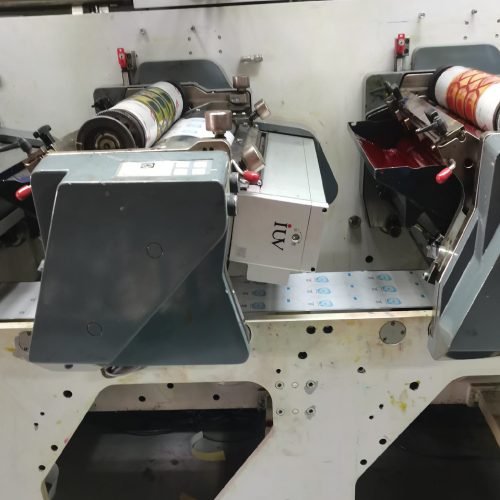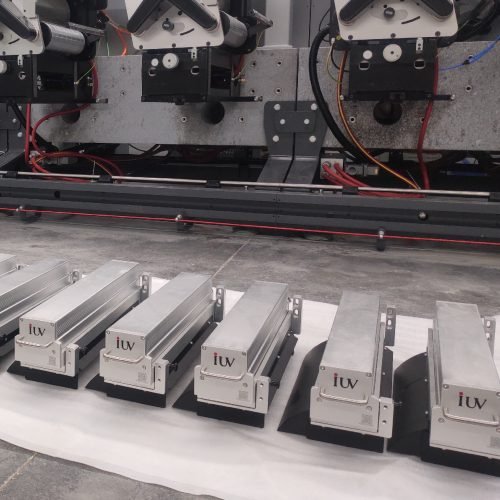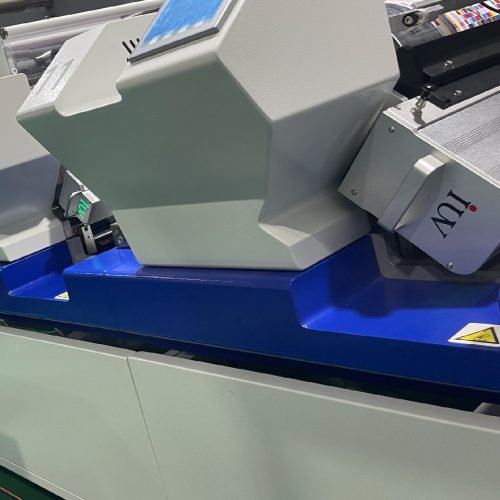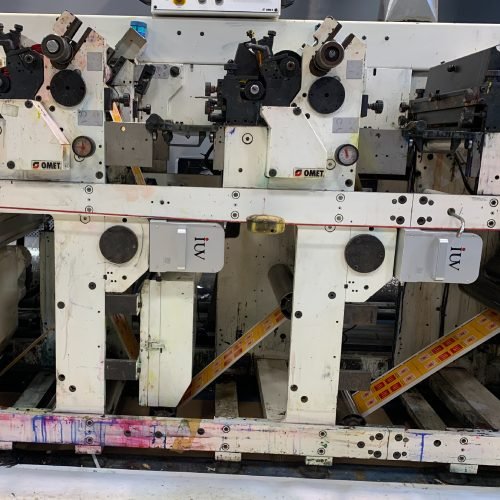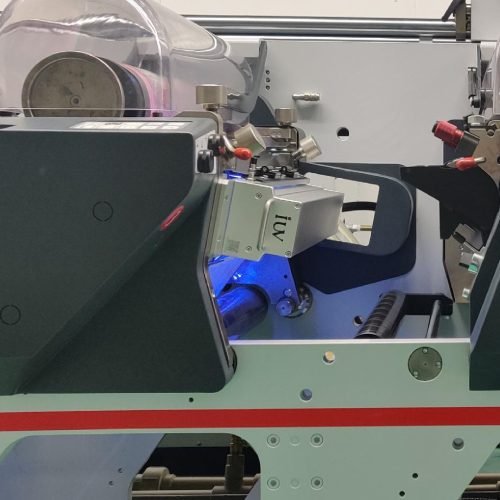
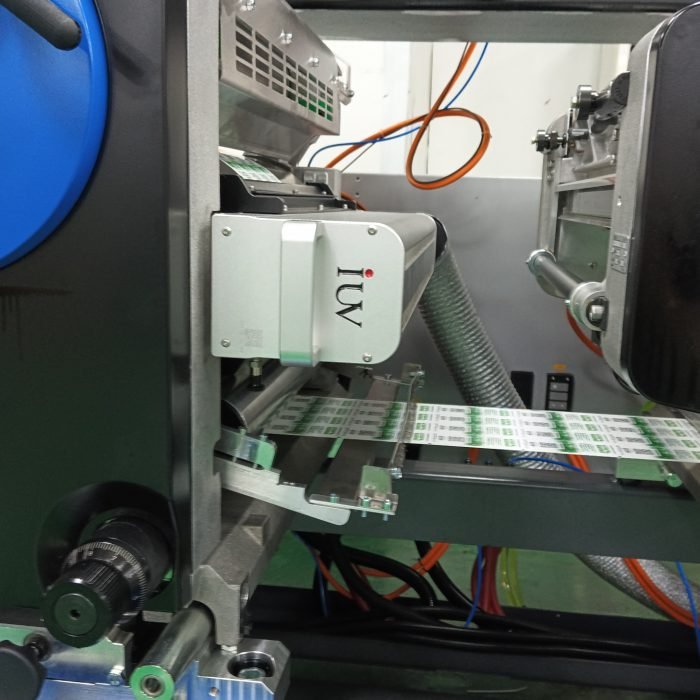
Narrow web label presses rely on rapid and reliable curing to maintain throughput, ink quality, and substrate stability. UV curing is central to this performance, enabling immediate handling of finished labels and compatibility with diverse substrates. Among UV options, traditional mercury arc lamps and modern UV-LED systems dominate. Each method brings distinct advantages and trade-offs for flexographic printing, offset-style plate printing, and narrow web operations. This article compares common UV curing methods, focusing on label printing, flexography, offset, and the practical implications for narrow web presses.
UV Curing Fundamentals for Label Printing
Understanding cure mechanisms helps explain why different UV sources behave differently on the press. UV-curable inks rely on photoinitiators that start free-radical or cationic polymerization when exposed to specific wavelengths. The result is rapid polymer formation, reduced tack, and improved abrasion resistance. In narrow web work, cure quality must meet dot fidelity, white ink opacity, and overprint performance.
Key distinctions among UV sources:
- Mercury arc lamps emit broad UV energy across a wide spectrum with strong output in the 200–400 nm range. They offer high peak irradiance and deep cure potential.
- UV-LED systems use arrays of light-emitting diodes, typically around 365–405 nm, with focused spectral output. They run cooler, start instantly, and consume energy more efficiently.
- Inks and coatings must be formulated or adjusted to respond to the source. LED-curable inks often rely on initiators optimized for 385–405 nm, while some legacy inks were designed for broad-spectrum mercury lamps.
- Substrates and surface energy play a major role. Heat-sensitive films, thin liners, and layered laminates benefit from lower heat input and cleaner in-line handling with LED-UV.
Common UV Curing Methods in Narrow Web Presses
Mercury Arc Lamp UV Curing
- Characteristics: High radiant power, fast cure for heavy coverage, strong for white inks and pigmented coatings.
- Benefits: Mature, widely compatible with many UV inks, robust curing on fast web speeds, good overprint and adhesion performance on diverse materials.
- Drawbacks: Higher energy consumption, substantial heat input, ozone generation potential, more frequent lamp maintenance and replacement, larger footprint, slower start-up times, and higher capital cost for energy infrastructure.
UV-LED Curing
- Characteristics: Narrow spectral output with low heat, instant on/off, longer lamp life, no mercury, and simpler disposal.
- Benefits: Gentle on heat-sensitive substrates (thin films, label stock with heat-sensitive coatings), precise process control, potential energy savings, safer maintenance, and compact integration into existing printers.
- Drawbacks: Inks and coatings must be LED-compatible; initial investment for high-power LED arrays can be substantial; some very UV-dense coatings may require higher irradiance or longer exposure, and uniform cure across thick coatings or heavy depositions can still challenge a single LED module.
Hybrid and emerging approaches
- Some presses use hybrid configurations that blend LED-UV with residual mercury capabilities or staged exposure to balance cure depth and throughput.
- Advanced cure management may pair LED-UV with in-line sensors that monitor cure uniformity, allowing real-time adjustments to lamp intensity, exposure time, or pass count.
Technical Comparison: Throughput, Heat, and Cure Uniformity
Throughput and cure uniformity are the most critical performance metrics for narrow web label lines.
- Throughput: Mercury systems deliver very high curable power, which can sustain aggressive press speeds, especially with dense white and opaque inks. LED-UV platforms can match throughput with multiple LED modules and longer dwell times, but the exposure strategy may need to be optimized for peak efficiency.
- Heat management: Mercury lamps generate noticeable heat, which can affect substrate dimensional stability, curl, and adhesive performance. LED-UV produces minimal heat, reducing substrate distortion and allowing thinner films or more sensitive facestocks.
- Cure uniformity: Mercury lamps provide uniform radiant energy across a wide footprint if the lamp geometry and reflectors are well designed. LED arrays require careful lamp-to-web distance, lensing, and module placement to avoid hot spots or undercured zones. In narrow web lines, tending to mid-web and edge cure uniformity is essential for consistent overprint, laminating, and finishing.
Ink and Substrate Compatibility
- Flexography (flexo): UV-curable inks suit flexo well, with rapid cure, good adhesion to synthetic films, and robust performance on labels. LED-UV works well when ink systems are formulated for narrow-band spectrum and when substrate heat sensitivity is a factor.
- Offset plate printing (胶板印刷): UV-curable offset inks exist but are less common in routine label production. When present, they demand compatible press chemistry, precise plate design, and careful ink transfer control. The higher energy demands of some UV blends can affect paper-based substrate stability and dot fidelity in plate-based workflows.
- Narrow web substrates: PET, PP, PE films, metallized foils, and paper stocks each interact differently with UV systems. LED-UV tends to be gentler on delicate facestock and liners, reducing curling and blocking in post-processing. Mercury systems can cure thicker coatings and high-build white inks more easily, but require substrate temperature monitoring.
Substrate and Adhesive Interactions
- Adhesive behavior: UV curing interacts with the adhesive chemistry used for labels. The cure depth and surface tack influence liner release, die-cutting, and matrix stripping. Substrates with low surface energy may need corona treatment or primer to ensure ink adhesion and print durability.
- Coatings and varnishes: Overprint varnishes and spot coatings require reliable cure to avoid pick-off during finishing. LED-UV’s precise control is beneficial for spot coats, but the chosen resin chemistry must respond to the LED spectrum to avoid gloss variation or yellowing.
- White and high-opacity inks: Achieving solid whites on transparent or colored films is driven by pigment loading and cure depth. Mercury systems often deliver robust curing for dense whites; LED-UV requires ink systems specifically tuned for LED photoinitiators and may need higher exposure or multiple passes.
Process Considerations for Flexo, Offset, and Letterpress in Narrow Web
- Flexo printing: UV curing is standard in flexo narrow web. LED-UV enables more compact systems, reduces heat, and supports leaned web transport. However, ink formulation and running parameters must align with the chosen curing spectrum to prevent pinholes and coalescence during high-speed printing.
- Offset/Plate printing: If using UV-curable offset inks, the curing system must synchronize with plate transfer dynamics and dampening control. The longer ink-laying and neutral sheet handling in offset-like processes can complicate cure uniformity, making spectral compatibility and exposure geometry critical.
- Letterpress: For UV-curable letterpress inks, the emphasis is on precise impression, dot definition, and immediate post-process handling. LED-UV might be advantageous for fine detail and reduced substrate heating, but cure depth must be balanced to prevent tack on textured surfaces.
Quality and Reliability Considerations
- Quality: Both systems can deliver excellent resolution and color stability with properly formulated inks and well-tuned exposure. LED-UV often contributes to less warping and improved edge definition on sensitive films.
- Reliability: LED-UV units typically offer longer service life and lower maintenance due to no mercury tubes and less mechanical wear. Mercury lamps require periodic lamp changeouts and ballast maintenance, which can impact uptime if not planned.
- Process monitoring: In-line cure monitoring, using actinic radiometry or sensor feedback, helps ensure consistent cure across the web. This is especially valuable on narrow web lines where web tension and printer geometry can amplify slight variances.
Cost of Ownership and Environmental Impact
- Capex and opex: Mercury systems may have lower initial capital costs, but higher ongoing energy use and maintenance. LED-UV modules cost more upfront but typically incur lower operating costs due to energy efficiency and reduced maintenance.
- Environmental footprint: LEDs avoid mercury and reduce hazardous waste concerns. Their cooler operation also lowers energy-related emissions and helps with regulatory compliance on shop floor emissions and worker safety.
- Downtime and maintenance: LED-UV generally reduces downtime associated with lamp changes and re-ignition checks. Mercury systems can experience longer unplanned downtime due to lamp failures in high-speed environments.
Practical Recommendations for Narrow Web Label Converters
- Assess substrate and ink needs first: Choose LED-UV for heat-sensitive films and precise curing on dense, image-rich labels. If you work with very thick coating layers or challenging pigmented whites, evaluate mercury options or hybrid configurations.
- Align ink chemistry with spectrum: Ensure inks and coatings are formulated for the selected UV source. For LED-UV, confirm that photoinitiators respond efficiently to the chosen wavelength.
- Plan for cure uniformity: Use multiple LED modules or a combination of LED banks to achieve even cure across the web width. Consider in-line cure sensors and exchangeable lenses or reflectors to optimize uniformity.
- Weigh total cost of ownership: Compare not just lamp price, but energy, maintenance, waste handling, and potential downtime. LED-UV often wins on total cost of ownership over the life of the press.
- Test and validate: Run side-by-side trials with representative label jobs. Evaluate dot gain, back-trap, solvent resistance, scuff resistance, and post-print finishing compatibility.
- Consider future scalability: If plan includes more opaque whites or matte finishes, verify that the cure system can support new inks and coatings without major hardware changes.
Future Trends in UV Curing for Narrow Web
- Advanced LED formulations: New photoinitiators extend LED-UV efficacy into broader parts of the spectrum, improving cure depth and robustness for a wider range of coatings.
- Higher-power LED modules: Custom driver electronics and more efficient optics are increasing usable irradiance without adding heat.
- Real-time cure feedback: Automated inline measurement and adaptive exposure control will become more common, ensuring consistent quality across long production runs.
- Hybrid systems: Some converters adopt hybrid approaches to blend the strengths of both sources, balancing throughput with cure quality for demanding label applications.
Conclusion
Choosing the right UV curing method for narrow web label presses hinges on substrate tolerance, ink chemistry, and production goals. Mercury lamp curing offers strong depth and proven performance, especially for dense whites and heavy coatings. UV-LED curing provides substantial advantages in energy efficiency, heat management, and environmental impact, with ongoing improvements in ink compatibility and cure uniformity. For flexo, offset-based plate printing, and label-oriented narrow web lines, the decision should be driven by a careful evaluation of cure requirements, substrate behavior, and total cost of ownership. With thoughtful system selection and rigorous in-line validation, modern UV curing can deliver high-quality labels, faster turn times, and more sustainable production on narrow web platforms.