In the demanding world of flexographic label printing, precision and efficiency are paramount. Every step in the production process, from ink formulation to final finishing, plays a critical role in delivering high-quality labels that meet client expectations. One area where improvements can lead to significant gains in both quality and cost reduction is UV curing. Specifically, understanding and implementing proper UV curing techniques can dramatically reduce rework and scrap in flexographic label production.
This article delves into the technical intricacies of UV curing, its impact on various printing methods like flexographic printing, offset printing, and narrow web printing, and how mastering this technology translates into tangible benefits for label manufacturers.
The Foundation: Understanding UV Curing Technology
UV curing, or ultraviolet curing, is a photochemical process that uses high-intensity ultraviolet light to initiate a rapid photopolymerization reaction. This reaction turns liquid ink, coating, or adhesive into a solid, cross-linked film almost instantaneously. The advantages over conventional thermal drying are numerous: speed, reduced energy consumption, lower VOC emissions, and the ability to print on heat-sensitive substrates.
The core components of a UV curing system include:
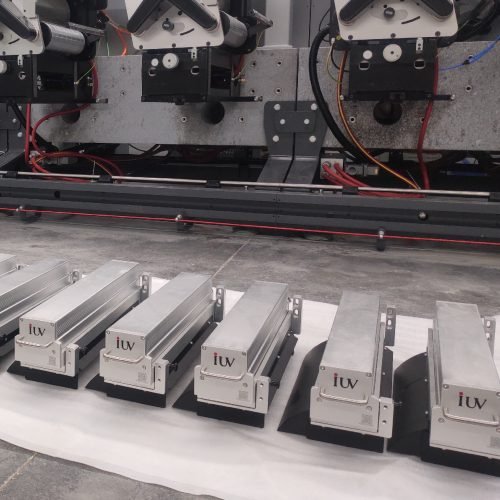
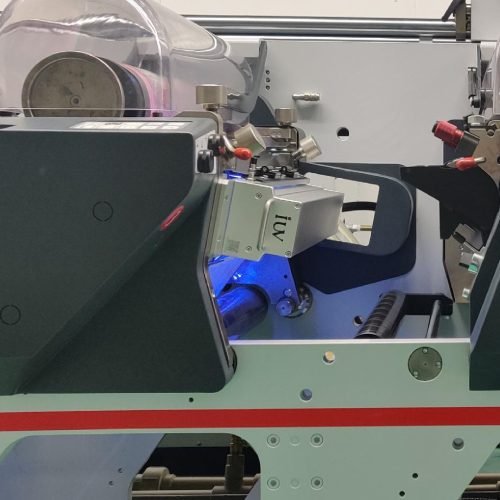
- UV Lamps: Traditionally, mercury vapor lamps were the standard. However, the industry is increasingly shifting towards LED UV curing. LED systems offer a more focused spectrum of UV light, longer lifespan, lower heat output, and reduced energy consumption.
- Reflectors: These direct the UV energy efficiently onto the substrate.
- Power Supplies: These provide the necessary electrical power to the lamps.
- Ancillary Equipment: This includes cooling systems, shutter mechanisms, and control systems.
The effectiveness of UV curing hinges on several critical parameters:
- UV Irradiance: The intensity of UV light delivered to the surface, measured in Watts per square centimeter (W/cm²). Higher irradiance generally leads to faster and more complete curing.
- UV Dose: The total amount of UV energy delivered to the surface over time, calculated by multiplying irradiance by exposure time (Joules per square centimeter, J/cm²).
- UV Spectrum: The specific wavelengths of UV light emitted by the source. Different inks and coatings are formulated to cure optimally under specific wavelength ranges.
Flexographic Printing and the UV Curing Nexus
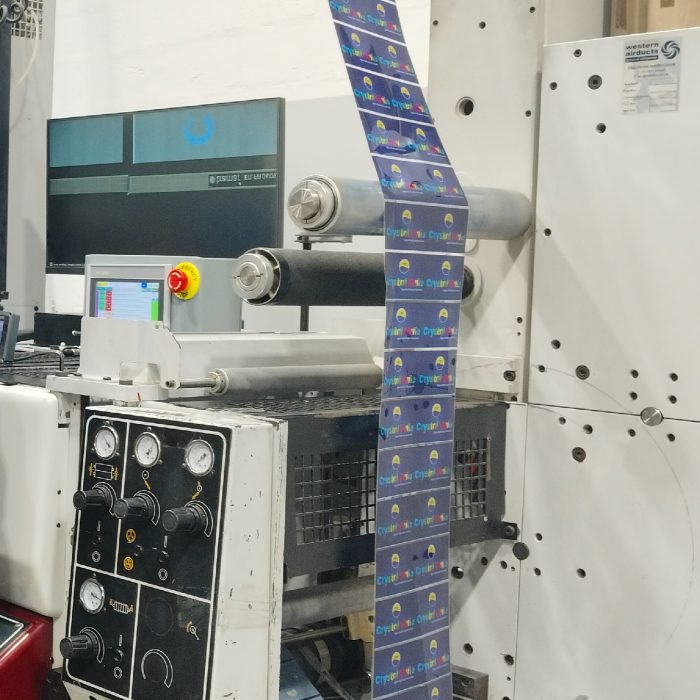
Flexographic printing is a dominant force in label production, especially for narrow web printing. Its inherent flexibility allows it to print on a wide variety of substrates, including films, foils, and papers. When combined with UV-curable inks and coatings, flexography becomes an incredibly versatile and efficient printing method.
However, the success of UV-cured flexographic printing is directly tied to the quality of the curing process. Incomplete or improper UV curing can manifest in several ways, leading directly to rework and scrap:
- Ink Smudging and Transfer: If the ink isn’t fully cured, it remains soft. This can lead to smudging during subsequent printing stations, die-cutting, or rewinding. Labels may also transfer ink to the back of adjacent labels on the roll, creating a costly mess.
- Poor Adhesion: Incomplete cross-linking can result in poor adhesion of the ink or coating to the substrate. This can cause delamination, cracking, or rub-off issues during handling, shipping, or application.
- Substrate Damage: Excessive heat generated by older UV lamp technologies can warp or distort heat-sensitive substrates, especially those used in narrow web printing. This leads to registration issues and ultimately, unusable labels.
- Chemical Reactivity: Partially cured inks may still contain uncured monomers, which can migrate and cause issues with food packaging safety or affect the performance of the final product. This is a critical concern for many label applications.
Offset Printing and UV Curing: Enhanced Durability
While flexography is king for many labels, offset printing, particularly for sheet-fed and some narrow web applications, also benefits immensely from UV curing. UV-cured offset inks offer superior rub resistance, chemical resistance, and gloss compared to conventional inks.
In offset, improper UV curing can lead to:
- Blocking: Labels sticking together in stacks or rolls due to uncured ink.
- Ink Transfer Issues: Similar to flexo, ink can transfer to undesired surfaces.
- Reduced Durability: The enhanced protective properties of UV-cured offset inks are lost if curing is insufficient, negating the benefit of using UV technology.
The LED UV Advantage in Narrow Web and Beyond
The transition from traditional mercury vapor lamps to LED UV curing has been a game-changer, particularly for narrow web printing and high-speed label production. LED UV offers:
- Specific Wavelengths: LEDs emit a narrow band of UV light, allowing formulators to create inks and coatings specifically tuned for optimal curing, leading to more consistent results.
- Lower Heat Output: This is crucial for heat-sensitive substrates common in label printing, significantly reducing the risk of substrate distortion and associated scrap.
- Instant On/Off: Unlike mercury lamps that require warm-up and cool-down times, LEDs can be switched on and off instantly. This allows for better control of UV exposure and can prevent premature curing in the print heads or anilox rolls, reducing ink waste.
- Consistent Output: LED systems maintain their UV output over their lifespan, unlike mercury lamps which degrade over time, leading to more predictable and repeatable curing.
Strategies for Optimal UV Curing to Minimize Rework and Scrap
Achieving optimal UV curing requires a systematic approach, involving collaboration between ink suppliers, press manufacturers, and the printing operation itself.
- Ink and Substrate Compatibility:
- Always use UV-curable inks and coatings specifically formulated for your printing process (flexo, offset) and substrate.
- Consult ink manufacturers to understand the curing requirements (wavelength, irradiance, dose) for their products.
- Test new inks and substrates together to ensure compatibility and proper curing performance before full production runs.
- UV System Calibration and Maintenance:
- Regularly measure UV irradiance using a calibrated radiometer. Track these readings over time to identify any system degradation.
- Ensure the UV system is clean, with no dirt or debris on the lamps or reflectors that could block UV light.
- For LED systems, ensure cooling systems are functioning correctly to maintain optimal performance and lifespan.
- Verify the spectral output of your UV lamps (especially important when switching between mercury and LED or between different LED types) to match ink requirements.
- Process Control on the Press:
- Drying Power (UV Intensity): Adjust the power output of the UV lamps based on press speed and ink coverage. Higher ink coverage requires more UV energy.
- Drying Speed (Exposure Time): This is primarily controlled by the press speed and the number of UV lamps. For a given press speed, ensure sufficient lamp units are engaged.
- Substrate Position: Ensure the substrate is consistently positioned directly under the UV lamps. Any deviation can lead to uneven curing.
- Press Speed: While higher speeds are desirable for productivity, ensure the UV system can deliver adequate energy at those speeds. If not, re-evaluate speed or consider upgrading the UV system.
- Advanced Curing Techniques:
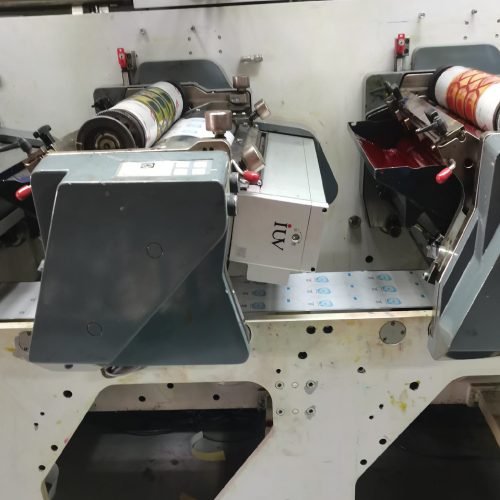
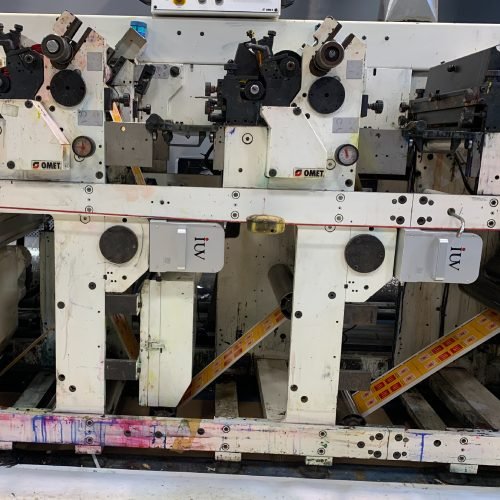
- Inter-deck UV: Using UV curing units between print stations is crucial for multi-color jobs. This prevents wet ink from offsetting onto the next printing unit, which is a common cause of defects.
- UV Coatings: Applying UV-curable coatings (varnishes, laminates) provides protection and enhances aesthetics. Proper curing of these coatings is as important as ink curing for final product quality.
- Hybrid Systems: Combining UV curing with other drying methods (e.g., IR drying for certain inks or primers) can optimize performance on complex jobs.
- Troubleshooting and Quality Control:
- Implement a robust quality control process to identify potential curing issues early. This includes rub tests, adhesion tests, and visual inspections for tackiness or smudging.
- Train operators on the importance of UV curing and how to recognize and report issues.
- Maintain detailed records of UV system performance, ink batches, press speeds, and any quality issues encountered. This data is invaluable for continuous improvement.
The Economic Impact: Reduced Rework and Scrap
The financial benefits of mastering UV curing in flexographic label production are substantial.
- Reduced Material Waste: Less ink, coating, substrate, and cleaning materials are wasted when labels are produced correctly the first time.
- Lower Labor Costs: Rework often involves time-consuming manual processes like reprinting, stripping, or hand-correction, which are expensive. Minimizing rework frees up skilled labor for more productive tasks.
- Improved Throughput: When jobs run smoothly without the need for rework, presses can operate at higher utilization rates, increasing overall production capacity and profitability.
- Enhanced Customer Satisfaction: Delivering high-quality, defect-free labels consistently builds customer trust and loyalty, leading to repeat business and positive referrals.
- Reduced Environmental Impact: Less waste means a smaller environmental footprint, which is increasingly important for businesses and their clients.
Conclusion: Investing in UV Curing Expertise
In the competitive landscape of label printing, especially within the narrow web sector, efficient and high-quality production is not a luxury but a necessity. UV curing technology offers a powerful means to achieve these goals. By understanding the science behind UV curing, implementing best practices for flexographic printing and offset printing, and embracing advancements like LED UV curing, label manufacturers can significantly reduce rework and scrap. Investing in proper training, meticulous calibration, and continuous monitoring of UV curing systems is an investment that pays dividends in cost savings, increased efficiency, and superior product quality. Mastering UV curing is, quite simply, mastering profitability in modern label production.