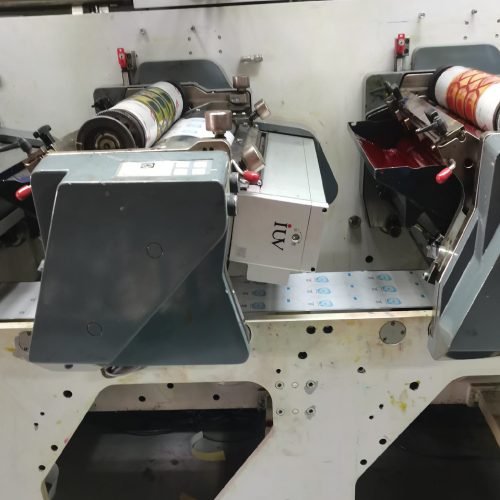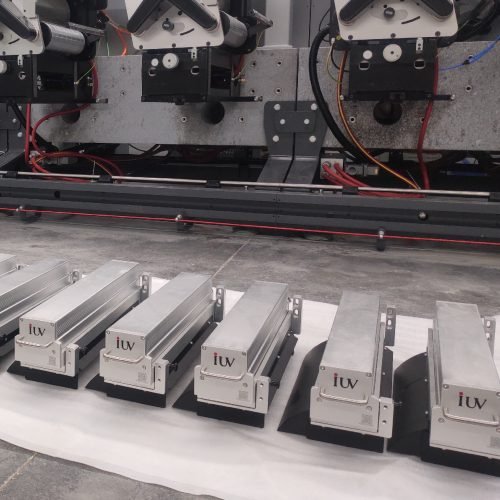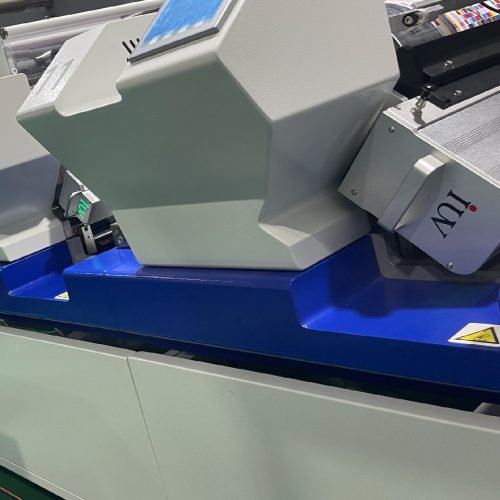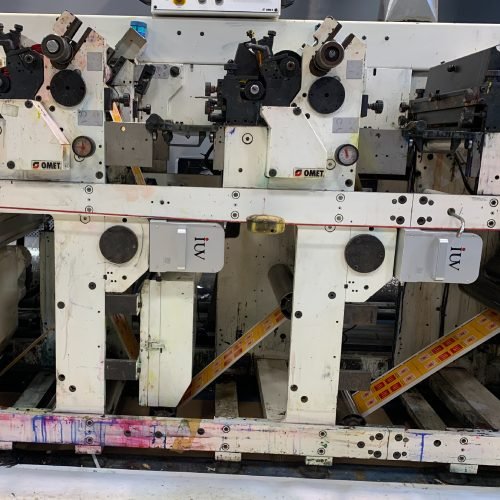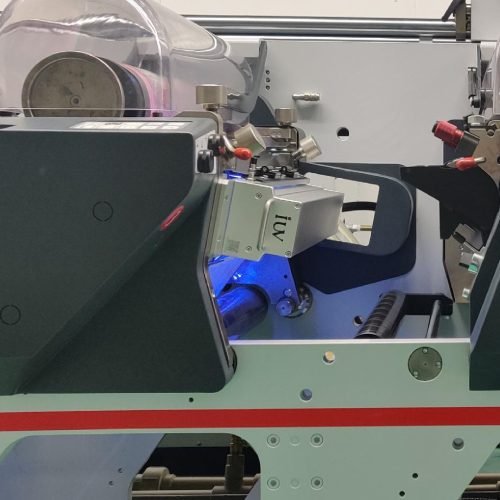
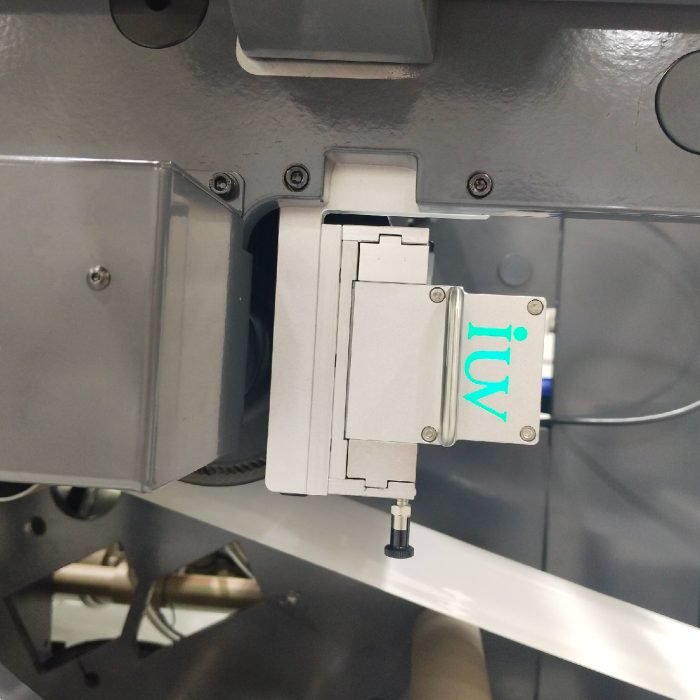
The transition from traditional mercury vapor lamps to LED UV technology represents a massive shift in narrow-web flexographic printing. For engineers managing high-speed production lines, the core challenge lies in maintaining consistent cure quality while press speeds fluctuate. Variable-speed flexo presses demand a curing system that is both responsive and stable. This guide explores the technical integration of LED UV systems into modern label and packaging workflows.
The Physics of High-Speed Polymerization
In traditional UV curing, mercury lamps emit a broad spectrum of light. This includes UVC, UVB, and UVA, along with a significant amount of infrared (IR) heat. LED UV systems focus their energy into a narrow band, typically 385nm or 395nm. This concentrated output targets specific photoinitiators within the ink.
For a flexo press running at 150 meters per minute (m/min) versus 300 m/min, the time the ink spends under the light changes. This is the “dwell time.” Engineers must ensure the ink receives enough energy to complete polymerization at peak velocity. If the press slows down, the energy delivery must scale down instantly to prevent substrate damage. LED technology excels here because it allows for instantaneous power modulation.
Matching Output to Substrate Velocity
A variable-speed flexo press requires a curing system that communicates directly with the press PLC (Programmable Logic Controller). This integration allows the LED intensity to follow the speed curve of the press.
We measure UV energy in two ways: Irradiance and Dosage. Irradiance is the peak intensity of the light hitting the surface (measured in W/cm²). Dosage, or energy density, is the total energy delivered over time (measured in mJ/cm²). When a press accelerates, the dosage naturally drops because the dwell time decreases. To compensate, the LED system increases its irradiance.
Modern LED drivers respond in milliseconds. This is a significant upgrade over mercury lamps, which take several minutes to warm up or cool down. This responsiveness ensures that the first label is cured just as effectively as the ten-thousandth label.
Narrow-Web Label Printing and Heat Sensitivity
Label printing often involves heat-sensitive films like PE, PP, and thin BOPP. Excessive heat during the curing process causes these materials to shrink, warp, or lose register. Traditional UV lamps generate high IR levels, requiring complex chill rollers or shutters.
LED UV systems are “cold” curing sources. They do not emit IR radiation. The heat generated is confined to the back of the LED chips, which is managed through internal water or air cooling. By keeping the substrate cool, engineers can run thinner, more cost-effective films. This capability also reduces the stress on the press’s tension control systems. Shrinkage issues become a thing of the past.
Ink Chemistry for LED Flexo and Offset Systems
Transitioning to LED requires a shift in ink chemistry. LED-curable inks are formulated with photoinitiators that peak at the 395nm wavelength. This differs from standard UV inks designed for broad-spectrum mercury light.
In flexo applications, the ink film is relatively thin. Oxygen inhibition can sometimes interfere with the surface cure, leading to a “tacky” finish. High-power LED arrays overcome this by delivering high peak irradiance. In narrow-web offset printing, the ink film is even thinner. The precision of LED curing ensures that these thin layers reach full through-cure. This is vital for low-migration applications in food packaging, where uncured monomers are a strict safety concern.
System Integration and PLC Communication
For an engineer, the mechanical installation of an LED array is only half the job. The software integration is where the real performance is found. The LED system should receive a 0-10V or 4-20mA signal from the press. This signal tells the LED power supply exactly how much output is needed based on the current tachometer reading.
Advanced setups use a “closed-loop” feedback system. Sensors monitor the actual UV output and adjust the power to maintain a constant dosage regardless of the diode’s age. This level of control is impossible with older mercury systems. It allows for a repeatable process that meets the high standards of pharmaceutical and high-end cosmetic labeling.
Thermal Load Management on Thin Films
While LED UV does not emit IR, the process of polymerization itself is exothermic. This means the chemical reaction creates a small amount of heat. On very thin films, even this chemical heat needs management.
Engineers should evaluate the cooling method of the LED head. Water-cooled systems are generally more compact and efficient for wide-format or high-speed narrow-web presses. They keep the LED chips at a constant temperature, which extends their lifespan and ensures stable output. Air-cooled systems are easier to install but may be limited by the ambient temperature of the pressroom. For variable-speed operations, water cooling offers the most consistent results across the entire speed range.
Maintenance Protocols for Peak Irradiance
One of the biggest advantages of LED UV is the reduction in maintenance. Mercury lamps lose 10% to 15% of their output within the first few hundred hours. They require frequent cleaning of reflectors and bulb replacements every 1,000 to 2,000 hours.
LED arrays are rated for 20,000 to 30,000 hours. However, this does not mean they are maintenance-free. Engineers must keep the protective glass window clean. Ink mist and dust can settle on the window, blocking the UV light and causing “soft” cures. A daily wipe-down with a lint-free cloth and approved solvent is standard. Additionally, the cooling system (whether air or water) must be checked for flow and cleanliness to prevent the diodes from overheating.
Operational Efficiency and Energy Savings
The financial argument for LED UV in flexo printing is tied to energy consumption. Mercury lamps stay on “standby” even when the press is stopped, consuming 20% to 30% of their full power. LED systems are “instant on/off.” If the press stops for a roll change, the LEDs turn off completely.
This reduces energy bills by up to 70% in many narrow-web facilities. Furthermore, the lack of ozone production eliminates the need for expensive exhaust ducting and blowers. This simplifies the pressroom layout and reduces the load on the HVAC system. For a facility running multiple narrow-web presses, these savings contribute directly to a faster ROI.
Final Technical Considerations
When specifying an LED UV system for a variable-speed flexo press, engineers must look beyond the price tag. The focus should be on the irradiance profile and the reliability of the driver electronics. A system that cannot sync perfectly with the press speed will lead to wasted material and inconsistent quality.
Check the “form factor” of the LED head. Narrow-web presses often have limited space between print stations. A compact LED design allows for easier retrofitting on older machines. Also, consider the modularity of the system. Can individual LED segments be replaced, or must the entire head be swapped? Modular designs offer lower long-term repair costs.
By moving to LED UV, printing plants gain a level of process control that was previously unattainable. The ability to match energy delivery to press speed ensures that every meter of substrate is cured perfectly. This stability is the foundation of modern, high-speed label and flexible packaging production. Utilizing these insights will help engineers optimize their lines for maximum throughput and zero defects.