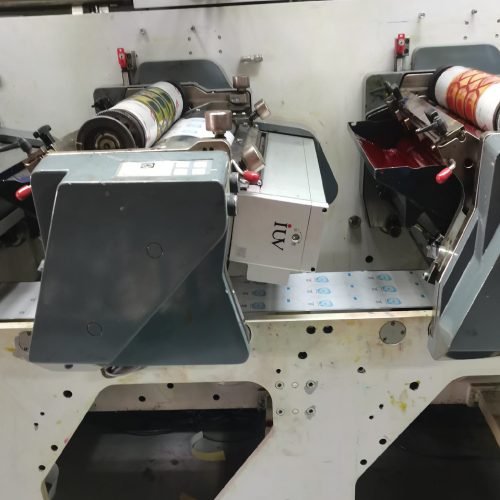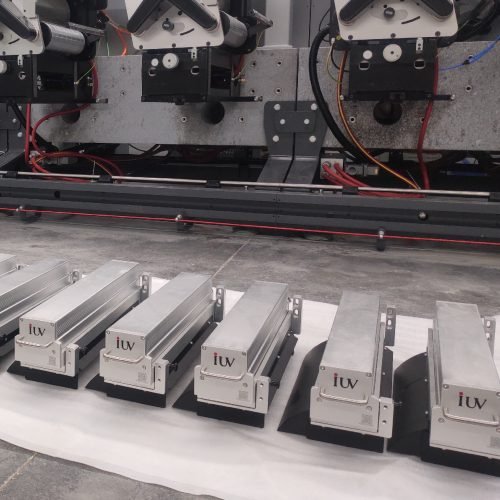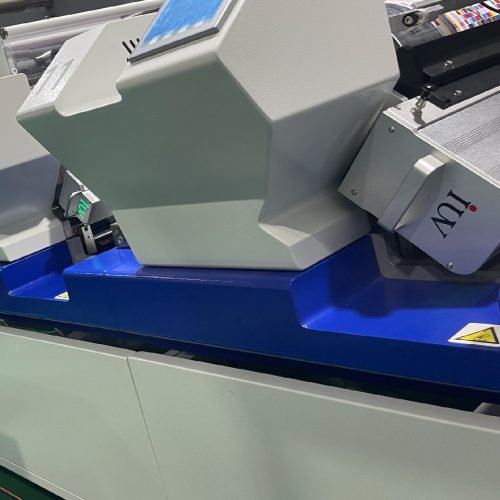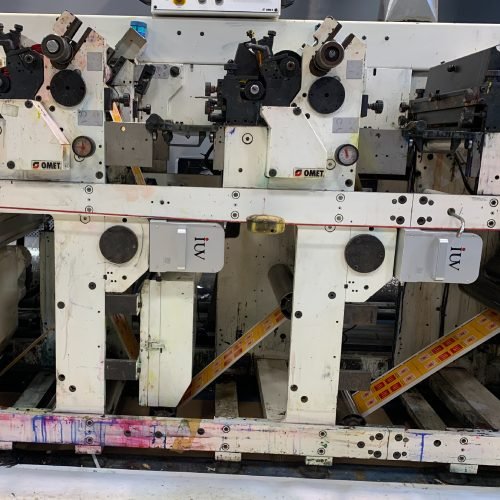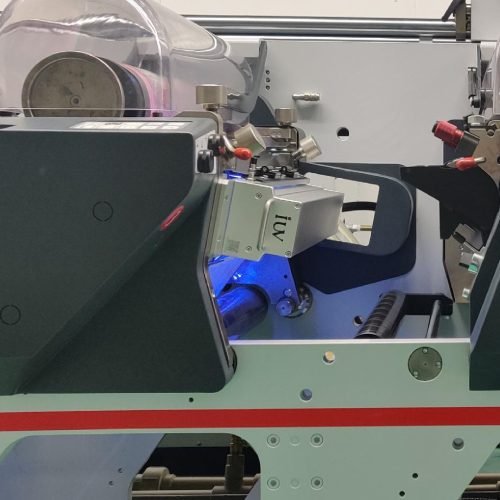
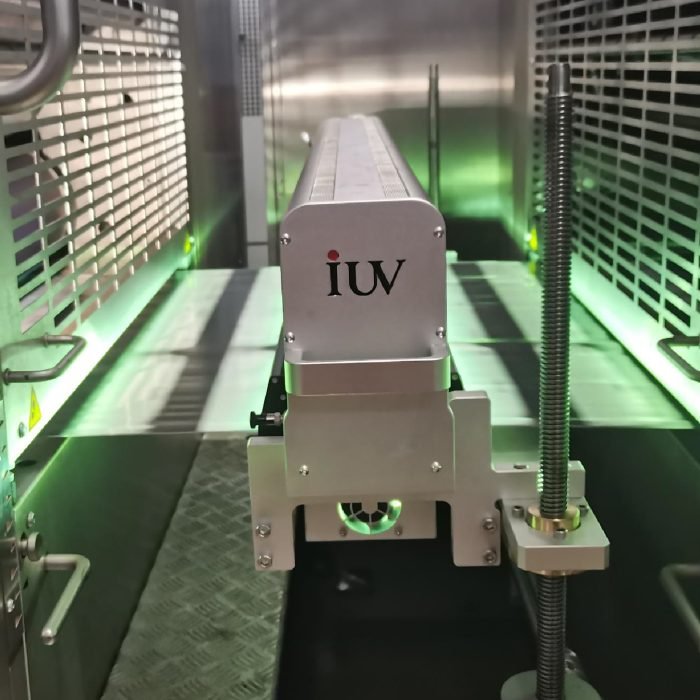
Printing large, high-density solid areas presents a unique set of challenges in the narrow-web and label industry. Achieving a smooth, fully cured finish on high-coverage designs requires a deep understanding of how light interacts with chemistry. Traditional mercury arc lamps have served the industry for decades, but LED UV technology has changed the physics of the curing process. This review explores the technical mechanics of LED UV curing specifically for high-coverage solid ink applications in flexo, offset, and narrow-web environments.
The Physics of Deep Penetration in Solid Inks
High-coverage solids contain high pigment concentrations. These pigments act as a physical barrier to UV light. In a standard CMYK process, the ink film is relatively thin. However, when printing brand-specific spot colors or heavy solids, the ink deposit increases significantly.
Conventional mercury lamps emit a broad spectrum, including UVC, UVB, and UVA. While UVC handles the surface cure, its short wavelength prevents it from penetrating deep into thick ink layers. LED UV systems typically operate at 385nm or 395nm. These longer UVA wavelengths possess a superior ability to travel through dense pigment structures. For high-coverage solids, this means the “bottom-through” cure is more reliable. Without this deep penetration, the ink may stay liquid at the substrate interface, leading to poor adhesion and “tape test” failures despite the surface appearing dry.
Managing Oxygen Inhibition in LED Systems
One of the primary hurdles with LED curing is the absence of UVC radiation. In traditional UV curing, short-wave UVC helps overcome oxygen inhibition at the ink surface. Oxygen molecules naturally migrate into the ink surface and terminate the free-radical polymerization process. This often results in a tacky surface or “greasy” feel on high-coverage solids.
To combat this in narrow-web flexo and offset printing, LED systems rely on high irradiance. By delivering a massive “hit” of photons in a concentrated area, the system overwhelms the oxygen molecules at the surface. Modern LED lamp designs use specialized optics to focus this intensity. For engineers, choosing a lamp with a high peak irradiance (measured in W/cm²) is often more vital for solid coverage than the total energy dose (measured in mJ/cm²).
Flexographic Ink Dynamics and High-Volume Anilox
In narrow-web flexo printing, solid areas are often achieved using high-volume anilox rolls. A higher BCM (billion cubic microns) count puts more ink on the substrate. While this produces vibrant colors, it complicates the curing cycle.
When switching to LED, the ink formulation must match the lamp’s output wavelength. High-coverage solids require a photoinitiator package that maximizes the 395nm peak. If the ink is not optimized, the center of a wide solid area might exhibit “orange peel” textures. This happens when the surface cures faster than the body of the ink, causing shrinkage stress. Engineers must balance press speed with lamp power to ensure the polymerization happens uniformly through the entire ink film thickness.
Offset Printing: Tack and Heat Management
Offset printing utilizes high-viscosity inks that behave differently than flexo fluids. In high-coverage offset applications, heat buildup is a significant concern. Traditional lamps radiate massive amounts of infrared (IR) energy, which can distort thin film substrates used in label printing.
LED UV lamps are “cold” light sources. They do not emit IR, meaning the substrate remains at a much lower temperature. This stability is excellent for maintaining register on narrow-web presses. However, the chemical reaction of UV curing is exothermic—it generates its own heat. When printing heavy solids, the rapid polymerization can still warm the web. Precise chill roll management remains necessary to ensure the substrate does not stretch or shrink, even when using LED lamps.
Surface Tension and Ink Trapping
Achieving a perfect solid requires the ink to wet out smoothly before it hits the UV station. In narrow-web applications, the time between the print deck and the LED lamp is very short. If the ink is cured too instantly, it doesn’t have time to “level,” resulting in pinholes or a grainy appearance in the solids.
LED systems allow for “pinning” between stations. By using a low-power LED lamp after a print deck, you can partially cure the ink. This freezes the dot or the solid area in place, preventing it from bleeding into the next color. For high-coverage solids, pinning ensures the ink stays exactly where the plate deposited it, maintaining sharp edges and dense color without the risk of “mottling.”
Adhesion on Non-Porous Substrates
Label printing frequently involves synthetic materials like PP, PE, and PET. High-coverage solids on these materials are prone to delamination. Because LED light penetrates deeper, it creates a stronger bond at the substrate-ink interface.
Chemical “anchoring” is improved because the long-wave UVA reaches the very bottom of the ink layer effectively. In a mercury system, the surface might be rock-hard while the base is still soft. This “skinning” effect is a common cause of failure in high-coverage solids. LED’s monochromatic output provides a more consistent cure profile from top to bottom, which is essential for labels that must withstand moisture, chemicals, or abrasion.
Optimizing the Photoinitiator Package
The success of LED curing for solids depends heavily on the ink’s chemistry. Traditional UV inks are designed for the “sawtooth” spectrum of mercury lamps. LED-compatible inks must be concentrated with photoinitiators that react to the narrow 395nm band.
For high-coverage areas, ink manufacturers often use “blind” or “long-wave” initiators. These chemicals do not compete with the pigments for light absorption as much as short-wave initiators do. This allows the light to pass through the pigment particles and reach the initiators at the bottom of the film. When specifying inks for a heavy solid job, verify that the absorption peak of the ink matches the spectral output of your LED array.
System Calibration and Maintenance
A major advantage of LED UV for high-coverage solids is consistency. Mercury lamps degrade over time, losing their UVC output first. This leads to a gradual shift in curing quality that press operators often miss until a batch fails.
LED chips have a lifespan often exceeding 20,000 hours with very little spectral shift. For a printing plant, this means the curing parameters for a high-coverage job remain the same from the beginning of the year to the end. To maintain this, engineers must keep the LED protective glass clean. Any ink mist or dust on the lamp face will create shadows on the web, leading to “soft spots” in the solid areas. Regular cleaning with approved solvents ensures the irradiance remains high enough to punch through dense ink layers.
Energy Efficiency and Process Speed
Switching to LED for high-coverage solids often allows for higher press speeds. Because the light is instant-on/off and highly concentrated, the “dwell time” required under the lamp is reduced.
In narrow-web environments, the energy savings are substantial. Mercury lamps must stay on in a “standby” mode even when the press is not idling. LEDs only draw power when the shutter is open or the press is moving. For jobs with heavy solid coverage that require high lamp power, the electrical cost per thousand labels is significantly lower with LED technology.
Final Technical Considerations
When reviewing LED UV for high-coverage solids, the focus must stay on the interaction between wavelength, pigment density, and irradiance. The transition from mercury to LED is not just a lamp swap; it is a process shift.
Success requires:
- Matching the ink chemistry to the 385/395nm wavelength.
- Ensuring the LED array provides enough peak irradiance to overcome oxygen inhibition.
- Managing the mechanical layout of the press to allow for proper ink leveling before curing.
- Consistent monitoring of the lamp’s glass window to prevent intensity loss.
LED UV technology provides a more stable, cooler, and deeper cure than traditional methods. For the label and narrow-web industry, this translates to better adhesion, more vibrant solids, and a more predictable production environment. By understanding the physics of deep-wave penetration, printers can confidently tackle the most demanding high-coverage designs without the risk of uncured ink or substrate distortion.