Outdoor labels face a brutal existence. They contend with constant UV radiation, fluctuating temperatures, moisture, and chemical exposure. For narrow web converters using flexographic or offset printing, achieving high-speed production while ensuring a five-year outdoor life cycle is a significant technical hurdle. Success depends on the synergy between ink chemistry, substrate selection, and the UV curing system.
The transition from traditional mercury arc lamps to LED UV technology has redefined these benchmarks. Understanding the mechanics of photo-polymerization is no longer just for ink chemists. It is a vital requirement for press operators and production managers who need to guarantee product performance in the field.
The Environment: Why Outdoor Labels Fail
Most label failures occur because of insufficient cross-linking during the curing stage. When a label sits under direct sunlight, the sun’s own UV rays continue to act on the unreacted photoinitiators within the ink film. This leads to embrittlement, cracking, and eventual delamination.
Furthermore, moisture can penetrate a poorly cured ink surface. This causes the ink to swell and lose its bond with the substrate. In narrow web printing, especially on synthetic films like BOPP or PE, the margin for error is slim. Achieving a “surface dry” state is easy. Achieving a “through-cure” that bonds chemically to the film is the real challenge.
UV Curing Fundamentals in Narrow Web Printing
UV curing is a photochemical reaction. When UV light hits the wet ink, photoinitiators absorb the energy and create free radicals. These radicals cause monomers and oligomers to chain together instantly, forming a solid polymer.
In flexographic printing, ink films are relatively thin. This usually allows for easier UV penetration. However, outdoor labels often require high pigment loads to prevent fading. These pigments, especially blacks and whites, compete with the photoinitiators for UV light. If the light cannot reach the bottom of the ink layer, the bond to the substrate remains weak. This results in poor “rub resistance” and premature failure.
Offset printing presents a different set of challenges. The ink films are even thinner, but the ink chemistry is more complex. High-speed narrow web offset presses require precise UV output to manage the ink-water balance while ensuring the oxidative drying doesn’t interfere with the UV reaction.
LED UV vs. Mercury Arc: Choosing the Right Source
The debate between traditional mercury arc lamps and LED UV systems is central to modern label production.
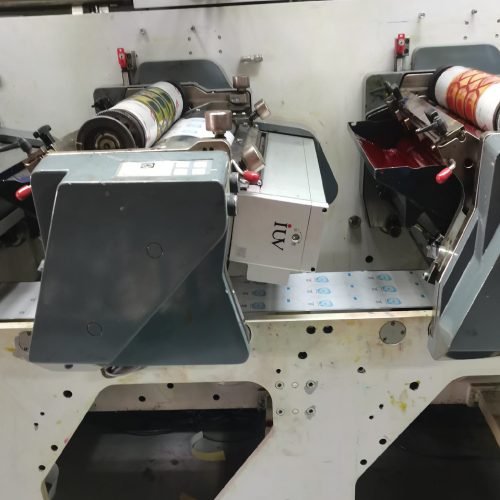
Mercury lamps emit a broad spectrum of UV light (UVA, UVB, UVC). This broad range is excellent for curing a wide variety of inks because it hits multiple absorption peaks of different photoinitiators. However, mercury lamps generate intense heat. On thin film substrates common in label printing, this heat causes stretching and registration issues.
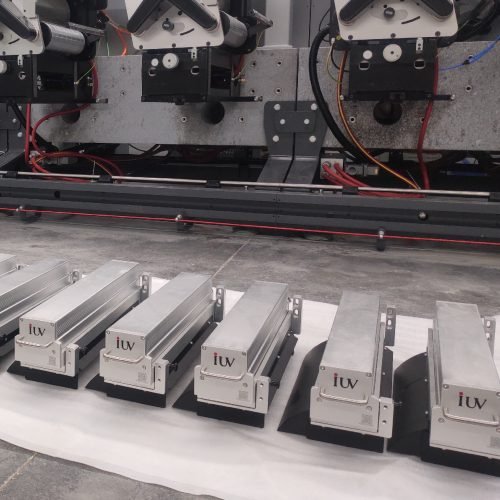
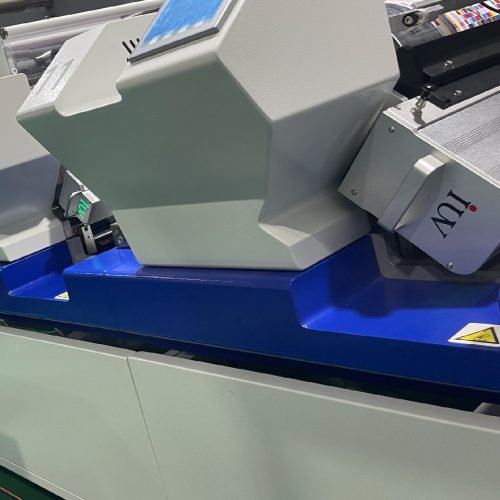
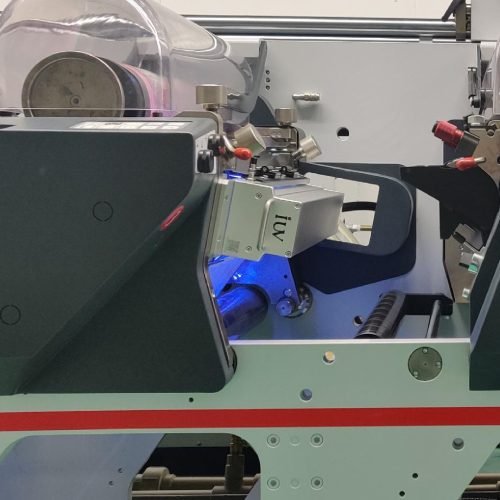
LED UV systems emit light at a specific wavelength, typically 385nm or 395nm. This monochromatic output is much cooler and more energy-efficient. For outdoor labels, LED UV offers a major advantage: deep penetration. Long-wavelength UVA light from LEDs travels deeper into thick or highly pigmented ink layers than the short-wavelength UVC light from mercury lamps. This ensures a better bond at the ink-substrate interface.
However, LED systems can struggle with “oxygen inhibition” at the very surface of the ink. Because they lack the short-wave UVC light that helps “set” the surface, LED-cured labels can sometimes feel tacky. Modern ink formulations for LED curing now include specialized photoinitiators to overcome this, ensuring the label is durable from the bottom up.
Ink Chemistry for Outdoor Longevity
Not all UV inks are created equal. For outdoor applications, the ink must contain light-fast pigments. Standard process colors will fade within months of sun exposure. High-grade automotive or architectural pigments are necessary to maintain brand colors for years.
The resin system also matters. Flexible resins are required so the label can expand and contract with the substrate as temperatures change. If the cured ink film is too brittle, it will crack when the plastic bottle or metal drum it is attached to gets hot in the sun.
Engineers must also consider the “degree of cure.” For food packaging or sensitive outdoor environments, low-migration inks are often used. These inks have higher molecular weight components that are less likely to stay unreacted. A higher degree of cure directly correlates to better chemical resistance against oils, detergents, and fuels.
Critical Process Parameters: Irradiance and Dose
To master UV curing for durable labels, one must distinguish between irradiance and dose.
- Irradiance (Intensity): This is the “brightness” of the UV light, measured in Watts per square centimeter (W/cm²). High irradiance is necessary to kickstart the chemical reaction and overcome oxygen inhibition.
- Dose (Energy Density): This is the total amount of energy the ink receives, measured in Joules per square centimeter (J/cm²). It is a function of the light intensity and the time the ink spends under the lamp.
If the press speed increases, the dose decreases. If the dose drops below a certain threshold, the ink will not fully polymerize. For outdoor labels, you cannot rely on visual inspection alone. Using a radiometer to regularly check that the UV system is delivering the required Joules is a standard requirement for quality assurance.
Substrate Influence on Curing and Adhesion
In narrow web printing, the substrate choice is as important as the ink. Common outdoor materials include:
- Vinyl (PVC): Excellent outdoor durability but can be sensitive to the heat of mercury lamps.
- Polyester (PET): Very stable and heat resistant, but often requires a primer or corona treatment to ensure UV ink adhesion.
- Polyethylene (PE) and Polypropylene (PP): Widely used for flexible labels. These have low surface energy.
The “dyne level” of the substrate measures its receptivity to ink. For UV curing to be effective, the substrate should generally have a surface energy of at least 38-40 dynes/cm. If the surface energy is too low, the UV ink will “bead up” before it can be cured, leading to a weak bond that will peel off in outdoor conditions.
The Role of Overprint Varnishes (OPVs)
For maximum outdoor durability, a UV-cured clear coat or laminate is often applied. This serves as a sacrificial layer. It absorbs the bulk of the environmental “stress” before it reaches the printed image.
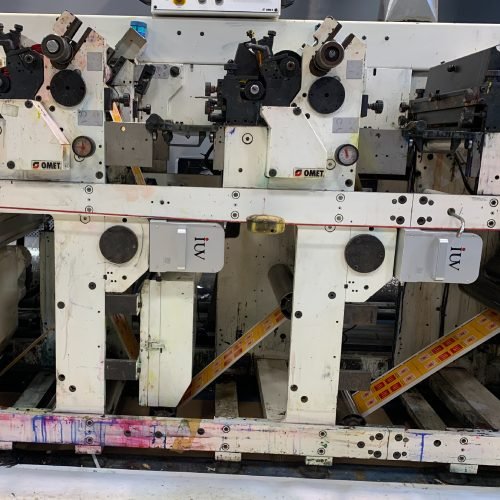
When applying a UV varnish over UV ink, “inter-coat adhesion” becomes the focus. If the base ink is over-cured (too hard), the varnish will not “wet out” properly and may flake off. This is why “pinned” curing is often used in multi-color flexo presses. The inks are partially cured (pinned) between stations and then receive a final “full cure” after the varnish station.
Testing and Validation for Outdoor Standards
How do you know if a label will last three years in the Arizona sun? You cannot wait three years for a test result.
Laboratories use “Accelerated Weathering” tests, such as the QUV test. These machines cycle through intense UV light and moisture sprays. One thousand hours in a QUV chamber can simulate months or years of real-world exposure.
On the production floor, simpler tests are used:
- The Tape Test: Using standardized adhesive tape to see if the ink can be pulled off the substrate.
- Sutherland Rub Test: Measuring how the ink stands up to abrasion.
- Solvent Resistance (MEK Rubs): Testing how well the polymer chains have formed by trying to dissolve them with chemicals.
Maintenance of the Curing System
A common mistake in label printing is neglecting the UV system. Mercury lamps lose intensity over time, even if they still look bright. The reflectors behind the bulbs can become dusty or warped, scattering the light instead of focusing it.
For LED systems, maintenance is lower, but not zero. The outer glass or lens must be kept clean. If ink mist or dust covers the LED array, the irradiance drops, and the labels at the end of the shift might not be as durable as those at the beginning.
Conclusion
Understanding UV curing requirements for durable outdoor label applications is a multi-disciplinary task. It requires the precision of a chemist and the practical skills of a press engineer. By focusing on the relationship between LED or mercury light sources, ink pigments, and substrate surface energy, printers can produce labels that survive the toughest environments.
Consistency is the goal. In the narrow web industry, the difference between a high-quality outdoor label and a failure is often found in the invisible details of the polymerization process. Accurate measurement, proper ink selection, and rigorous testing ensure that your labels remain vibrant and intact, regardless of what the elements throw at them.