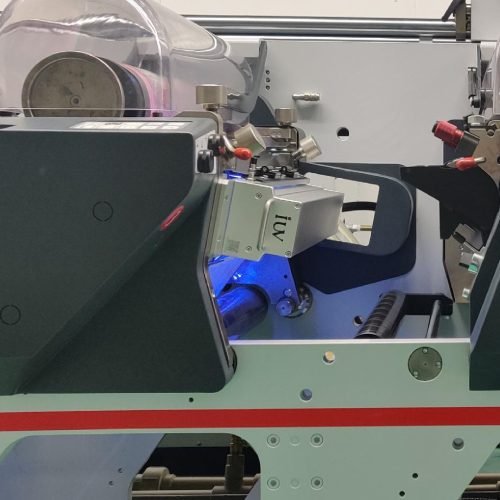
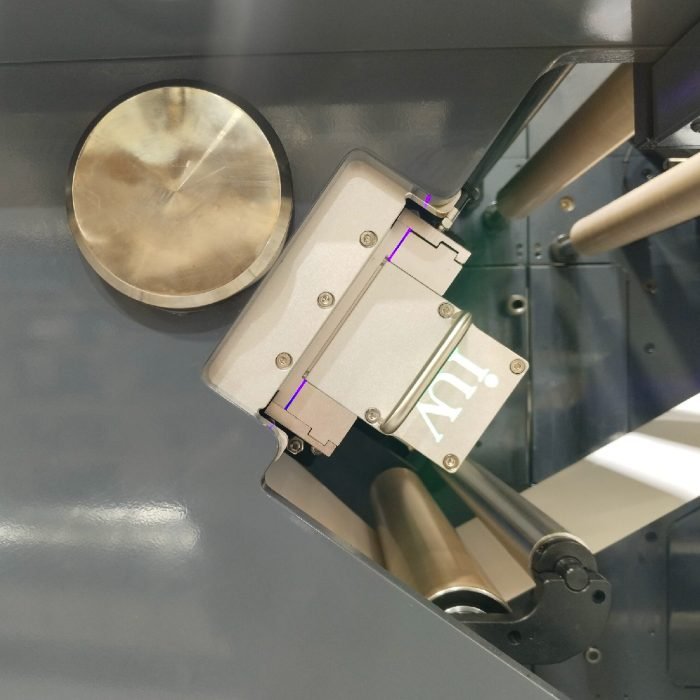
Achieving the “no-label look” remains the gold standard in the narrow-web packaging industry. Brand owners demand clear and transparent label films that disappear once applied to glass or plastic containers. For the printing engineer, this aesthetic goal introduces significant technical hurdles. Traditional mercury vapor lamps often struggle with heat-sensitive films, leading to substrate distortion or poor ink adhesion.
Transitioning to LED UV curing offers a solution, but it requires a specialized approach. You cannot simply swap lamps and expect identical results. Optimization demands a deep understanding of ink chemistry, light physics, and mechanical press settings.
The Physics of LED UV on Clear Substrates
Clear films like Polypropylene (PP), Polyethylene (PE), and Polyester (PET) behave differently under UV light compared to paper. In a narrow-web flexo or offset environment, the light must pass through the ink layer and interact with the film surface.
LED UV systems typically emit a narrow monochromatic band, usually centered around 385nm or 395nm. This is a departure from the broad-spectrum output of mercury lamps. Because the energy is concentrated, it penetrates deep into the ink layer. This deep penetration ensures a solid bond at the ink-substrate interface. However, the lack of short-wave UVC radiation means surface curing can sometimes be a challenge. On clear films, any residual tackiness or incomplete surface cure manifests as “silvering” or haze when the label is wound on the roll.
Managing Heat and Dimensional Stability
The primary advantage of LED UV is the absence of infrared (IR) radiation. Mercury lamps generate massive amounts of heat, which can cause clear thin films to stretch or shrink. Dimensional instability leads to registration errors in multi-color flexographic runs.
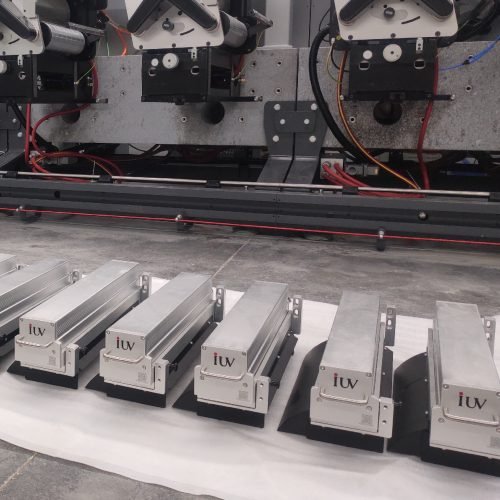
When optimizing for clear films, you must maintain a stable web temperature. Even though LED chips are “cold” light sources, the curing process itself is exothermic. Additionally, the LED modules generate heat that must be managed via water-cooled or air-cooled heat sinks. For high-speed narrow-web printing, water-cooled LED systems are preferred. They keep the lamp housing at a consistent temperature, preventing radiant heat from affecting the clear film. This allows you to run thinner, more cost-effective films without the risk of melting or warping.
Ink Chemistry and Photoinitiator Matching
You cannot use standard UV inks with LED lamps. LED-curable inks are formulated with photoinitiators that specifically react to the 365nm to 395nm range. For clear labels, the clarity of the resin and the choice of photoinitiator are paramount.
Some photoinitiators used in LED curing can cause “yellowing” if over-cured. On a transparent label, this destroys the “no-label” effect. You must work with ink suppliers to ensure the photoinitiator package is optimized for transparency. The goal is to achieve a full cure at high press speeds without shifting the color balance of the clear film.
Overcoming Oxygen Inhibition on Film Surfaces
Oxygen inhibition is a major hurdle in LED UV curing. Oxygen molecules in the air interfere with the radical polymerization process at the very surface of the ink. In conventional mercury systems, the UVC wavelengths help overcome this. Since LED lacks UVC, the surface of a clear label might remain slightly soft.
To optimize this, engineers often look at two factors: irradiance and dose. Irradiance (measured in W/cm²) is the “peak” power. Dose (measured in mJ/cm²) is the total energy over time. For clear films, high irradiance is necessary to “shock” the photoinitiators and outpace the oxygen inhibition. If you still face surface tackiness, consider the distance between the LED array and the substrate. Reducing the gap to 5mm–10mm maximizes the intensity of the light hitting the ink film.
Surface Energy and Wet-out
Clear films are notoriously non-porous and often have low surface energy. For the ink to cure properly, it must first “wet out” or spread evenly across the film. If the ink beads up, the UV light will cure it in droplets, creating an “orange peel” effect that ruins transparency.
Check the dyne levels of your clear film before printing. Most transparent PP or PET films require corona treatment or a primer to reach a surface energy of at least 38–42 dynes. When the ink lays flat, the LED UV light can penetrate the film thickness uniformly. This leads to a smoother finish and better optical clarity.
The Role of Nitrogen Inerting
In high-end narrow-web applications, especially for food or cosmetic clear labels, nitrogen inerting is becoming more common. This process involves flooding the curing zone with nitrogen gas to displace oxygen.
By removing oxygen, you eliminate the primary cause of surface cure failure. This allows the LED lamps to run at lower power settings while achieving a harder, more scratch-resistant finish. For clear films, this is a game-changer. It permits the use of lower-viscosity inks that level out better, enhancing the “invisible” look of the label.
Precision Maintenance and Monitoring
Optimization is not a “set and forget” process. LED output degrades over time, though much slower than mercury bulbs. For transparent labels, a 10% drop in UV output might be the difference between a perfect clear finish and a hazy, under-cured mess.
Implement a regime of regular radiometry. Use a UV power map to measure both the irradiance and the dose at the web level. If you notice a drop in performance, check the protective glass on the LED head. In a flexo or offset environment, ink mist and dust can settle on the lens. On clear film jobs, even a small smudge on the LED lamp can create a “shadow” that results in a localized uncured strip on your labels.
Integrating LED into Narrow-Web Offset and Flexo
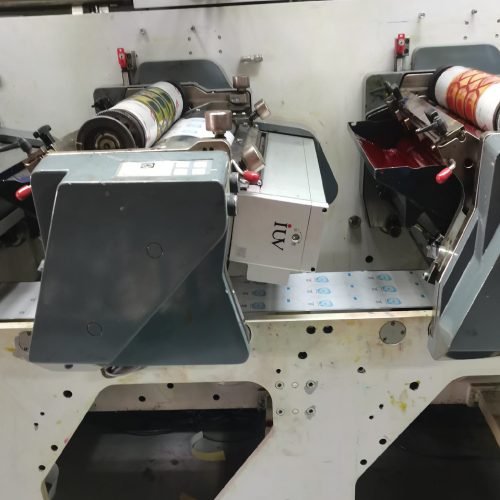
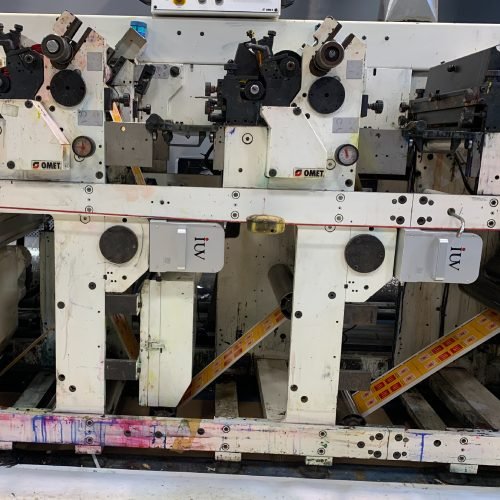
Whether you are running a flexographic or a narrow-web offset press, the integration of LED UV must be seamless. In offset printing, the ink film is much thinner than in flexo. This makes the ink even more susceptible to oxygen inhibition.
For offset printers, optimizing LED UV for clear films involves precise water-balance management. Excess dampening solution can emulsify with the LED ink, leading to a “cloudy” appearance in the cured film. In flexo, the focus should be on anilox selection. A higher cell count anilox will deliver a thinner, more consistent ink film that is easier for the 395nm LED light to penetrate and cure thoroughly.
Troubleshooting Common Issues
If you encounter adhesion failure on clear films, the problem is often the “dose.” The ink may look cured, but it hasn’t bonded to the film. Increase the lamp power or slow down the press speed to increase the Joules per square centimeter.
If you see “silvering” (tiny air bubbles trapped under the ink), it is likely a wetting issue. Check your corona treater or the age of your film. Clear films can “age out,” where the surface treatment migrates back into the material, making it difficult for UV inks to grab hold.
Final Engineering Checklist for Optimization
To ensure the best results for clear and transparent label films using LED UV, follow these technical steps:
- Verify Wavelength Compatibility: Ensure your ink’s photoinitiators are tuned specifically to your LED lamp’s peak wavelength (e.g., 395nm).
- Monitor Substrate Temperature: Use chilled rollers if necessary, even with LED, to keep the film from stretching.
- Optimize Lamp Height: Keep the LED array as close to the web as mechanically possible to maximize peak irradiance.
- Control Surface Energy: Maintain dyne levels above 40 for optimal ink wet-out and transparency.
- Measure Regularly: Use a digital radiometer to track UV dose and irradiance daily.
- Assess Clarity Post-Cure: Use a haze meter or visual “black plate” test to check for any yellowing or cloudiness in the ink layer.
By focusing on these technical parameters, printing converters can maximize the efficiency of LED UV technology. The result is a high-speed, low-heat production process that delivers the crystal-clear labels that the modern market demands. The transition to LED is not just about energy savings; it is about achieving a level of process control that was previously impossible with traditional curing methods.