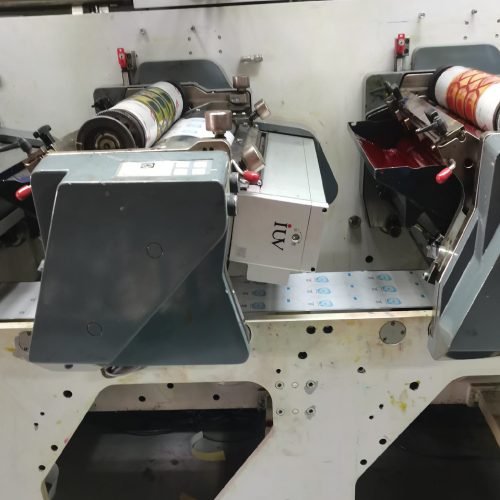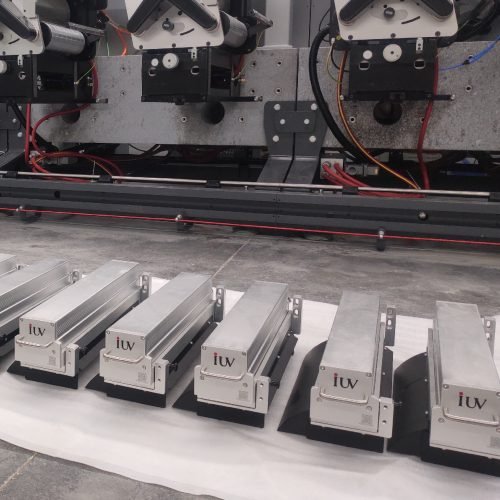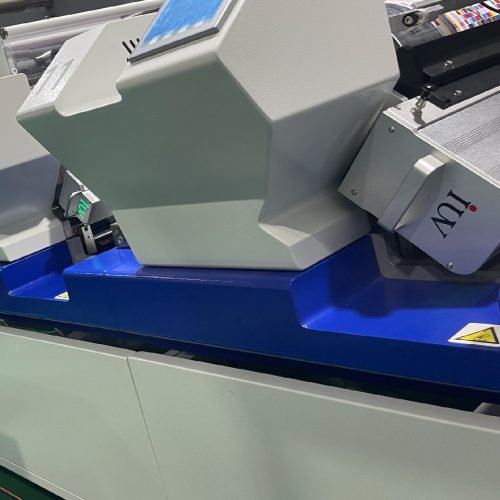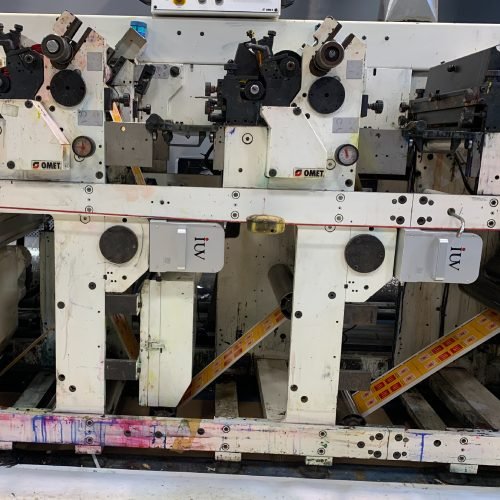
In high-speed narrow web flexographic label printing, image quality is defined not only by plate technology or ink formulation, but by how effectively each color layer interacts with the next. As press speeds increase and color counts expand, controlling ink trapping and preventing wet-on-wet bleeding becomes one of the most critical process challenges. Inter-station LED UV pinning has emerged as a precise and controllable method to stabilize ink behavior between print units without sacrificing productivity.
This technical guide explains how to optimize inter-station LED UV pinning to improve ink trapping, reduce wet-on-wet bleeding, and maintain consistent print quality in high-speed flexo label production using UV-curable inks and coatings.
Why Ink Trapping Breaks Down at High Press Speeds
Ink trapping refers to the ability of a subsequent ink layer to adhere cleanly to a previously printed ink film. In flexo label printing, trapping failures often appear as color contamination, muddy overprints, or loss of tonal contrast. These problems become more severe as press speeds increase.
At high speeds, the time between color stations is extremely short. UV inks remain in a low-viscosity state when the next color is applied. Without intervention, the second ink can re-mobilize the first, causing wet-on-wet bleeding and uncontrolled mixing. Traditional mechanical adjustments cannot fully address this issue because the root cause lies in ink surface stability, not transfer mechanics.
The Role of Inter-station Pinning in Modern Flexo Presses
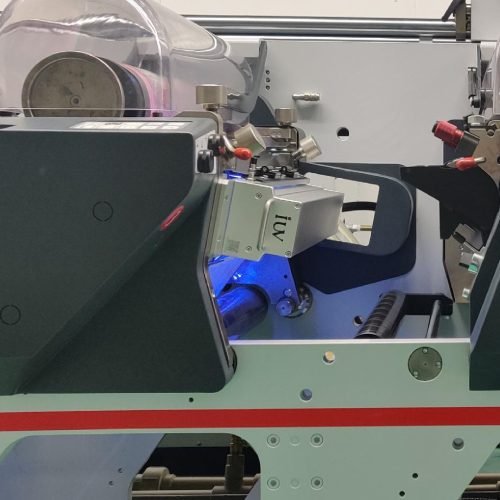
Inter-station LED UV pinning introduces controlled UV energy between print units to partially immobilize the surface of the first ink layer. This process increases surface viscosity without fully curing the ink film. As a result, the next color can trap cleanly without disturbing the underlying layer.
In narrow web presses, LED UV pinning is particularly effective because it provides instant response, stable output, and minimal heat generation. These characteristics allow precise control of ink behavior even at line speeds exceeding traditional curing limits.
Understanding Wet-on-Wet Bleeding in UV Flexo Printing
Wet-on-wet bleeding occurs when successive ink layers interact before the first layer has gained sufficient surface strength. This interaction leads to color shift, dot distortion, and loss of edge definition. In high-resolution label work, even minor bleeding can degrade fine text and halftone detail.
UV inks are formulated for rapid curing, but full polymerization typically occurs after all colors are printed. Without inter-station pinning, the first ink layer remains vulnerable throughout the printing sequence. Pinning shortens this vulnerability window by stabilizing the surface early in the process.
How LED UV Pinning Controls Ink Surface Behavior
LED UV pinning works by initiating partial polymerization at the ink surface. This creates a thin gel layer that resists lateral flow while leaving the bulk of the ink receptive to further curing. The surface tension balance shifts, reducing the tendency of the ink to reflow when contacted by subsequent colors.
Because LED systems emit narrow wavelength bands, pinning can be tuned to favor surface reaction rather than deep cure. This selectivity is essential for maintaining interlayer adhesion and avoiding curing-related defects.
Wavelength Selection for Effective Inter-station Pinning
Choosing the correct LED wavelength is fundamental to successful pinning. Most flexographic UV inks respond strongly in the 385 nm to 395 nm range. Shorter wavelengths promote faster surface activation, while longer wavelengths penetrate deeper into the ink film.
For inter-station pinning, surface activation is the primary goal. Selecting a wavelength that aligns with the photoinitiator package ensures rapid surface gelation without excessive depth cure. Incorrect wavelength selection often results in over-pinning, which can prevent proper trapping or lead to poor final cure.
Establishing a Stable Baseline Before Pinning
Before optimizing inter-station pinning, it is essential to establish a stable baseline printing condition. Press speed, ink viscosity, anilox volume, and substrate surface energy should be consistent. Trapping performance and bleeding behavior should be evaluated without pinning to identify the true extent of the problem.
This baseline allows operators to quantify improvements objectively and avoid masking other issues such as excessive impression pressure or incompatible ink sets.
Introducing Pinning at Controlled Energy Levels
Initial pinning should begin at low irradiance levels. The goal is subtle surface stabilization rather than visible curing. Early indicators of success include cleaner color boundaries, improved overprint clarity, and reduced color contamination.
Energy should be increased gradually while monitoring trapping performance. Excessive pinning energy hardens the ink surface too quickly, preventing proper wet-on-tacky interaction. Controlled adjustment provides a wider operating window and better consistency across jobs.
Synchronizing Pinning with Press Speed
Press speed has a direct impact on pinning effectiveness. As speed increases, exposure time under the pinning lamp decreases. To maintain consistent surface stabilization, pinning output must be adjusted accordingly.
In high-speed narrow web labeling, linking pinning output to press speed control ensures stable trapping during acceleration, deceleration, and steady production. This synchronization is especially important for short-run jobs where speed changes are frequent.
Evaluating Trapping Across Color Sequences
Not all color sequences respond the same way to pinning. High-pigment inks and dense solids often require different pinning settings than light tints or varnishes. Trapping should be evaluated across the full color sequence, including critical overprints.
Optimized inter-station pinning results in uniform trapping without color shift or density loss. When properly tuned, it enhances both image sharpness and color consistency across the entire label design.
Managing Thermal Load in Multi-station Presses
One of the key advantages of LED UV pinning is low heat output. In multi-station narrow web presses, cumulative heat from curing systems can affect web tension, registration, and substrate stability. LED pinning minimizes these risks while providing precise control of ink behavior.
This thermal stability is particularly important for filmic substrates and shrink-sensitive materials commonly used in modern label applications.
Integrating Pinning with Final Cure Strategy
Inter-station pinning alters the curing profile of the ink film. Final curing must be adjusted to ensure complete polymerization through the full ink thickness. Proper coordination between pinning and final cure ensures mechanical strength, chemical resistance, and long-term durability.
LED UV systems allow independent control of pinning and final cure outputs, making it possible to fine-tune each stage without compromise.
Benefits for High-Speed Narrow Web Label Production
When inter-station LED UV pinning is optimized, converters achieve cleaner trapping, sharper images, and reduced wet-on-wet bleeding even at elevated press speeds. Makeready times decrease because color interaction becomes more predictable. Waste is reduced as fewer adjustments are needed to correct trapping issues.
These benefits support higher throughput without sacrificing print quality, which is essential in competitive label markets demanding short lead times and consistent results.
Long-term Process Stability and Repeatability
Optimized pinning improves process stability by reducing sensitivity to minor variations in ink viscosity, ambient conditions, and substrate batches. Once trapping behavior is stabilized at the curing stage, daily fluctuations have less impact on output quality.
This repeatability supports standardized print profiles and consistent brand color reproduction across multiple runs and press platforms.
Conclusion
Optimizing inter-station LED UV pinning is a decisive factor in controlling ink trapping and wet-on-wet bleeding in high-speed flexo label printing. By stabilizing ink surfaces between color stations, converters gain precise control over color interaction without limiting press speed or substrate choice. In narrow web UV flexo environments, properly tuned pinning delivers sharper images, cleaner overprints, and a more robust production process suited to modern label quality demands.