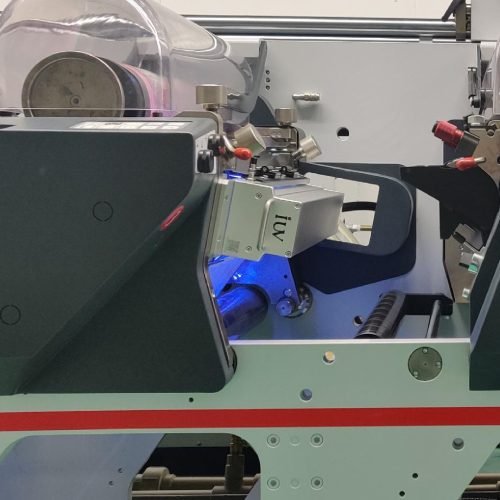
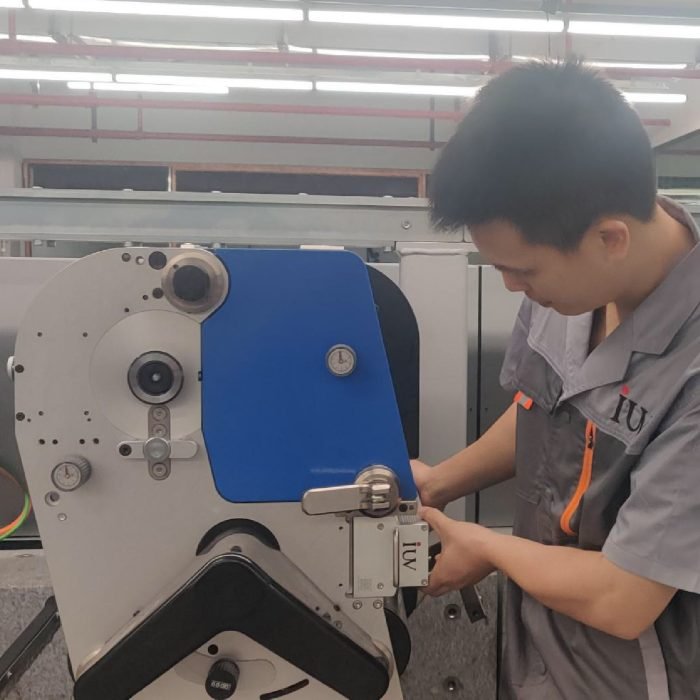
Retrofitting existing narrow web label presses with LED UV curing technology has become a practical and strategic decision for many converters. Aging mercury UV systems struggle to meet modern demands for energy efficiency, uptime stability, and process control. At the same time, replacing an entire press is rarely cost-effective. A properly executed LED UV retrofit extends press life, improves print quality, and aligns production with current environmental and safety standards. Success depends on technical preparation, not simple component substitution.
Evaluating the Existing Press Platform Before Retrofit
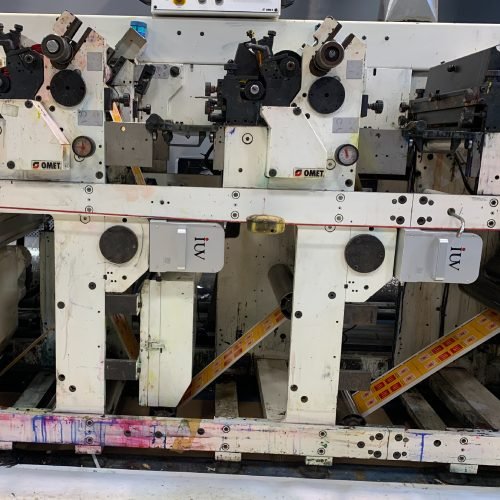
Every successful LED UV retrofit begins with a thorough evaluation of the press. Narrow web presses vary widely in frame design, station spacing, electrical architecture, and control logic. The first step is to document the current curing layout, including lamp positions, reflector geometry, shutter systems, and cooling arrangements. Web width, maximum press speed, substrate range, and print unit configuration must be reviewed in detail. This assessment defines the mechanical and electrical boundaries within which the LED UV system must operate.
Defining Performance Targets for the Retrofit
A retrofit should be driven by clear performance objectives. These may include higher press speeds, reduced energy consumption, improved curing consistency, or support for new ink and coating systems. In narrow web flexographic and offset label printing, curing performance directly affects dot gain, adhesion, and resistance properties. Setting realistic targets for line speed, UV dose, and operating temperature helps prevent overspecification or underperformance. Performance targets also guide decisions on lamp output, wavelength, and station placement.
Ink, Coating, and Adhesive Compatibility Analysis
Ink chemistry is a critical factor in LED UV retrofits. Many older presses run inks formulated for broadband mercury UV, which behave differently under narrow-band LED wavelengths. Before retrofit, all inks, varnishes, and adhesives must be reviewed with suppliers to confirm LED compatibility. This includes pigmented flexo inks, rotary screen whites, overprint varnishes, and laminating adhesives. In some cases, reformulation or process adjustments are required to achieve full cure at target speeds.
Selecting the Appropriate LED UV System Architecture
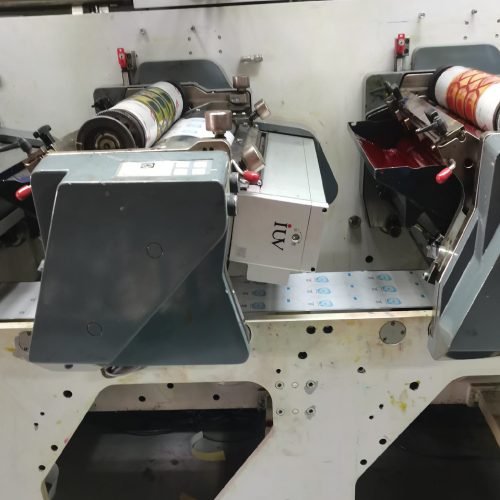
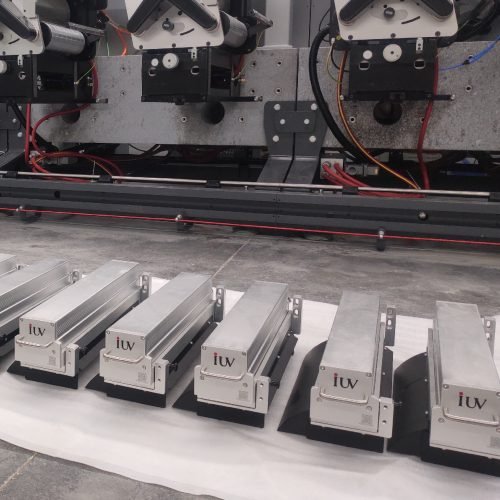
LED UV systems differ in output density, optical design, and cooling method. For narrow web presses, compact form factors are essential to fit within existing station spacing. The system architecture must match press requirements, whether curing after each print unit or in centralized positions. Decisions on air-cooled versus liquid-cooled systems depend on available space, duty cycle, and ambient conditions. Proper system selection ensures stable output without compromising press accessibility or maintenance.
Wavelength Optimization for Narrow Web Label Applications
Wavelength selection is one of the most important technical decisions in an LED UV retrofit. Common options include 365 nm, 385 nm, and 395 nm. Most modern label inks are optimized for 385 nm or 395 nm, offering efficient surface cure and good penetration. Thicker ink films, such as tactile varnishes or rotary screen deposits, may require higher energy density or multi-head configurations. Matching wavelength to application minimizes curing variability across different job types.
Mechanical Integration and Mounting Strategy
Mechanical integration must respect the structural limits of the press. LED UV heads should be mounted using rigid brackets that prevent vibration and maintain precise distance to the substrate. Unlike mercury lamps, LED systems have defined focal ranges, making distance control critical. Adjustable mounts allow fine tuning during commissioning and accommodate different substrate thicknesses. Proper alignment across the full web width ensures uniform irradiance and consistent curing performance.
Electrical Power and Control System Integration
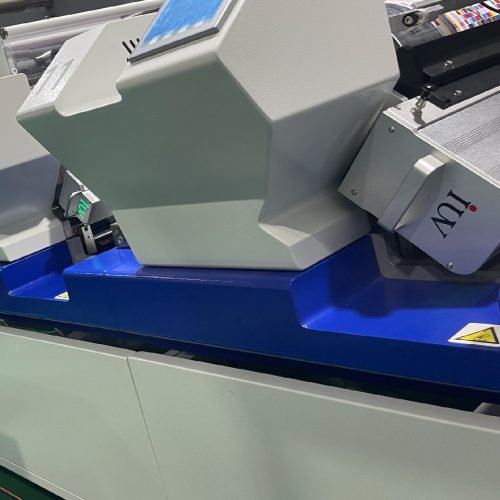
LED UV retrofits often require upgrades to the press electrical system. LED power supplies demand stable low-voltage, high-current input and robust grounding. The retrofit should integrate LED controls with the press HMI to enable synchronized operation. Linking LED output to press speed ensures consistent energy delivery during acceleration, deceleration, and stop-start cycles. Fault signals and temperature monitoring should be visible to operators for proactive maintenance.
Thermal Management and Cooling Design
Although LED UV generates less radiant heat than mercury lamps, effective thermal management remains essential. LED junction temperature directly affects output stability and lifespan. Cooling systems must be designed to operate independently of press speed. In narrow web presses, airflow paths or liquid cooling lines should be routed to avoid interference with print units and web handling components. Reliable cooling ensures long-term performance consistency after retrofit.
Retrofitting for Flexographic Printing Units
In flexographic narrow web presses, LED UV retrofits often involve installing curing units immediately after each color station. This configuration supports wet-on-wet printing while maintaining dot integrity. Inter-station curing may require lower output for ink pinning, followed by higher output for final cure. The retrofit design should allow independent power control for each station, enabling precise tuning for different ink laydowns and substrates.
Addressing Offset and Hybrid Press Requirements
Offset and hybrid narrow web presses introduce additional retrofit considerations. Offset UV inks may require higher total dose and careful oxygen control. In hybrid presses combining flexo, offset, and rotary screen units, curing stations must be placed to avoid overcuring intermediate layers. A successful retrofit balances curing energy across processes, maintaining adhesion and surface quality without sacrificing speed.
Commissioning the LED UV Retrofit
Commissioning transforms the retrofit from installation to production readiness. Initial checks confirm mechanical alignment, electrical stability, and cooling performance. Radiometric measurements verify irradiance and dose at the substrate level. Test runs at different speeds validate curing margins and adhesion. Adjustments made during commissioning establish standard operating parameters that ensure repeatable results across job changes.
Process Validation and Quality Verification
After commissioning, process validation confirms that the retrofit meets production requirements. Adhesion tests, rub resistance, chemical resistance, and post-converting performance should be evaluated. These tests ensure that cured inks and coatings perform consistently through die-cutting, slitting, and application. Validation builds confidence that the LED UV retrofit supports both current and future label applications.
Operator Training and Workflow Adaptation
A retrofit introduces new operational behaviors. Operators must understand how LED UV differs from mercury curing, particularly regarding instant on-off behavior and power adjustment. Training should cover basic system diagnostics, cleaning procedures, and process optimization. Well-trained operators maximize the benefits of the retrofit while minimizing downtime.
Long-Term Reliability and Maintenance Planning
LED UV systems require less maintenance than mercury lamps, but they are not maintenance-free. Optical windows must remain clean, and cooling systems require periodic inspection. Establishing maintenance routines during the retrofit phase protects system output and extends service life. Long-term reliability depends on disciplined maintenance rather than reactive repairs.
Conclusion: Turning Existing Presses into Modern LED UV Platforms
A successful LED UV retrofit transforms existing narrow web label presses into efficient, competitive production assets. By following a structured technical approach that addresses mechanical integration, electrical compatibility, ink chemistry, and process validation, converters can achieve stable curing performance and long-term operational benefits. When executed correctly, an LED UV retrofit delivers higher productivity, improved print quality, and a sustainable path forward for narrow web label printing operations.