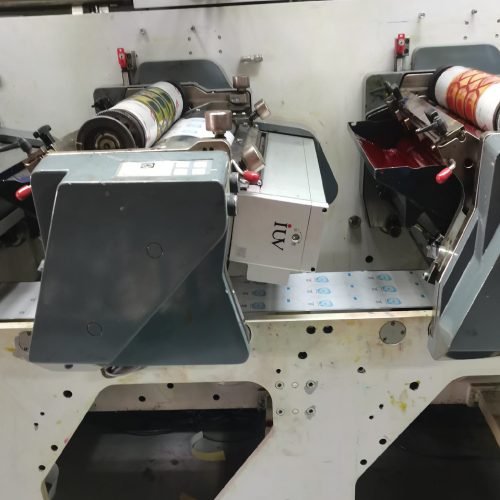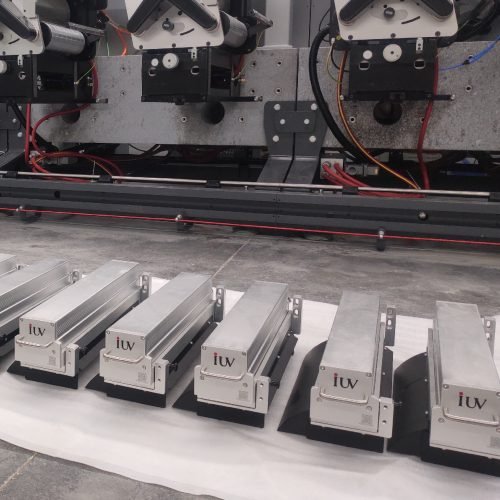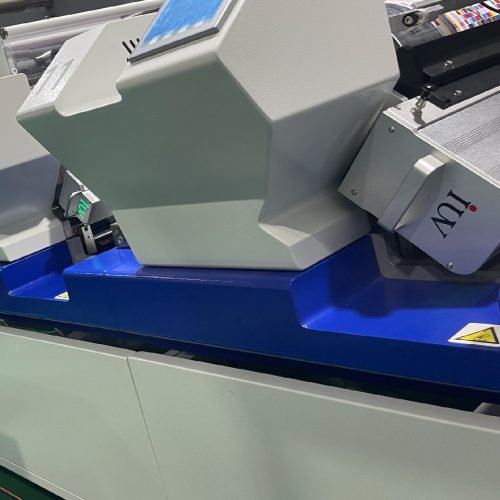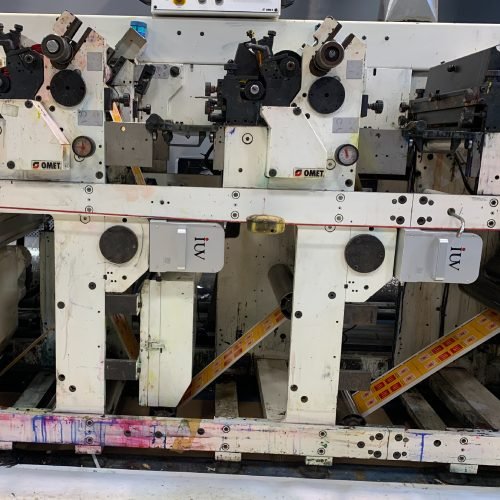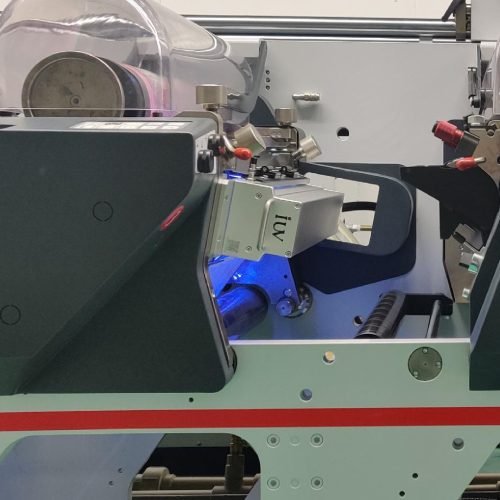
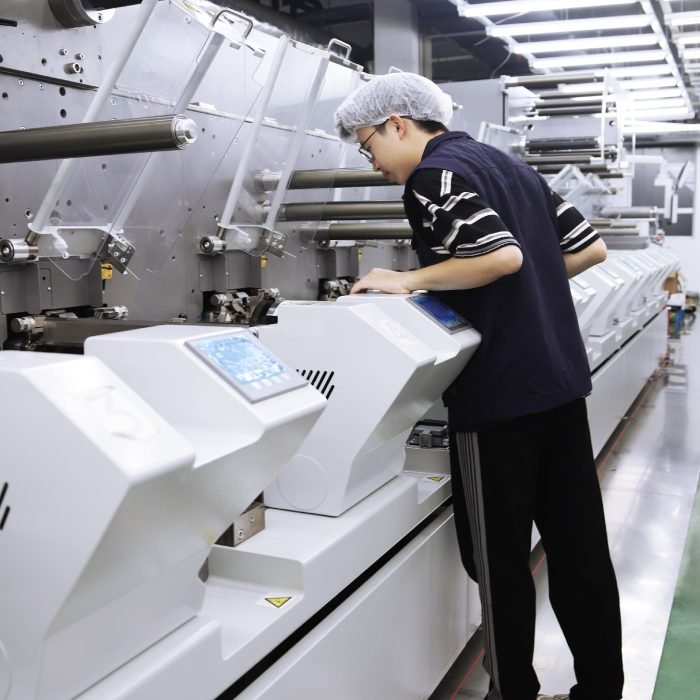
Color consistency is a critical quality benchmark in narrow web offset label printing. Brand owners expect tight Delta E tolerances across long runs, repeat orders, and multi-site production. As LED UV curing replaces mercury UV systems, many printers discover that color stability is no longer driven only by ink formulation and plate control. LED UV output calibration has become a decisive factor influencing dot formation, ink density, trapping behavior, and final color perception. Understanding how curing energy interacts with offset inks is essential for maintaining predictable Delta E values.
Color Formation in Narrow Web Offset Printing
In narrow web offset, color is created through a balance of ink film thickness, dot geometry, and substrate interaction. Unlike flexo, offset relies on lithographic principles, where ink-water balance and plate characteristics play a dominant role. UV offset inks cure rapidly after transfer, locking dot shape and pigment distribution in place. Any variation in curing energy affects polymerization speed, ink flow, and surface leveling, which directly influences color density and hue.
The Relationship Between LED UV Output and Color Shift
LED UV curing systems emit narrow-band radiation with highly stable spectral characteristics. However, output intensity can vary over time due to temperature changes, electrical load, and aging of LED modules. In offset printing, small changes in curing output can alter ink gloss, surface texture, and pigment orientation. These changes may be subtle but are enough to cause measurable Delta E drift, especially in solid tones and brand-critical colors.
Understanding Delta E in UV Offset Label Production
Delta E is a numerical representation of color difference perceived by the human eye. In label printing, acceptable Delta E values are often below 2.0, with premium brands demanding even tighter limits. Delta E variation can occur within a single press run or between repeat jobs. While press mechanics and ink formulation contribute to variation, inconsistent UV curing output is frequently an overlooked cause of color instability in LED UV offset systems.
LED UV Output Parameters That Influence Color
Several LED UV parameters affect color stability. Peak irradiance determines how quickly the ink polymerizes. Total UV dose influences final hardness and surface properties. Wavelength affects how energy penetrates the ink film. In offset printing, where ink layers are relatively thin, surface cure speed plays a larger role than depth of cure. Excessive irradiance can freeze ink before it fully levels, while insufficient output allows dot spread and density variation.
Calibration vs. Compensation in LED UV Systems
Calibration aims to establish a known, repeatable output level for each LED UV curing unit. Compensation attempts to correct color variation downstream through ink density or press adjustments. In narrow web offset, compensation has limits. Adjusting ink density to correct Delta E often disrupts gray balance and tonal curves. Proper LED UV calibration addresses the root cause by stabilizing the curing environment before color deviations occur.
Measuring LED UV Output Accurately
Radiometric measurement is the foundation of output calibration. Radiometers designed for LED UV wavelengths provide data on irradiance and energy density at the substrate level. Measurements should be taken across the full web width and repeated at multiple press speeds. In offset printing, even minor output differences between curing stations can lead to color shifts between units. Regular measurement establishes a baseline and reveals gradual output changes before they affect print quality.
Spectral Consistency and Its Impact on Offset Inks
LED UV systems are valued for spectral consistency, but this advantage only holds when modules are correctly specified and maintained. Mixing LED heads with different peak wavelengths or spectral bandwidths can cause uneven curing response across colors. Offset inks are formulated to respond to specific photoinitiator activation ranges. Consistent spectral output ensures uniform polymerization and stable color development throughout the press.
Thermal Effects on LED UV Output Stability
LED UV output is temperature-dependent. As junction temperature rises, radiant output can decrease. In narrow web offset presses, compact layouts and high-duty cycles increase thermal load. Without proper cooling, output drift occurs during long runs. This drift translates into gradual Delta E change that is difficult to trace without radiometric data. Stable thermal management is therefore a direct contributor to color consistency.
Press Speed Variability and UV Energy Delivery
Press speed changes alter the exposure time under the LED UV lamp. If output is not synchronized with speed, total UV dose fluctuates. In offset printing, this affects how quickly the ink sets after transfer. Variations in setting behavior influence dot shape and density, leading to color variation. Integrating LED UV output control with press speed feedback helps maintain consistent energy delivery and color stability.
Interplay Between Ink-Water Balance and Curing
In UV offset printing, ink-water balance affects ink film thickness and dot definition. LED UV curing locks in this balance almost instantly. If curing energy varies, the same ink-water settings can produce different color results. Stable LED UV output allows press operators to maintain consistent offset balance, reducing color drift caused by frequent adjustments.
Calibrating LED UV Output for Repeat Jobs
Repeatability is a key advantage of LED UV offset printing, but only when curing output is consistent between runs. Calibration procedures should include recording baseline irradiance and dose values for each curing unit. These values become reference points for future jobs. When repeat orders are printed weeks or months later, matching UV output helps reproduce original color conditions with minimal adjustment.
Managing Multi-Unit Narrow Web Offset Presses
Narrow web offset presses often include multiple print and curing units. Variations in LED UV output between units can cause color differences across the web or between colors. Calibration must be performed on each unit individually, not assumed from a single measurement. Uniform output across all stations is essential for maintaining Delta E stability in complex label designs.
Aging Effects and Preventive Calibration
LED UV modules degrade gradually over time. While degradation is slower than mercury lamps, it is not negligible. Preventive calibration identifies output decline before it affects color. Scheduled measurements and output verification allow planned adjustments rather than reactive troubleshooting. This proactive approach protects color consistency and reduces waste.
Linking UV Calibration to Color Management Systems
Modern narrow web offset operations rely on color management systems to control Delta E. LED UV calibration should be treated as part of this system. Stable curing output ensures that ICC profiles, density targets, and tonal curves remain valid over time. Without stable UV conditions, color management loses effectiveness regardless of measurement accuracy.
Practical Indicators of UV-Related Color Drift
Certain color issues point directly to UV output inconsistency. Gloss variation within solids, density fluctuation at constant ink settings, and unexplained Delta E drift during long runs are common signs. Recognizing these indicators helps printers focus on curing calibration rather than unnecessary ink or plate changes.
Building a Color-Stable LED UV Offset Workflow
Achieving Delta E stability in narrow web offset printing requires a disciplined approach to LED UV calibration. Accurate measurement, consistent thermal management, synchronized output control, and regular verification form the foundation. When these elements are controlled, LED UV curing becomes a powerful tool for maintaining predictable color across jobs, shifts, and production sites.
Conclusion: LED UV Calibration as a Color Control Strategy
Color consistency in narrow web offset printing depends on more than ink and press mechanics. LED UV output calibration plays a central role in stabilizing dot formation, ink density, and final color appearance. By treating curing output as a controlled process parameter, printers can maintain tight Delta E tolerances and meet the growing demands of brand-driven label production.