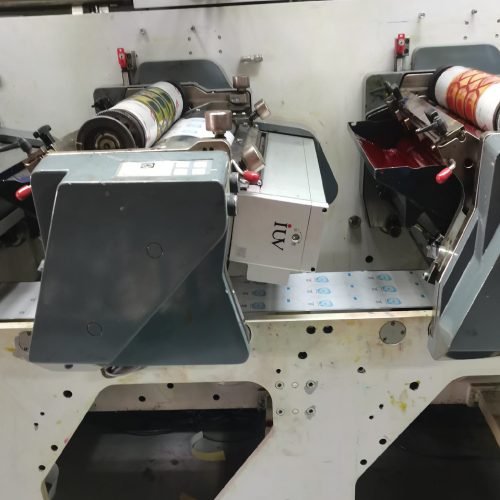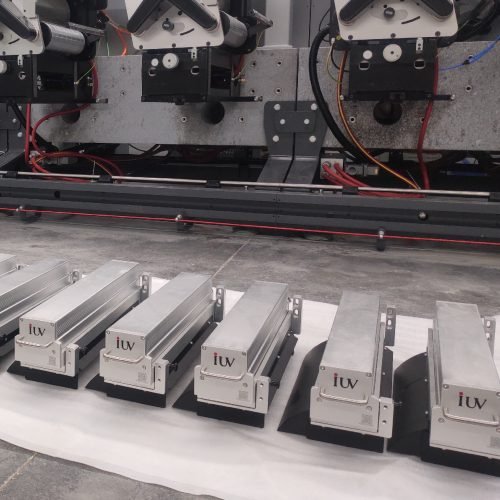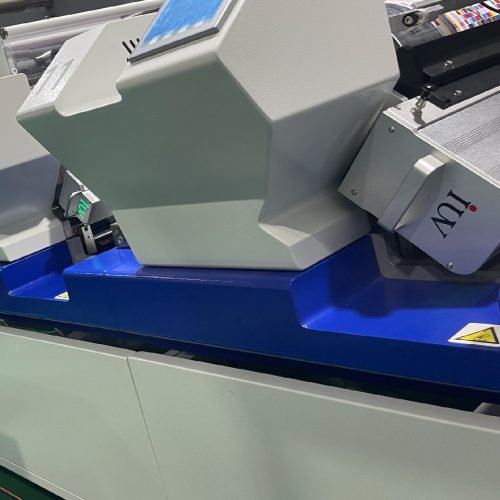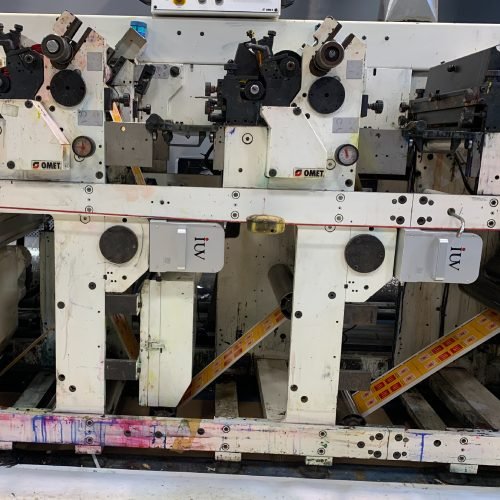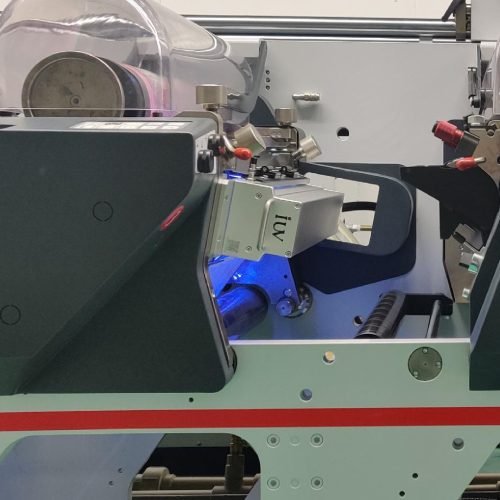
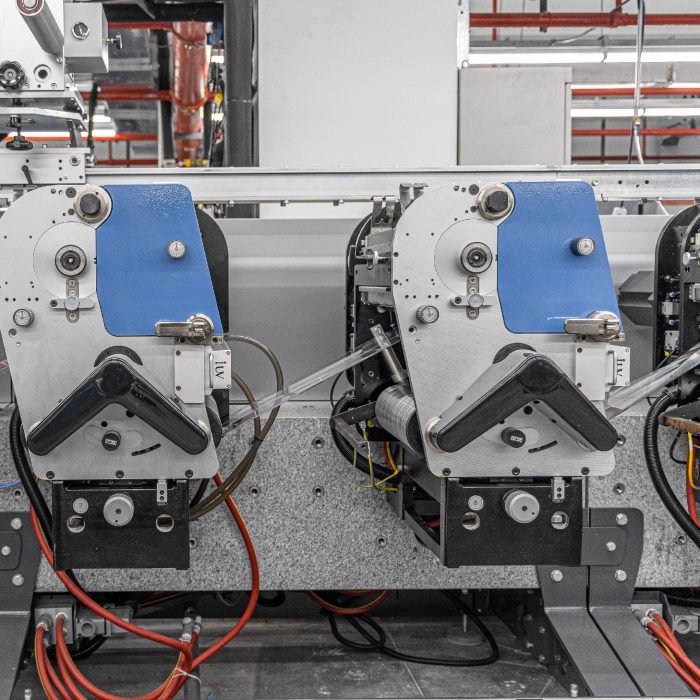
In narrow web label printing, curing technology plays a critical role in determining print quality, substrate stability, and overall production efficiency. Traditional UV curing, based on mercury arc lamps, has been the standard for decades. These systems emit a broad spectrum of ultraviolet light and rely on high thermal energy to initiate the polymerization of inks and coatings. While effective in many applications, traditional UV systems introduce heat stress to films and papers, which can lead to substrate distortion, register issues, and inconsistent adhesion in complex multi-color jobs. The evolution of production demands, including faster changeovers, mixed substrate types, and higher-resolution graphics, has made these limitations increasingly evident. Label converters are now seeking alternatives that provide reliable curing without compromising substrate integrity, color stability, or operational efficiency.
How Traditional UV Systems Operate
Mercury-based UV lamps function by emitting a broad UV spectrum, typically from 200 to 400 nanometers. This light interacts with photo-initiators in the ink, triggering a chemical reaction that converts liquid ink into a solid, cured layer. Because these lamps generate significant heat, cooling systems are required to protect sensitive substrates. The heat can also cause dimensional changes in films or coated papers, especially at high speeds, which may result in registration errors or ink smudging. Additionally, the intensity and spectral output of mercury lamps decrease over time as the bulbs and reflectors age, necessitating frequent maintenance to ensure consistent curing performance. For label printers producing high-density inks, whites, or varnishes, achieving uniform cure across the web width can be particularly challenging, requiring careful lamp adjustments and monitoring.
The Introduction of LED UV Technology
LED UV curing represents a fundamental shift in how inks and coatings are polymerized. These systems employ light-emitting diodes tuned to specific wavelengths, most commonly in the 365 to 405 nanometer range, which match the absorption spectra of modern LED-curable inks. By delivering energy in a narrow band, LED UV systems can efficiently cure inks without producing excessive heat. This reduction in thermal load maintains substrate stability, prevents shrinkage, and allows higher press speeds without sacrificing print quality. The instant-on and instant-off capabilities of LED modules further enhance operational flexibility, enabling precise control during short-run jobs, color changes, and multi-pass processes.
Comparing Curing Performance and Color Consistency
One of the most noticeable differences between traditional UV and LED UV systems is their effect on color consistency. Mercury lamps can produce variations in output over time and across the lamp length, resulting in subtle color shifts or uneven gloss levels in repeated print runs. LED UV curing maintains stable irradiance throughout its service life, ensuring consistent polymerization of inks and coatings. For high-resolution flexo and letterpress labels, this stability reduces the risk of Delta E deviations, minimizes color corrections, and supports precise reproduction of brand colors across multiple production cycles. The ability to achieve predictable curing results with LED UV is especially valuable when working with metallic substrates, laminated films, or multi-layer varnishes.
Substrate Compatibility and Heat Management
Traditional UV systems require careful management of heat-sensitive substrates, including pressure-sensitive films, coated papers, and shrink sleeves. The high thermal output from mercury lamps can cause warping, bubbling, or premature adhesive activation, leading to waste and quality issues. LED UV systems, by contrast, generate significantly lower heat and provide uniform energy distribution. This characteristic allows narrow web converters to run diverse substrates at higher speeds without compromising registration or adhesion. For applications involving multi-layer laminates or heat-sensitive adhesives, LED curing reduces the risk of material damage while maintaining optimal ink performance.
Operational Efficiency and Maintenance Considerations
Maintenance demands and operational flexibility are additional factors that distinguish traditional UV from LED UV systems. Mercury lamps have a finite lifespan, require warm-up time, and necessitate periodic replacement of bulbs, reflectors, and cooling components. These factors introduce downtime and increase labor costs. LED modules are solid-state devices with extended operational life, often exceeding 20,000 hours, and require minimal cooling infrastructure. Their instant-on capability eliminates warm-up periods and allows immediate start-stop operation. This reliability not only reduces downtime but also streamlines production scheduling, making it easier for narrow web label converters to accommodate frequent job changes and short production runs.
Energy Consumption and Sustainability Impacts
Energy efficiency is another advantage of LED UV technology. Traditional mercury UV lamps consume high power continuously, generating both ultraviolet output and excess heat that must be removed via ventilation or water-cooled systems. LED UV systems convert a larger portion of electrical energy directly into effective curing light while minimizing heat generation. This efficiency reduces electricity costs and lowers environmental impact. For converters pursuing sustainability initiatives, the adoption of LED UV supports greener production by decreasing energy consumption, lowering pressroom temperatures, and reducing the overall carbon footprint of printing operations.
Integrating LED UV into Existing Press Workflows
Transitioning from traditional UV to LED UV requires careful consideration of press layout, ink selection, and process parameters. LED-curable inks are designed to respond efficiently to specific LED wavelengths, offering fast polymerization and robust adhesion. Proper integration includes selecting modules that match the press width, ensuring uniform irradiance across the web, and calibrating power settings for consistent cure. Operators must also adjust web tension and coating thickness to optimize curing outcomes. With careful planning, LED UV retrofits can be implemented without significant disruption to production, providing immediate improvements in print speed, quality, and reliability.
The Strategic Benefits for Narrow Web Converters
For narrow web label printers, adopting LED UV technology addresses multiple operational challenges simultaneously. It enhances throughput by enabling higher press speeds without compromising ink performance or substrate integrity, reduces waste by maintaining consistent curing across varied materials, and supports repeatable color accuracy in high-resolution print runs. Maintenance is simplified, energy consumption is reduced, and heat-sensitive substrates can be processed more reliably. These combined benefits make LED UV a strategic choice for label converters seeking to improve competitiveness, efficiency, and quality in 2026 and beyond.
Conclusion
Understanding the differences between traditional mercury-based UV curing and LED UV technology is essential for any label printer seeking to optimize production performance. Traditional systems provide broad-spectrum curing but introduce heat stress, color variability, and maintenance challenges, particularly in high-speed, multi-substrate operations. LED UV offers targeted, consistent curing with lower heat output, improved operational flexibility, and significant reductions in maintenance and energy consumption. For narrow web flexo and letterpress label production, this technology represents a practical and future-proof solution that enhances print quality, press efficiency, and overall reliability. By adopting LED UV curing, label converters can meet modern production demands while positioning themselves for sustainable growth and competitive advantage in the evolving marketplace.