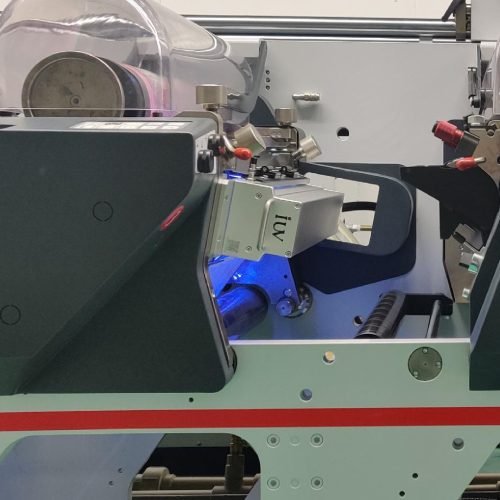
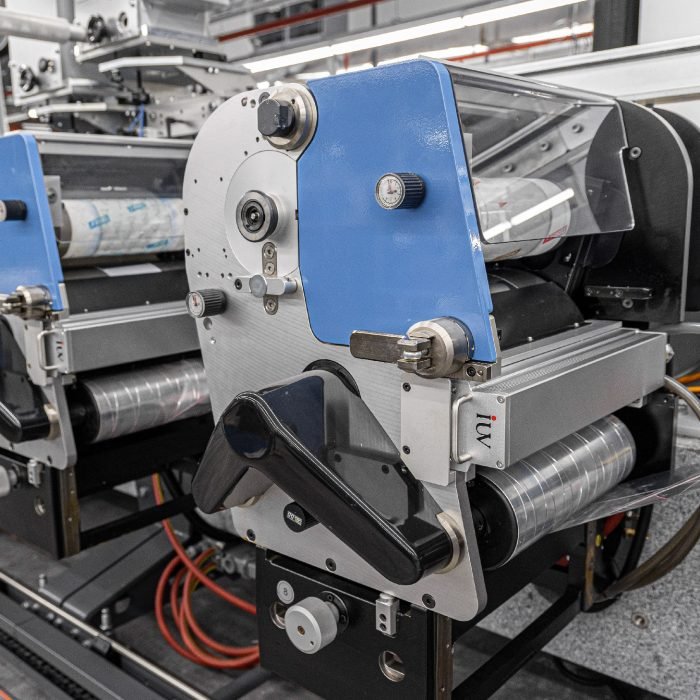
Inter-station LED UV pinning is a critical technique in high-quality flexographic label printing. It ensures precise ink trapping between successive color stations. By partially curing the ink with low-intensity LED UV exposure, printers can maintain sharp edges and prevent color bleed, especially on narrow web presses.
Pinning must be carefully controlled. Excessive energy can fully cure the ink, preventing proper blending and adhesion between layers. Insufficient energy leaves inks too fluid, resulting in smudging or loss of registration. Optimizing pinning requires understanding both the ink formulation and the LED UV system characteristics.
Principles of LED UV Pinning
Pinning involves applying a brief, low-intensity UV dose to the freshly printed ink film. This creates a surface skin while allowing the underlying ink to remain reactive. In narrow web label printing, pinning improves registration accuracy, especially for fine text, lines, and small graphics.
LED UV diodes allow precise control over wavelength, intensity, and exposure duration. This control enables printers to match the curing profile to specific ink formulations, substrate types, and press speeds. Proper pinning ensures that inter-station ink trapping produces sharp color transitions and consistent gloss across the web.
Benefits of Controlled Pinning
Controlled LED UV pinning delivers multiple advantages in narrow web flexographic printing. It reduces ink spread, minimizes dot gain, and preserves detail in high-resolution graphics. Sharp traps are essential for labels with multiple overlapping colors, ensuring consistent visual appearance and brand integrity.
Pinning also supports faster press speeds. By partially stabilizing the ink surface, the web can move to the next station without smudging. This reduces make-ready time and minimizes downtime, improving overall production efficiency.
Factors Affecting Pinning Performance
Several factors influence pinning effectiveness. LED UV intensity and distance from the substrate determine how quickly the surface layer cures. Press speed affects exposure time, requiring adjustment of LED UV settings to maintain consistent results.
Ink viscosity, opacity, and photoinitiator concentration also play a role. Highly pigmented or opaque inks require careful calibration to achieve adequate surface stabilization without overcuring. Substrate type and surface energy influence ink absorption and the formation of a pinning layer.
Optimizing Pinning for Narrow Web Presses
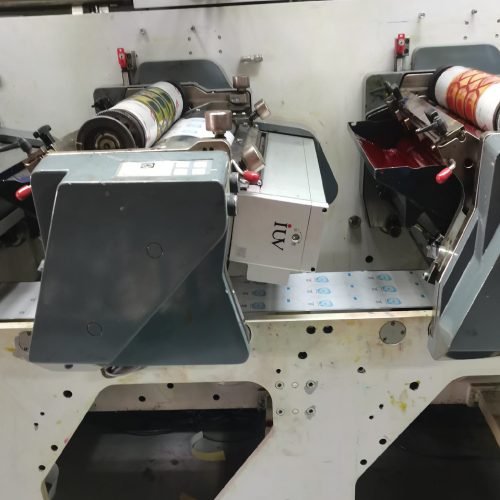
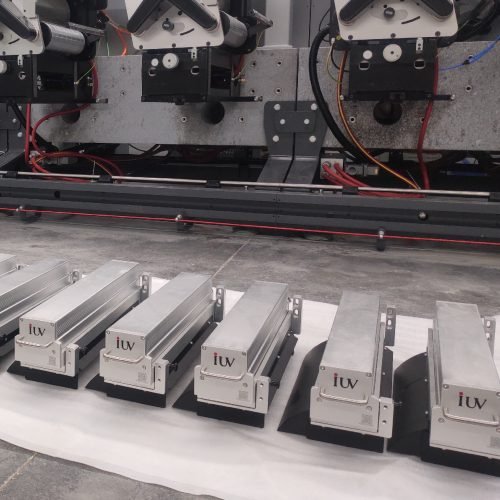
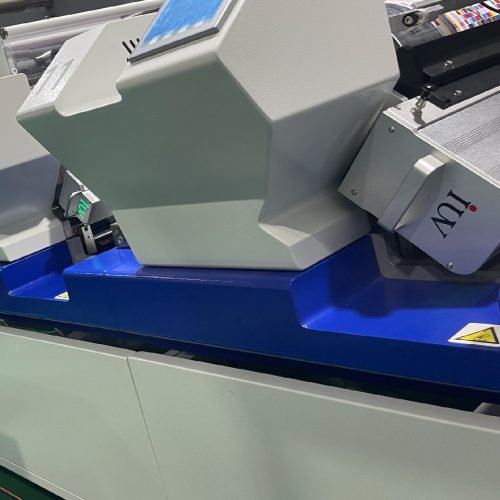
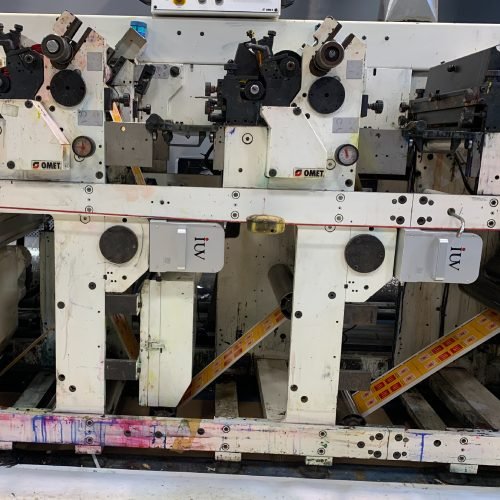
Narrow web presses often operate with low-tension films, which are sensitive to heat and mechanical stress. Pinning must be carefully aligned with the press’s mechanical and servo systems. LED UV cassettes should be positioned perpendicular to the web and adjustable for tilt and distance.
Uniform energy delivery across the web width is essential. High-density LED UV arrays produce consistent irradiance, preventing localized under- or over-pinning. Proper calibration ensures that the ink surface stabilizes evenly, preserving registration and print quality.
Inter-Station Synchronization
Pinning must be synchronized with the press cycle and encoder signals. LED UV triggers should activate precisely as the web exits the preceding station. Servo-driven presses enable accurate timing, ensuring that each ink layer receives the correct pinning dose.
Synchronization reduces the risk of misregistration and color bleed. Consistent triggering also prevents uneven pinning, which can compromise sharp traps and result in visible defects across the label roll.
Adjusting Exposure for Different Inks
Ink formulation dictates the required pinning energy. Low-viscosity inks need less energy, while heavy solids or metallic inks may require higher exposure to achieve surface stabilization. LED UV systems allow fine adjustment of intensity, exposure time, and distance to accommodate these variations.
Testing with representative inks and substrates ensures that pinning produces sharp traps without affecting adhesion or curing of underlying layers. This trial-and-error calibration is crucial for high-speed label production.
Thermal and Mechanical Considerations
Heat management is important during pinning. LED UV cassettes generate localized heat, which can distort low-tension films. Proper mounting and airflow prevent substrate deformation. Vibration damping in the mounting system maintains precise distance, ensuring uniform energy across the web.
Mechanical stability is critical to avoid movement during exposure. Even minor misalignment can cause inconsistent pinning, leading to color bleed or dot gain. Well-designed mounting and precise calibration support repeatable, high-quality results.
Monitoring and Quality Control
Regular monitoring of pinning effectiveness ensures consistent trap quality. Measuring surface tack, ink gloss, and adhesion provides immediate feedback on curing performance. Adjustments to LED UV settings maintain sharp traps across varying production speeds and substrate types.
Quality control also includes checking registration accuracy. Consistent inter-station pinning allows subsequent stations to maintain precise alignment, critical for complex label designs with multiple overlapping colors.
Practical Applications in Label Printing
Pinning is particularly effective in narrow web label printing, where fine graphics, small text, and vibrant colors demand sharp traps. It supports multi-color flexographic processes, specialty coatings, and hybrid print applications that combine flexo with digital or offset stations.
Well-executed pinning improves visual appeal, reduces waste, and enhances productivity. It allows printers to achieve high-quality results on challenging substrates, including low-tension films, synthetic labels, and specialty coatings.
Long-Term Benefits of Optimized Pinning
Optimized inter-station LED UV pinning ensures consistent product quality across long production runs. By stabilizing the ink surface at each station, printers can maintain sharp traps, consistent registration, and uniform gloss.
This reduces scrap, minimizes downtime, and enhances customer satisfaction. High-speed narrow web flexographic presses benefit from repeatable performance, ensuring reliable results for demanding label applications.
Implementing Best Practices
Best practices for LED UV pinning include selecting appropriate diode density, adjusting exposure for ink type, ensuring proper mechanical mounting, and synchronizing with servo-driven press systems. Regular monitoring and calibration maintain consistent trap quality and sharp inter-station registration.
By integrating these strategies, label converters can optimize inter-station LED UV pinning, achieving superior print quality while supporting efficient high-speed production.