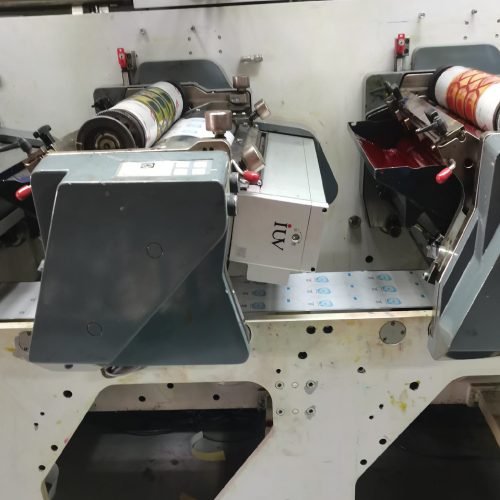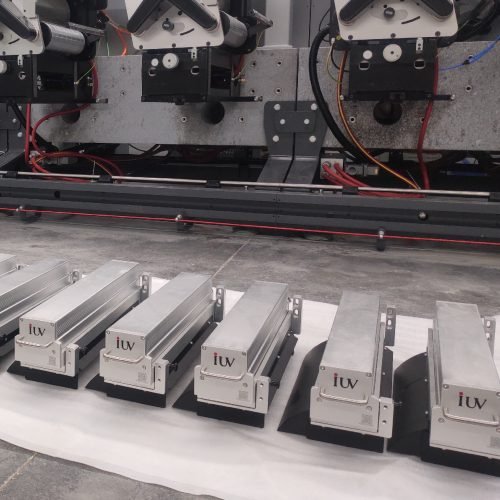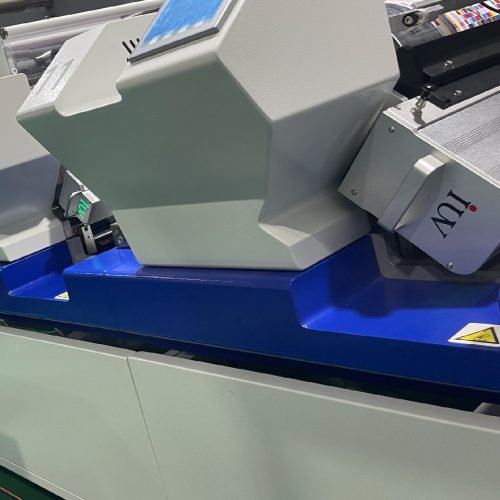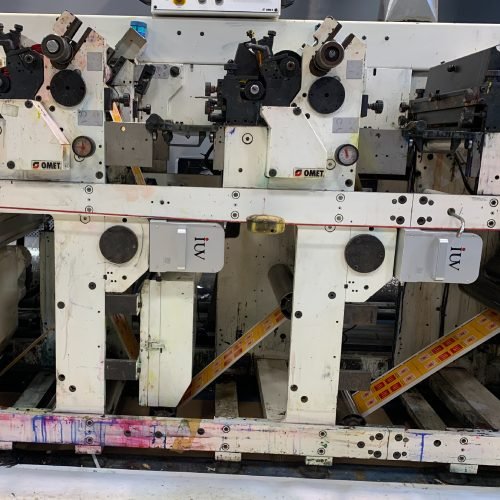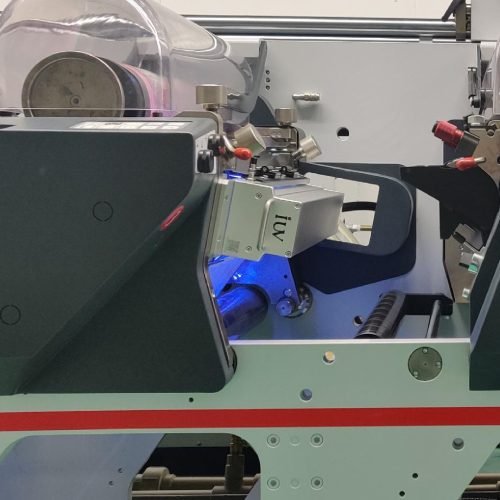
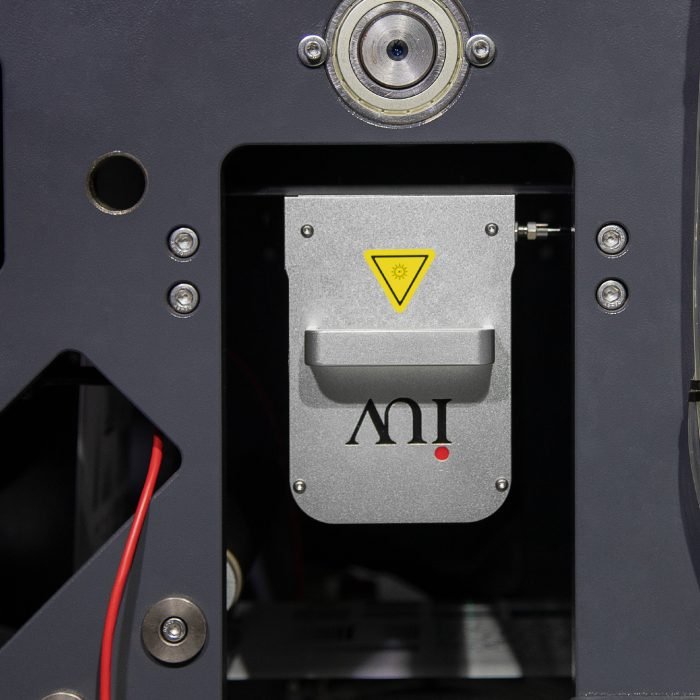
Ink trapping is a decisive factor in multi-color wet-on-wet flexographic printing, especially in narrow web label production where image precision and color consistency define product value. Each ink layer must anchor securely to the previous layer without disturbing dot geometry or altering tonal balance. When trapping performance declines, visible problems such as density loss, mottling, color shift, and interlayer delamination quickly follow.
In LED UV flexo printing, curing behavior differs significantly from conventional mercury UV systems. LED arrays emit narrowband UV-A energy, which interacts with specifically designed photoinitiator systems. Because of this focused spectral output, polymerization speed and surface cure characteristics are more sensitive to irradiance settings. In multi-color wet-on-wet sequences, the balance between stabilization and adhesion becomes extremely precise. Too much energy at an early station can lock the ink surface prematurely. Too little energy can leave the film unstable and prone to disturbance by subsequent colors.
Stable trapping performance requires coordination between ink rheology, anilox volume, LED output, substrate characteristics, and press speed. Each variable influences how ink films interact before final polymerization is complete.
Managing Partial Cure Between Print Stations
Wet-on-wet flexographic printing relies on controlled partial curing between color units. The first ink layer should reach a gel state that prevents dot spread while maintaining enough surface activity to accept the next layer. LED UV systems make this possible, but only when irradiance and energy dose are calibrated correctly.
If LED intensity is too high at the first station, the surface crosslinks rapidly and becomes resistant to bonding. The next ink layer struggles to wet the hardened surface, resulting in weak mechanical anchorage. This condition often appears as reduced color density or poor trapping efficiency in overprint tests.
If energy input is too low, the first ink layer remains overly fluid. The second color can displace it, leading to dot distortion and tonal instability. In fine screen label printing above 150 lines per inch, even minimal displacement affects highlight detail and gradient smoothness.
Achieving controlled partial cure requires matching LED output to ink film thickness and press speed. Operators should adjust irradiance so the ink stabilizes without reaching full cure until the final station.
Matching Anilox Volume to LED Energy
Anilox cell geometry directly determines ink film thickness. Higher cell volumes deposit heavier ink layers, which require greater UV energy to stabilize. Lower volumes used for fine process colors create thinner films that react quickly to LED exposure.
In multi-color label production, different units often use different anilox specifications. Opaque whites or spot colors may use 5.0 BCM or higher, while process colors may range between 2.0 and 3.5 BCM. If LED output remains constant across stations, imbalance occurs.
For example, excessive curing on a thick white layer can create a rigid surface that reduces adhesion of subsequent colors. At the same time, thin process layers may require less interstation energy to avoid over-hardening. Matching LED intensity to each anilox configuration prevents this imbalance and supports reliable trapping.
Radiometer measurements should confirm both peak irradiance and total energy dose. Adjustments must reflect changes in press speed and substrate reflectivity.
Ink Rheology and Surface Tension Balance
Effective trapping also depends on ink formulation. In UV flexographic systems, each successive ink should have slightly lower surface tension than the one beneath it. This gradient promotes wetting and anchorage.
LED exposure begins polymerization immediately, increasing viscosity within milliseconds. In high-speed narrow web presses running above 150 meters per minute, timing between print units becomes critical. Ink layers meet while cure development is already underway. If viscosity rises too quickly, wetting efficiency drops.
Close collaboration with ink suppliers ensures that formulations are optimized for LED wavelengths, commonly 385 or 395 nm. Balanced photoinitiator packages allow sufficient cure depth without excessive surface hardening. When rheology and curing energy align, interlayer bonding improves and color strength remains stable.
Substrate treatment also influences results. Film materials require adequate corona treatment to maintain surface energy. Poorly treated substrates reduce primary adhesion, which magnifies trapping weakness in upper layers.
Controlling LED Irradiance and Press Speed
Press speed determines exposure time under the LED array. As speed increases, exposure duration decreases. To maintain energy dose, irradiance must increase proportionally. However, raising intensity without considering ink thickness may lead to over-cure.
Modern narrow web presses often include adjustable LED intensity for each station. Early stations in the sequence typically operate at lower levels to achieve controlled gelation. Final stations deliver full energy dose to complete polymerization through all layers.
Uniformity across web width is equally important. Uneven irradiance can cause localized trapping variation and visible banding in gradients. Regular measurement across the full curing width ensures consistent performance.
Thermal stability supports energy consistency. Although LED systems generate less heat than mercury lamps, proper cooling maintains diode efficiency and prevents output fluctuation during long runs.
Preventing Surface Over-Cure
Surface over-cure is one of the most common causes of trapping failure in LED UV flexography. Because LED systems deliver concentrated UV-A energy, the outer layer of ink can crosslink faster than the interior. This creates a hardened surface that resists bonding.
To prevent this condition, energy settings must be calibrated according to ink film thickness and photoinitiator sensitivity. Slightly reducing interstation intensity often improves overprint density and interlayer adhesion.
Airflow management also plays a role. Excessive cooling air directed across the substrate can alter surface temperature and influence cure dynamics. Stable environmental control contributes to predictable trapping behavior.
Sequencing Strategy in Multi-Color Jobs
Color sequence planning affects trapping performance. Heavier coverage colors usually print first to establish a strong base layer. Lighter process colors follow, benefiting from improved anchorage. In LED UV systems, energy levels can gradually increase through the sequence, culminating in full cure at the final station.
In UV offset printing, sectional LED curing supports similar strategies. Although offset ink transfer differs from flexography, controlled intermediate curing enhances color stacking and image sharpness.
Hybrid configurations combining LED and conventional UV require careful calibration. Spectral differences influence photoinitiator activation, so ink compatibility must be confirmed before production.
Verification and Process Documentation
Preventing trapping failures requires consistent testing. Overprint density measurements reveal how effectively one color adheres to another. Adhesion testing after final cure confirms crosslink integrity.
Solvent rub tests and scratch resistance evaluations provide additional validation. Tracking gloss stability and density throughout production helps detect early changes in curing balance.
Recording anilox specifications, LED intensity settings, press speed, and substrate type for each job creates a valuable reference database. Data-driven adjustments reduce setup variability and strengthen repeatability.
Achieving Stable Multi-Color Performance
Reliable trapping in LED UV flexo multi-color wet-on-wet sequences depends on balance. Ink film thickness must align with energy dose. Partial curing must stabilize without hardening prematurely. Surface tension gradients must promote wetting between layers.
When these variables are coordinated, narrow web label production achieves strong color density, clean dot structure, and durable adhesion. Stable trapping improves long-term performance during die-cutting, slitting, and application.
Consistent calibration of LED irradiance, careful anilox selection, and disciplined process control eliminate recurring trapping failures. The result is high-definition flexographic printing with dependable color stacking and robust mechanical performance across extended production runs.