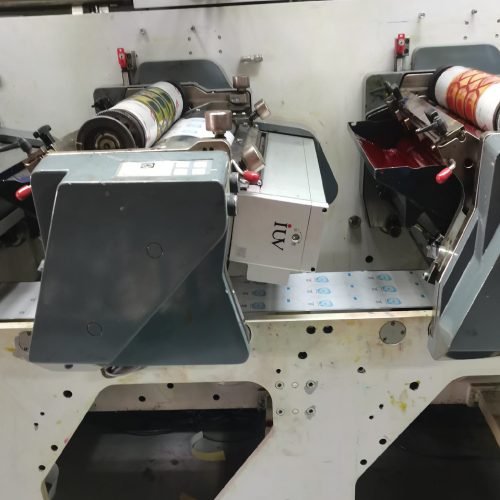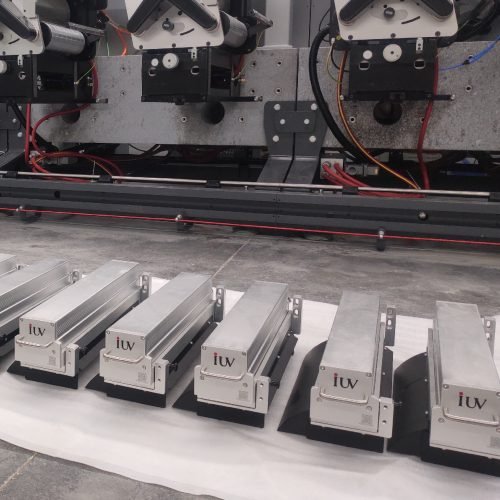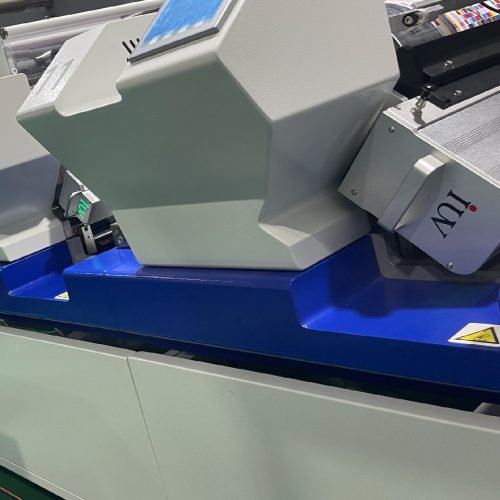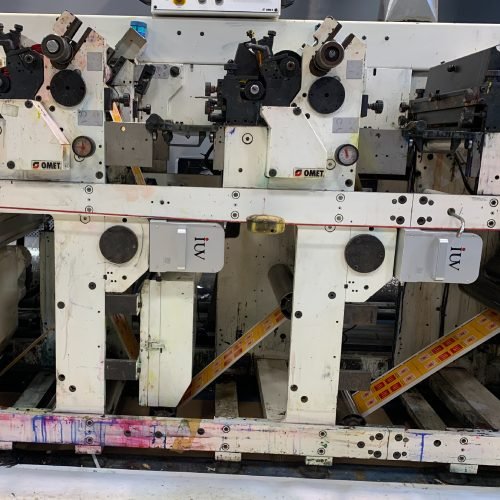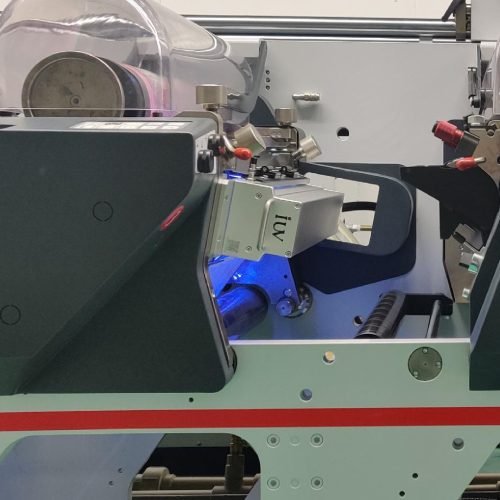
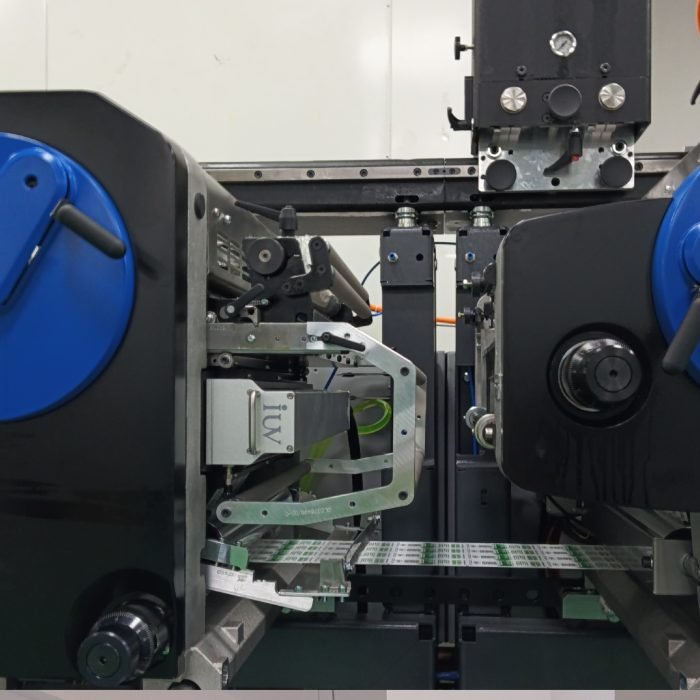
Labels face daily wear. They endure abrasion, exposure to solvents, oils, and cleaning agents, and they must cling to curved surfaces. UV curing plays a central role in turning liquid inks and coatings into durable, crosslinked films. By aligning ink formulation, substrate preparation, and curing hardware, printers can dramatically boost scratch and chemical resistance. This article focuses on label printing, including flexographic printing, gravure printing, and narrow-web applications. It also covers UV curing fundamentals and the practical use of LED curing technology.
UV Curing Fundamentals for Label Production
UV curing uses reactive species in inks and coatings that harden when exposed to UV light. The cure results from photoinitiators absorbing photons and initiating rapid polymerization of acrylate and acrylic components. A well-cured coating forms a dense, interlinked network with high hardness and low permeability. Key factors include:
- Ink and coating chemistry: Reactive monomers, oligomers, and pigments determine film properties and cure behavior.
- Wavelength and lamp/LED output: Matching the photoinitiator family to the light source is essential for efficient cure.
- Dose and exposure: Total energy delivered, not just peak intensity, controls crosslink density and surface properties.
- Substrate and surface treatment: Surface energy and ink adhesion influence how the coating wets and bonds to the label face.
LED curing vs traditional mercury lamps
LED curing offers several advantages for labels. It provides narrow-band, stable output with minimal heat. LED arrays reduce energy use and footprint and require less maintenance. They also enable instant on/off operation, which improves process control at high speeds. Mercury lamp systems deliver broad-spectrum UV but generate more heat and need regular lamp replacement. For label applications, the choice depends on ink chemistry, requested cure depth, and the desired balance of surface tack versus initial hardness.
Impact of UV curing on flexographic printing
Flexo labels rely on fast line speeds and reliable adhesion to diverse substrates. Proper UV cure enhances scratch and chemical resistance in several ways:
- Robust overprint protection: A UV-cured topcoat or clear varnish can shield underlying ink from abrasion and chemical attack.
- Reduced interaction with contaminants: A dense cured film limits solvent migration and pigment bleed, preserving color integrity.
- Controlled surface energy: Post-cure surface chemistry influences subsequent protective coatings and lamination performance.
- Minimized dot gain and color shifts: A uniform cure stabilizes the ink film, preserving print density and legibility after exposure to scuffing or solvents.
Process notes for flexo:
- Use a UV-curable varnish or topcoat formulated for flexo inks, with a compatible photoinitiator system.
- Optimize the ink film thickness to achieve abrasion resistance without creating blocking or surface roughness.
- Monitor cure uniformity across the web to avoid soft spots that compromise durability at start/finish of the press run.
Impact of UV curing on gravure printing
Gravure printing deposits thicker ink films compared with flexo, which challenges cure uniformity. The cured layer must resist scratching and chemical attack without becoming brittle or crazing. Benefits include:
- Thicker coats with dense crosslinking: UV cure can achieve high hardness in thicker coatings, improving resistance to daily wear.
- Strong solvent resistance: The crosslinked network slows solvent penetration, helping labels survive cleaning agents and oils.
- Improved gloss stability: A well-cured film maintains surface integrity, reducing micro-scratches that reveal dullness.
Process notes for gravure:
- Choose a UV-curable topcoat designed for gravure deck thickness and release properties.
- Align lamp output with the thickest ink layers to prevent surface tack or incomplete cure.
- Validate cure through surface hardness tests and solvent resistance checks.
Impact of UV curing on narrow-web printing
Narrow-web labels demand precise control of cure across tight web formats and high speeds. UV cure influences:
- Edge integrity: Adequate cure at the label edge prevents micro-fractures where scratches tend to initiate.
- Substrate compatibility: PET, paper, foil, and laminated substrates respond differently to UV exposure; pretreatment and primer layers can help adhesion and durability.
- Finishes and overprint layers: Clear coats and spot varnishes benefit from optimized cure to resist scuffing and solvent attack.
Process notes for narrow-web:
- Configure the UV system to deliver consistent energy across the web width, reducing color and gloss variation.
- Use inline sensors to monitor dose in real time and adjust for speed changes.
- Test a matrix of exposure levels with representative cleaning agents used in end-use environments.
Mechanisms behind scratch and chemical resistance
A properly cured UV coating forms a dense, crosslinked network. Scratch resistance hinges on:
- Hardness of the surface: A high crosslink density creates a hard surface that resists gouging and micro-scratching.
- Elongation and impact resistance: The coating should absorb small impacts without cracking, preserving the underlying artwork.
- Chemical barrier: A low permeability film reduces solvent absorption and pigment migration.
Chemical resistance depends on:
- Crosslink density: Higher density reduces solvent uptake and pigment extraction.
- Topcoat structure: Aromatic or aliphatic networks offer different resistance profiles to acids, bases, and alcohols.
- Additives: Abrasion modifiers, slip agents, and hard coatings can tailor performance without compromising adhesion.
Surface energy and adhesion
Cured UV coatings must bond to the ink film and substrate. Good adhesion prevents delamination under abrasion or chemical attack. Surface energy influences wetting by subsequent coatings and cleaning solutions. Strategies include:
- Substrate pretreatment: Corona or plasma treatment improves adhesion for many plastics.
- Primer layers: A compatible primer can bridge ink and coating chemistries.
- Cleanliness: Contaminants can hinder cure and adhesion, so inline cleaning steps and handling controls matter.
Quality assurance and testing
To ensure the expected durability, perform targeted tests, such as:
- Pencil hardness or ASTM D3363 tests to gauge surface hardness.
- MEK rub tests or solvent rub cycles to assess chemical resistance.
- Abrasion tests to quantify wear resistance of the cured film.
- Adhesion tests (Cross-hatch or pull-off) to verify bond strength between layers.
- Scrub and scratch tests on representative labels to simulate real-world handling.
Process parameters for optimal cure
Key levers include:
- Dose or radiant energy: Sufficient energy ensures complete cure without overexposure that could embrittle the film.
- Wavelength match: Photoinitiator systems should align with LED or lamp output for efficient curing.
- Line speed and dwell time: Higher speeds require better lamp intensity or more efficient coatings to reach the same cure level.
- Layer sequencing: The order of ink, primer, and topcoat affects final performance.
- Film thickness: Thick protective layers may need higher dose or multi-pass curing.
Environmental and operational considerations
UV curing is sensitive to operating conditions:
- Substrate temperature and ambient heat can influence cure kinetics and coating properties.
- Pigments in inks can shield photoinitiators, demanding adjusted exposure or formulations.
- Safety and ventilation: Photoinitiators and coatings may require proper ventilation and handling protocols.
- Sustainability: LED systems reduce energy use and waste from lamp replacements, aligning with green production goals.
Practical steps for label printers
- Start with a compatible system pairing LED or mercury UV with a UV-curable topcoat designed for your substrate and press configuration.
- Tune exposure to achieve a balanced cure: surface hardness with retained flexibility to prevent cracking.
- Validate with small, representative runs before full production to catch issues early.
- Use test panels that mimic end-use conditions, including exposure to common cleaners or fuels used in the field.
- Document process parameters for repeatability across orders and shops.
Case-oriented guidance
- A flexo label producer switched to an LED cure unit and a new topcoat. They reported improved scuff resistance and cleaner color integrity after exposure to solvent-based cleaners. The energy use dropped by a noticeable margin, enabling faster changeovers without compromising cure quality.
- A gravure label line added a UV-curable protective layer. After adjusting dose and aligning the cure with the thick ink film, they observed fewer micro-scratches during shelf life and better cosmetic retention after repeated handling.
Environmental and market considerations
Durable UV-cured labels expand their usefulness in harsh conditions, including pharmaceutical packaging, cosmetics, and industrial labeling. The right cure strategy supports chemical resistance requirements for cleaners, oils, and water-based formulations. Vendors increasingly offer tailored UV systems that optimize energy efficiency, waste reduction, and process control, aligning with modern production goals.
Conclusion
Proper UV curing is a central lever for scratch and chemical resistance in label printing. Whether in flexographic, gravure, or narrow-web applications, aligning ink chemistry, coatings, substrate preparation, and curing hardware yields robust, durable labels. Embracing LED curing capabilities, when appropriate, can unlock energy savings, better process control, and improved environmental performance. By focusing on cure dose, wavelength compatibility, and post-cure properties, printers can deliver labels that stand up to abrasion and chemical exposure in real-world use without sacrificing color fidelity or appearance.