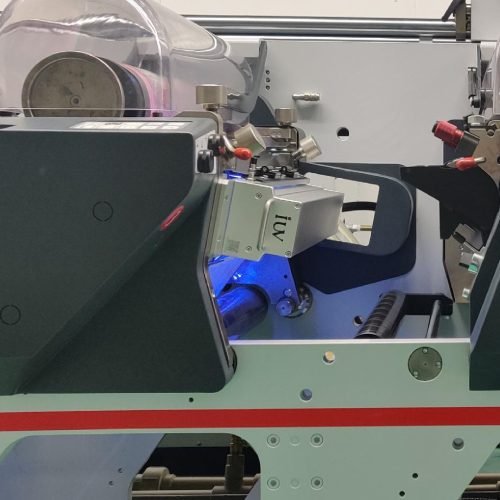
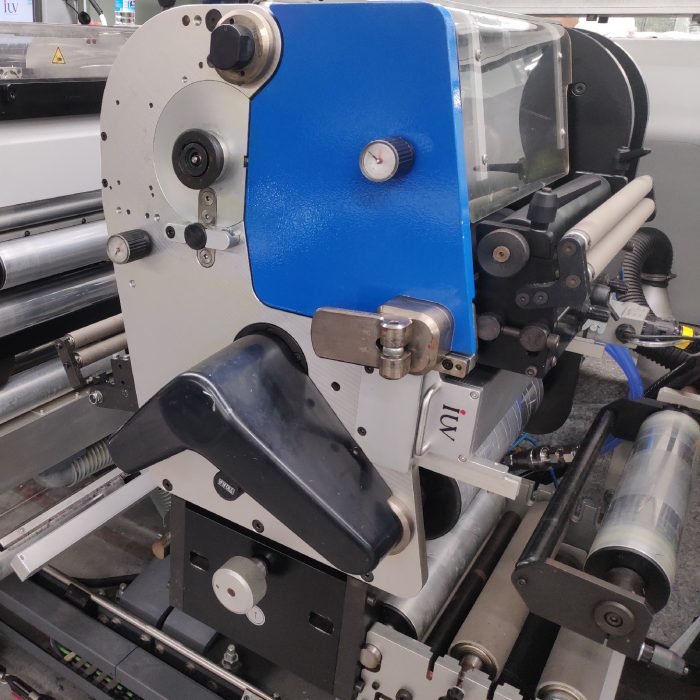
Achieving strong print adhesion on challenging substrates remains a persistent hurdle in commercial printing operations. Non-porous surfaces, heat-sensitive materials, and textured finishes demand curing solutions that traditional mercury vapor lamps struggle to address effectively. UV LED curing systems emerge as game-changing technology for printers working with difficult substrates across flexographic, offset, and narrow-web applications.
Substrate Challenges in Modern Printing
Polypropylene labels warp under excessive heat. Metallic packaging foils reject conventional inks. Recycled cardboard fibers absorb energy unevenly. These material behaviors force compromises between cure quality and production speed. Traditional UV curing often generates infrared radiation that distorts thin-gauge films or alters surface chemistry on specialty coatings.
Instantaneous Cure Without Thermal Damage
UV LED systems eliminate infrared emissions through solid-state light generation. Unlike mercury lamps requiring warm-up periods, LEDs deliver full-intensity 365-405nm wavelengths immediately. This characteristic proves critical when printing temperature-sensitive materials like:
- Shrink-sleeve PVC films
- Thin-gauge polycarbonates
- Pressure-sensitive label stocks
Printers achieve complete ink polymerization without substrate warping – particularly valuable for unsupported vinyls and other dimensionally unstable materials.
Surface Energy Optimization
Difficult substrates often exhibit low surface energy (under 38 dynes/cm), causing poor ink wetting and adhesion failure. UV LED curing modifies this dynamic through:
- Precise spectral matching to photoinitiators
- Adjustable irradiance up to 15 W/cm²
- Instant on/off cycling between print jobs
Operators fine-tune energy delivery to optimize surface cross-linking without over-curing. This control proves essential when switching between glossy UV coatings on rigid plastics and matte finishes on textured synthetic papers.
Flexographic Printing Advancements
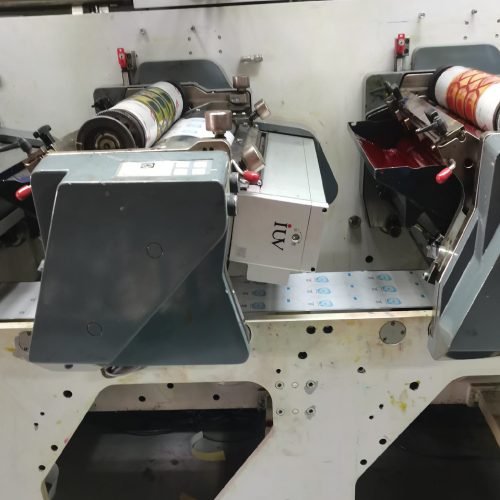
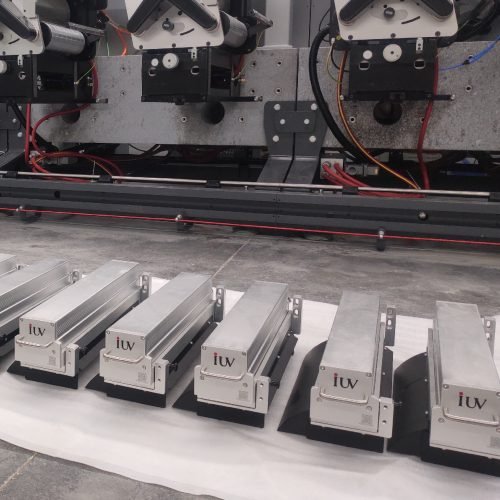
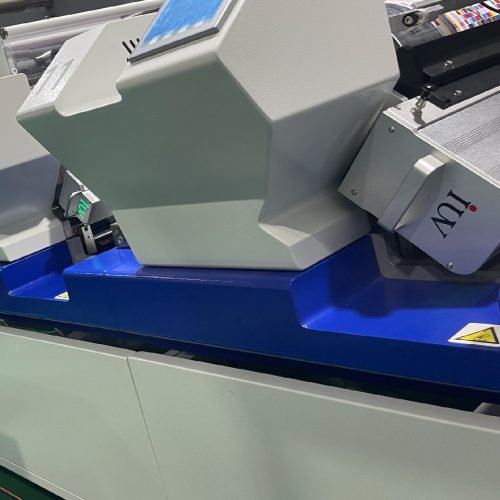
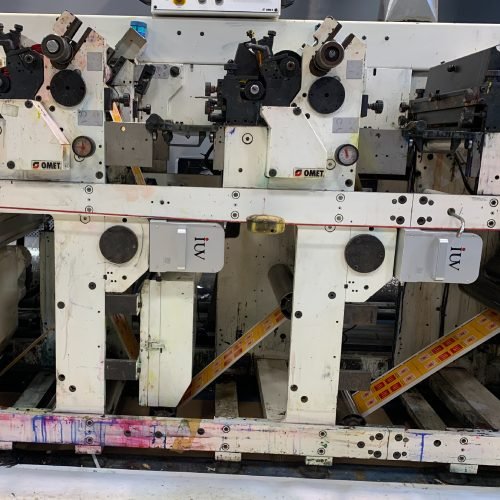
Narrow-web flexo presses benefit significantly from UV LED curing’s compact form factor. Rotary sleeve printers now integrate multiple LED arrays for:
- Intermediate curing of white underbase layers
- Final cure after cold foil stamping
- Partial curing for tactile varnish effects
The technology enables inline production of multi-layer labels on polyethylene containers without web distortion. A beverage label printer recently reported 40% faster job changeovers by eliminating mercury lamp cooldown periods.
Offset Printing Applications
Sheetfed offset operators leverage UV LED curing to tackle adhesion issues on:
- Synthetic security papers
- Plasticized gift cards
- Metalized board packaging
LED arrays mounted at delivery units provide complete curing before sheets stack. This prevents offsetting in textured coatings and embossed areas that conventional IR drying leaves vulnerable.
Adhesion Testing Improvements
Post-cure adhesion tests demonstrate measurable performance gains with UV LED systems:
- Cross-hatch tape tests show 95% ink retention on polyolefins
- Abrasion resistance increases 3X on automotive interior components
- Chemical resistance meets MIL-STD-810 standards for industrial labeling
These results stem from deeper ink film polymerization achieved through controlled spectral output.
Energy Efficiency Factors
LED systems consume 70% less power than mercury lamps while eliminating ozone generation. Printers report annual energy savings exceeding $25,000 per press – a crucial advantage as material costs rise. The maintenance advantage compounds savings: No bulb replacements or reflector cleaning required across 20,000 operational hours.
Regulatory Compliance Benefits
Transitioning to UV LED curing helps manufacturers meet tightening environmental regulations:
- Mercury-free technology aligns with RoHS directives
- Reduced VOC emissions satisfy air quality standards
- Energy Star certifications improve sustainability profiles
Major retail chains now prioritize suppliers using LED-cured packaging – a market differentiator for converters.
As substrate diversity grows across packaging, labeling, and industrial printing sectors, UV LED curing establishes itself as the adhesion assurance solution. The technology’s spectral precision, thermal management, and operational flexibility resolve long-standing compromises between print quality and production efficiency. Print providers adopting LED systems gain technical capabilities to handle next-generation material challenges while improving bottom-line performance through energy savings and reduced waste.