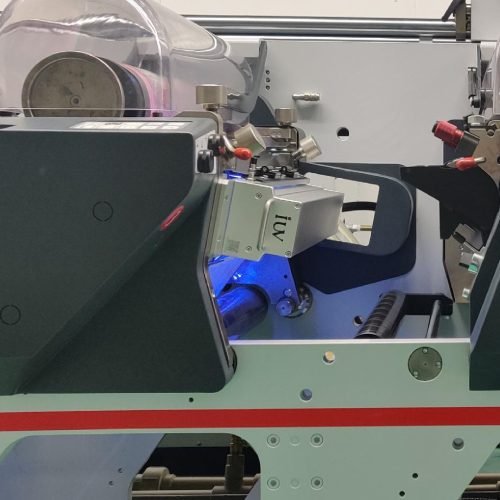
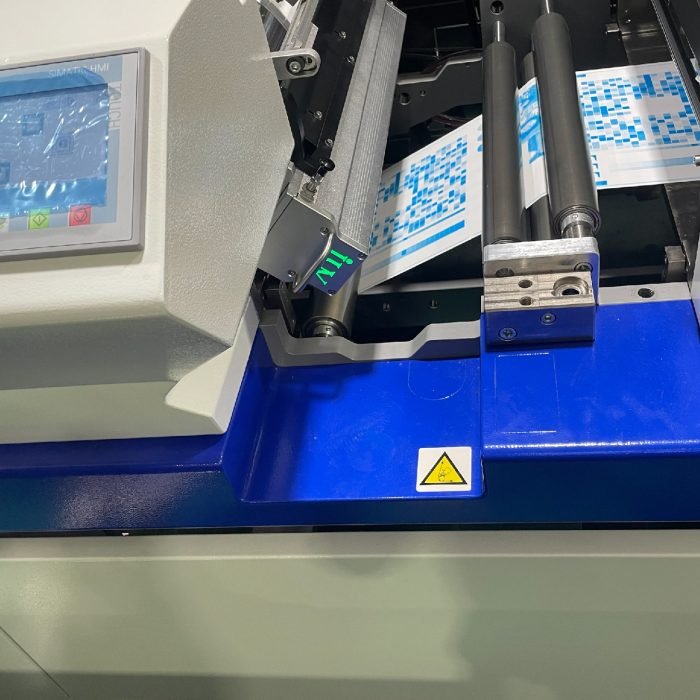
The landscape of narrow web printing, particularly for labels and flexible packaging, is in constant evolution. Manufacturers are perpetually seeking ways to enhance efficiency, reduce waste, and improve turnaround times. Within this dynamic environment, advancements in curing technology have emerged as a significant differentiator. One such innovation that is profoundly impacting multi-color flexo presses is the integration of LED UV curing systems. This technology offers a compelling suite of advantages over traditional methods, directly translating to enhanced productivity and a stronger competitive edge.
The Productivity Challenge in Multi-Color Flexo Printing
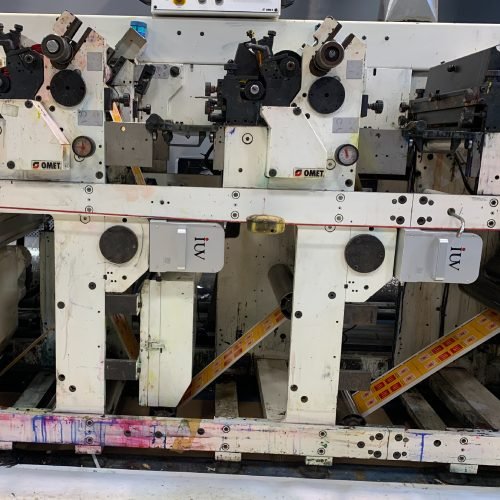
Multi-color flexographic printing, by its nature, involves multiple print stations, each applying a different ink color or coating. In traditional setups, this often means incorporating multiple curing units between stations, typically employing mercury vapor lamps. While these systems have served the industry for decades, they come with inherent limitations that can hinder productivity.
The primary challenge lies in the lengthy warm-up and cool-down periods required for mercury lamps. This downtime adds to overall job setup and changeover times. Furthermore, the significant heat generated by these lamps can impact the substrate, especially thinner films, potentially leading to distortion or requiring additional cooling measures. This heat also contributes to higher energy consumption, an increasingly important consideration for operational costs.
Another significant factor is the lifespan and maintenance of mercury lamps. They have a finite operational life and require periodic replacement, which involves further downtime and associated costs. The disposal of spent mercury lamps also presents environmental considerations. Inconsistent curing can also lead to issues like ink transfer problems, smudging, or incomplete adhesion, necessitating reprints and impacting overall throughput.
Understanding LED UV Curing Technology
LED UV curing systems utilize light-emitting diodes (LEDs) to generate ultraviolet (UV) light. Unlike mercury vapor lamps, which emit a broad spectrum of UV light, LEDs emit specific wavelengths that are precisely matched to the photoinitiators within UV-curable inks, coatings, and adhesives. This targeted approach is a fundamental reason for their superior performance.
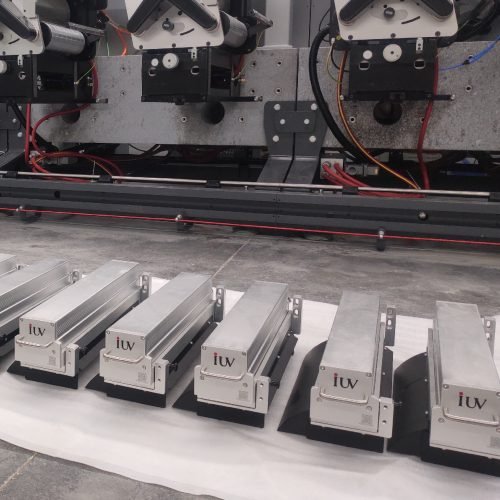
The key components of an LED UV system include the LED array, a power supply, and a cooling system. The LEDs themselves are solid-state devices, meaning they have no filaments or glass tubes that can break. This inherent robustness contributes to their extended lifespan and reduced susceptibility to physical damage.
The specific wavelengths emitted by LEDs are typically in the UVA range (365 nm, 395 nm, 405 nm are common). This precise emission profile allows for highly efficient absorption by the photoinitiators in the ink. When these photoinitiators absorb the UV light, they initiate a photochemical reaction that rapidly polymerizes the ink, transforming it from a liquid to a solid, cured film.
How LED UV Curing Enhances Productivity
The benefits of LED UV curing systems for multi-color flexo presses are multifaceted and directly address the productivity bottlenecks of older technologies.
1. Instant On/Off Capability and Reduced Warm-up Time:
Perhaps the most significant productivity gain comes from the instant on/off nature of LED systems. Unlike mercury lamps that require a warm-up period to reach optimal intensity and a cool-down period, LEDs can be switched on and off instantaneously. This means that as soon as the print head starts moving and ink is applied, the UV light is ready to cure. When the press stops, the UV lamps can be switched off immediately. This eliminates a substantial amount of idle time, especially during job setups, color adjustments, and short production runs. For printers running multiple short jobs throughout a day, this translates into a dramatic increase in available printing time.
2. Consistent Curing and Higher Quality:
LEDs provide a highly consistent output of UV energy across the entire curing width. This uniformity ensures that each color station receives the same amount and intensity of UV light, leading to thorough and predictable curing of the inks. This consistency minimizes issues such as under-curing (leading to smudging or poor adhesion) or over-curing (which can degrade the substrate or ink). The result is higher print quality, fewer rejected jobs, and reduced material waste, all of which contribute to increased productivity.
3. Reduced Heat Generation and Substrate Flexibility:
LED UV lamps generate significantly less heat compared to mercury vapor lamps. This is a critical advantage, especially when printing on heat-sensitive substrates like thin films, foils, or certain types of paper. The reduced thermal load means less risk of substrate distortion, shrinkage, or delamination. Printers can therefore expand their substrate capabilities without the need for complex and costly cooling systems, thereby increasing job versatility and streamlining production. This also means less energy is wasted on generating unwanted heat.
4. Extended Lamp Lifespan and Reduced Maintenance:
LEDs have an exceptionally long operational lifespan, often rated at 20,000 to 50,000 hours or more. This is orders of magnitude longer than the typical 1,000 to 3,000 hours of mercury vapor lamps. The consequence for productivity is a drastic reduction in lamp replacement frequency, leading to less downtime for maintenance. This translates into more consistent uptime and predictable production schedules. The elimination of frequent lamp changes and the associated consumables (like ballasts and reflectors for mercury lamps) also lowers the total cost of ownership over time.
5. Lower Energy Consumption:
LED UV systems are far more energy-efficient than traditional mercury lamps. They convert a much higher percentage of electrical energy directly into UV light, with less energy wasted as heat. This lower energy consumption not only reduces operational costs but also contributes to a more sustainable printing operation, which is increasingly important for many brands and end-users.
6. Compact Design and Integration:
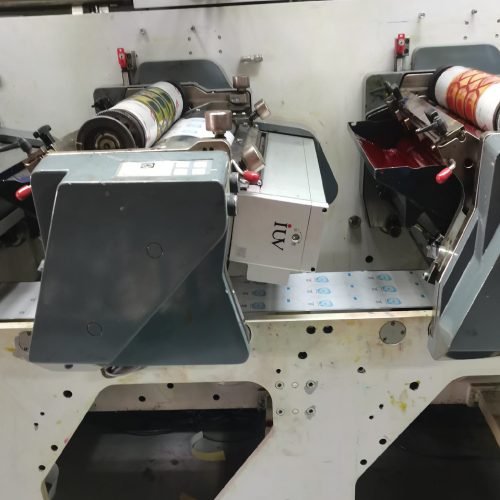
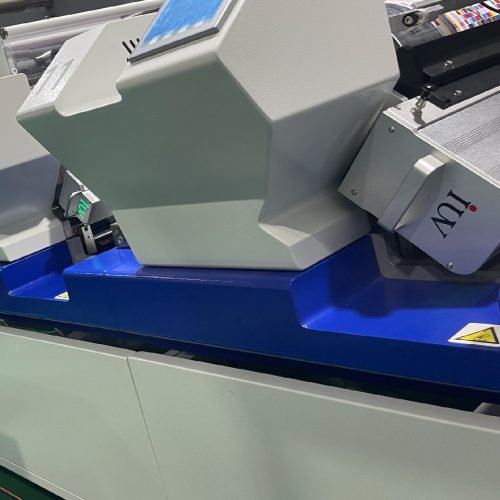
Modern LED UV curing systems are often designed with a compact form factor. This makes them easier to integrate into existing narrow web flexo presses, even in machines with limited space between print stations. Their smaller footprint can simplify press retrofits and allow for more flexible press configurations.
Impact on Specific Printing Applications
The benefits of LED UV curing are particularly pronounced in applications where high-speed, multi-color printing is essential.
Label Printing: For the vast array of self-adhesive labels used in food, beverage, pharmaceutical, and cosmetic industries, speed and accuracy are paramount. LED UV allows label printers to achieve faster press speeds while maintaining excellent print quality and ensuring the durability required for product packaging. The ability to cure efficiently on various label stocks, including clear films and textured papers, further broadens their application potential.
Flexible Packaging: In the flexible packaging sector, where printing on films is common, the low heat emission of LED UV is a significant advantage. It prevents substrate distortion and allows for the use of a wider range of film materials. The consistent curing ensures that inks and coatings meet stringent adhesion and rub resistance requirements, critical for product integrity and shelf appeal.
Narrow Web Printing: Across the narrow web sector, productivity is often measured by meters or feet per minute. By eliminating curing downtime between stations and enabling faster, more reliable curing, LED UV systems directly boost this key metric. The ability to handle a variety of ink types, including process colors, spot colors, metallics, and specialty varnishes, with consistent results further enhances the productivity of narrow web presses.
Considerations for Implementation
While the advantages are clear, successful implementation of LED UV curing systems requires careful consideration.
Ink Formulation: It is essential to use UV-curable inks and coatings specifically formulated for LED UV wavelengths. While many existing UV inks can be adapted, optimizing for LED curing ensures the fastest cure speeds and most robust performance. Compatibility testing with existing ink suppliers is a crucial step.
Wavelength and Intensity Matching: Different LED systems emit at specific wavelengths and intensities. It’s important to match the LED system’s output to the photoinitiators in the chosen inks and to ensure sufficient intensity for the desired press speeds and ink film thicknesses.
Substrate Type and Thickness: While LED UV is gentler on substrates, understanding the specific heat resistance and potential for static buildup of different materials remains important.
Press Speed and Curing Requirements: The number of LED units, their power output, and their placement relative to the print stations must be carefully calculated to match the press speed and the curing requirements of the inks and coatings being used.
Conclusion
The adoption of LED UV curing systems represents a significant technological leap forward for multi-color flexo presses. By addressing the inherent limitations of traditional mercury vapor lamp technology, LED UV offers tangible improvements in productivity through reduced downtime, faster job turnover, consistent high-quality output, and greater substrate flexibility. As the demand for faster, more efficient, and more sustainable printing solutions continues to grow, LED UV curing stands out as a critical technology for printers looking to enhance their operational efficiency and maintain a leading position in the competitive narrow web market. The investment in an LED UV system is an investment in higher throughput, reduced waste, and ultimately, increased profitability.