Achieving vibrant and accurate colors is a constant pursuit in label printing. The quest for color consistency across print runs and different media can be challenging, especially within the demanding narrow-web flexographic printing environment. Fortunately, advancements in LED UV curing technology are revolutionizing this space, offering significant benefits for color reproduction.
The Challenge of Color Consistency in Narrow-Web Flexo
Narrow-web flexographic printing is a workhorse for the label industry. Its speed, versatility, and cost-effectiveness make it ideal for producing a wide array of labels. However, several factors can conspire to compromise color consistency.
Traditional UV curing systems, often employing mercury vapor lamps, can generate significant heat. This heat can affect the ink viscosity and the substrate itself, leading to unpredictable color shifts. Furthermore, the spectral output of mercury lamps can be inconsistent, varying with lamp age and power fluctuations. This variability directly impacts how inks cure and, consequently, how colors appear.
Ink formulation plays a critical role, but even with precise ink management, external factors can introduce deviations. Substrate porosity, environmental humidity, and the curing process itself are all potential culprits. For label printers striving for brand-accurate colors and minimizing costly reprints, these inconsistencies represent a persistent hurdle.
The Promise of LED UV Curing
The advent of LED UV curing has brought a new level of control and predictability to the printing process. Unlike traditional mercury lamps, LEDs emit a narrow band of UV light at specific wavelengths. This targeted emission offers several advantages for color consistency.
Firstly, LEDs generate very little heat. This thermal stability is paramount. It means the ink and substrate remain at a more constant temperature throughout the curing process. Reduced heat translates to less ink viscosity change and less substrate distortion, both of which are critical for maintaining color fidelity.
Secondly, the spectral output of LEDs is highly stable and consistent. Once manufactured, an LED emitter provides a predictable light spectrum for its entire lifespan. This eliminates the variability associated with aging mercury lamps, ensuring that each print job is cured under the same UV conditions, regardless of when it was run.
How LED UV Empowers Color Consistency in Flexo
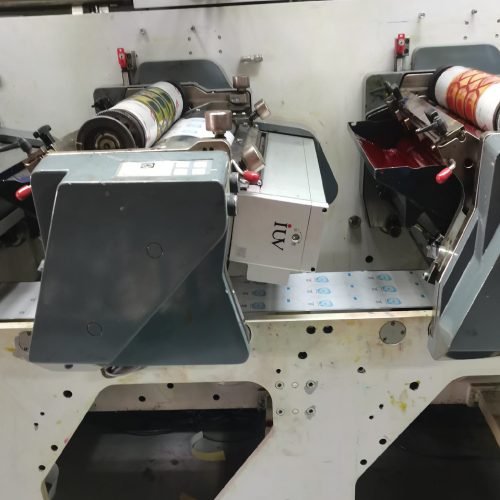
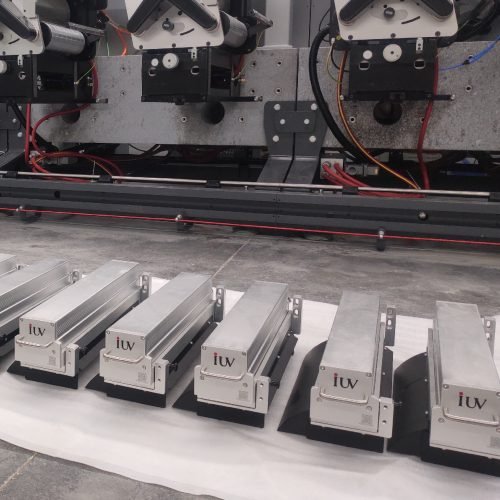
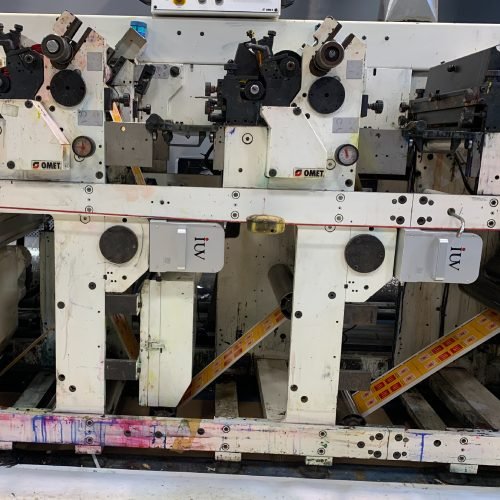
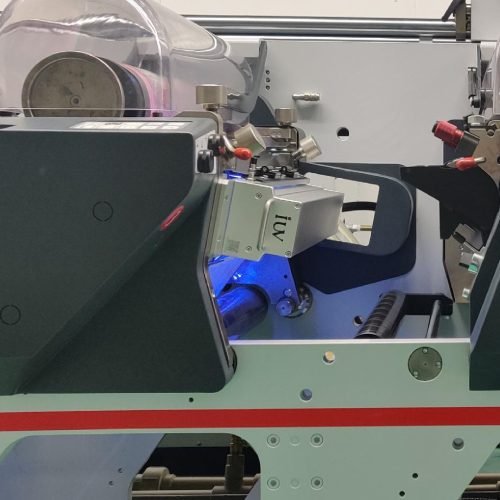
Integrating advanced narrow-web LED flexo systems offers tangible improvements for color-critical applications. Here’s how:
Precise Ink Curing
LEDs emit UV light at precise wavelengths that are highly efficient at initiating the photoinitiators within UV-curable inks. This targeted curing means that inks cure quickly and completely, without over-curing or under-curing. Complete and uniform curing ensures that the colorant within the ink is locked in its intended state, preventing changes that could alter the final appearance.
Minimal Heat Impact on Substrate and Ink
As mentioned, the low heat output of LEDs is a game-changer. Inks are less prone to thinning or thickening due to temperature fluctuations. Substrates, particularly sensitive films often used in narrow-web printing, are less likely to shrink or warp. This stability directly contributes to consistent dot gain and ink laydown, which are foundational to achieving reproducible colors.
Consistent Wavelength and Intensity
The consistent spectral output of LEDs means that the energy delivered to the ink is always the same, given the same power settings. This predictability removes a significant variable from the equation. Printers can be confident that the curing conditions are identical from one job to the next, and even from one shift to another. This translates directly to repeatable color results.
Faster Curing Speeds and Higher Throughput
LEDs offer rapid curing capabilities, often allowing for faster press speeds. While speed is important for productivity, it also contributes to consistency. When inks cure rapidly and completely, there’s less opportunity for them to migrate, bleed, or interact with subsequent printing stations or finishing processes in unintended ways.
Enhanced Ink Performance and Formulation Options
The efficient and precise curing provided by LEDs can sometimes allow for optimized ink formulations. Printers might find they can achieve desired results with inks that are less sensitive to slight variations, or they may be able to explore new ink technologies that benefit from the specific curing profile of LEDs. This can lead to broader color gamuts and improved print quality.
Integrating LED UV into Your Narrow-Web Flexo Workflow
Adopting advanced narrow-web LED flexo systems requires a thoughtful approach. Here are key considerations:
Choosing the Right LED System
Not all LED systems are created equal. When selecting a system, pay close attention to:
- Wavelength Output: Ensure the LEDs emit wavelengths compatible with your chosen inks. Common wavelengths are in the 365nm, 385nm, 395nm, or 405nm range.
- Irradiance Levels: This refers to the power density of the UV light. Higher irradiance generally leads to faster curing. Match this to your press speed and ink requirements.
- Uniformity: The LED array should provide uniform light coverage across the entire web width to avoid patchy curing and color variations.
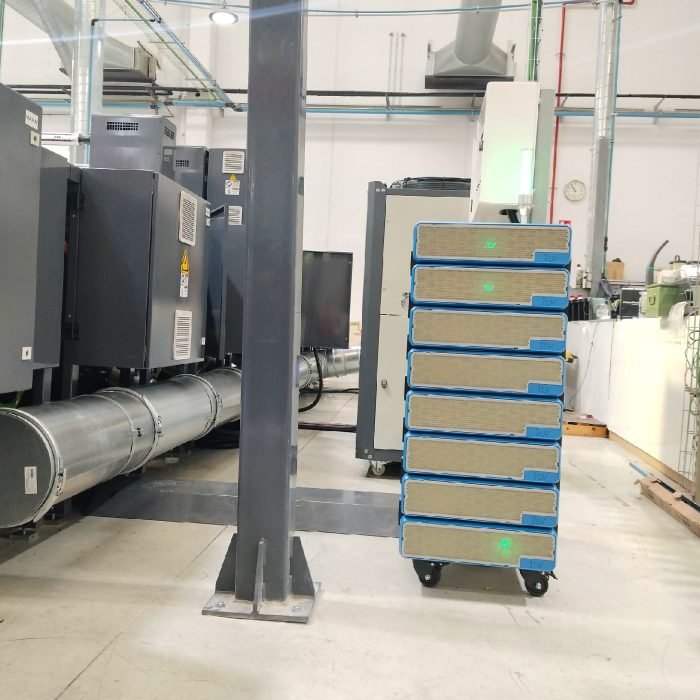
- Cooling Systems: While LEDs produce less heat than mercury lamps, they still require effective cooling to maintain peak performance and longevity.
Ink Compatibility and Optimization
Work closely with your ink supplier. Ensure your inks are specifically formulated for LED UV curing. While many modern UV inks are designed for broad compatibility, LED-specific formulations can offer superior performance and efficiency. Testing different ink sets under your LED curing conditions is crucial for achieving the best color results.
Substrate Considerations
While LED UV is gentler on substrates, understanding your materials remains important. Highly absorbent or very thin substrates may still require specific ink formulations or adjustments to curing parameters to prevent issues like ghosting or ink penetration that can affect color appearance.
Pressroom Environment Control
Even with LED technology, maintaining a stable pressroom environment is beneficial. Consistent temperature and humidity can further reduce variables that might subtly influence ink behavior and color perception.
The Future is Consistent Color with LED Flexo
The demand for high-quality, consistently colored labels continues to grow. As brand owners become more discerning and color management becomes more sophisticated, the tools that enable predictable results are invaluable. Advanced narrow-web LED flexo systems represent a significant leap forward in achieving this goal.
By leveraging the precise, stable, and low-heat curing capabilities of LED UV technology, label printers can overcome many of the traditional challenges associated with color consistency. This leads to fewer reprints, improved efficiency, and ultimately, a more competitive offering in the marketplace. Embracing these systems is not just about adopting new technology; it’s about investing in the reliability and quality that your customers expect. The path to vibrant, repeatable colors in narrow-web flexo printing is increasingly illuminated by LED UV.