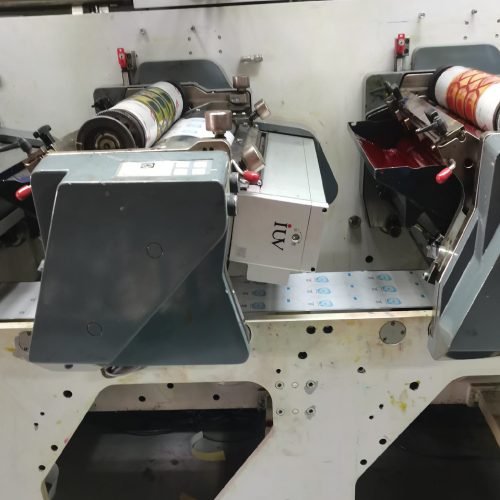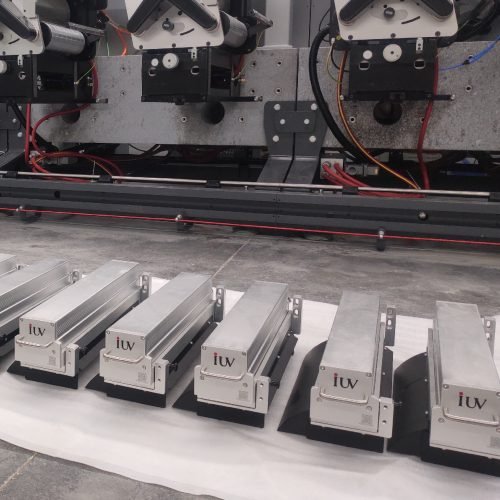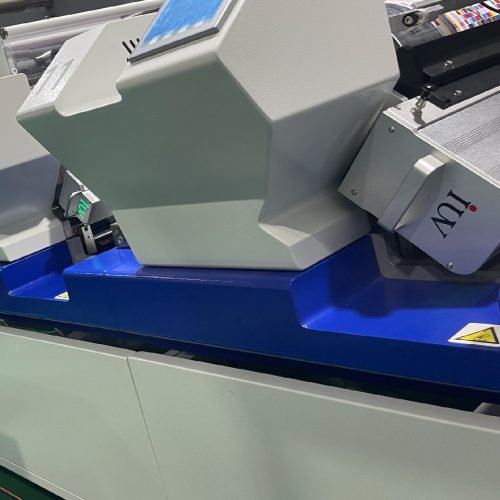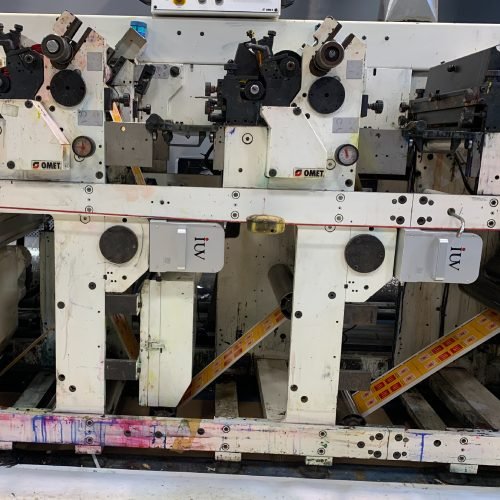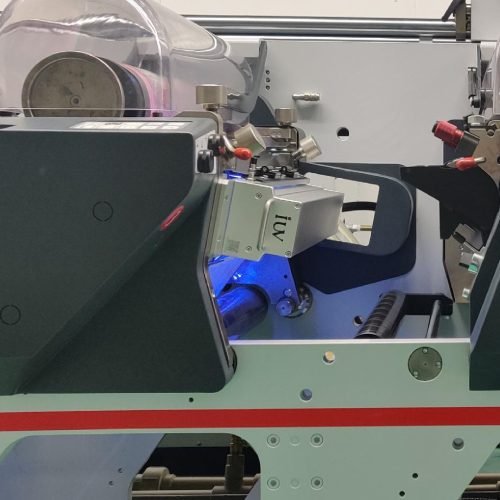
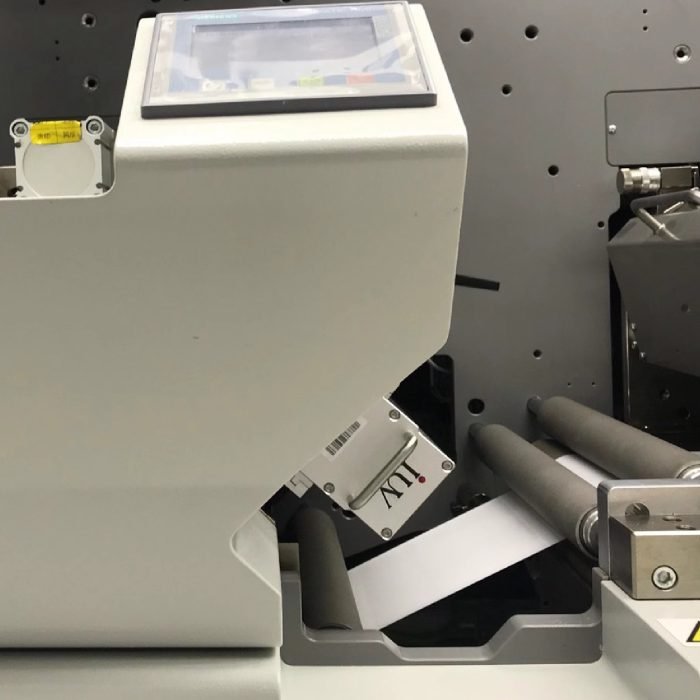
In modern offset printing production, curing consistency has become one of the most critical factors affecting print quality, production stability, and downstream converting performance. As printing speeds increase and substrate varieties expand, conventional mercury UV systems increasingly expose limitations related to thermal instability, inconsistent UV output, and uncontrolled energy distribution. Under these production conditions, the engineering value of Upgrade to LED Curing Technology in Offset Printing for Higher Cure Consistency and Print Quality is no longer limited to energy savings or maintenance reduction. The more important objective is achieving stable polymerization behavior across varying press conditions while maintaining repeatable print quality.
In sheetfed offset printing and hybrid offset packaging applications, UV curing directly influences dot stability, gloss uniformity, surface hardness, ink adhesion, and substrate deformation. Traditional UV drying systems generate broad-spectrum ultraviolet radiation together with significant infrared heat. Although this wide-spectrum output provides strong curing capability, much of the emitted energy is not effectively utilized for photoinitiator activation. Instead, excess thermal energy accumulates inside the press, affecting paper moisture balance, substrate dimensional stability, and ink-water equilibrium.
This is one of the main engineering reasons behind the growing adoption of Upgrade to LED Curing Technology in Offset Printing for Higher Cure Consistency and Print Quality in commercial printing and packaging printing environments. LED UV systems fundamentally change how curing energy is delivered to the ink layer by concentrating output within narrow wavelength ranges optimized for modern UV ink chemistry.
UV wavelength control and curing consistency in offset printing
In offset printing, curing consistency depends heavily on maintaining stable UV dose distribution throughout the press run. UV dose is determined by irradiance and exposure time, but in practical production environments, additional factors such as substrate reflectivity, ink density, and press speed fluctuations significantly affect polymerization behavior.
Traditional mercury UV lamps produce varying spectral output as lamp temperature changes during operation. Over time, reflector contamination and lamp aging also reduce UV transmission efficiency. This creates curing instability that becomes visible in fine text reproduction, gloss inconsistency, and post-press adhesion problems.
By comparison, Upgrade to LED Curing Technology in Offset Printing for Higher Cure Consistency and Print Quality improves spectral stability because LED modules emit controlled wavelengths, typically around 385 nm or 395 nm. Since LED systems do not rely on gas discharge arc behavior like mercury lamps, wavelength output remains more stable during production.
This stability is especially important in high-resolution offset printing where minor curing inconsistencies can affect ink density balance and trapping behavior. In commercial packaging production, stable curing also improves resistance to scratching, blocking, and chemical migration.
However, wavelength stability alone does not guarantee consistent curing quality. Photoinitiator compatibility remains critical. If UV ink chemistry is not optimized for LED wavelengths, insufficient surface cure may occur even when measured irradiance appears acceptable.
UV ink chemistry and polymerization behavior under LED curing
One of the most misunderstood aspects of Upgrade to LED Curing Technology in Offset Printing for Higher Cure Consistency and Print Quality is the relationship between LED wavelength output and UV ink formulation. Conventional UV inks were historically designed for broad-spectrum mercury lamps containing multiple wavelength peaks. LED systems operate within a much narrower spectral range, meaning photoinitiator efficiency becomes highly wavelength-dependent.
In actual offset printing production, incomplete curing frequently appears as surface tackiness, poor rub resistance, or insufficient adhesion during laminating and varnishing processes. These problems are often incorrectly attributed to low UV intensity, while the real cause is incomplete radical polymerization resulting from spectral mismatch.
Oxygen inhibition further complicates surface curing behavior. During free-radical polymerization, oxygen molecules interfere with surface crosslinking reactions, particularly in low-viscosity coatings and varnishes. In LED systems, where energy distribution is more concentrated, oxygen inhibition effects may become more visible if ink reactivity is insufficient.
Increasing UV power is not always the correct solution. In many cases, excessive UV dose creates surface over-curing while deeper ink layers remain under-polymerized. This can lead to brittleness, poor flexibility, and long-term adhesion instability.
Under properly optimized conditions, Upgrade to LED Curing Technology in Offset Printing for Higher Cure Consistency and Print Quality improves curing uniformity because energy delivery becomes more controlled and repeatable across different print jobs and substrate types.
Thermal management and print quality stability
In offset printing environments, thermal behavior directly influences print quality. Traditional mercury UV systems generate significant infrared radiation, increasing substrate temperature during long production runs. Paper expansion, moisture imbalance, and sheet distortion become more severe as thermal load increases.
In packaging printing and high-coverage offset applications, excessive heat also affects blanket stability and ink-water balance. This often results in registration variation and color inconsistency during extended production cycles.
One of the major advantages of Upgrade to LED Curing Technology in Offset Printing for Higher Cure Consistency and Print Quality is the reduction of infrared heat transferred to the substrate. LED systems produce lower surface temperatures, which improves dimensional stability and reduces stress on heat-sensitive materials.
However, LED curing systems introduce their own thermal engineering requirements. Although substrate heating decreases, LED chips generate concentrated junction heat internally. If cooling systems are insufficient, wavelength drift occurs, reducing photoinitiator activation efficiency and affecting curing repeatability.
In real industrial conditions, proper thermal management is therefore essential not only for LED module lifespan but also for maintaining stable curing performance. Water-cooled systems are often preferred in high-speed offset production because they provide tighter temperature control under continuous operation.
Production efficiency and maintenance behavior after LED conversion
Production efficiency improvements associated with Upgrade to LED Curing Technology in Offset Printing for Higher Cure Consistency and Print Quality are closely related to operational consistency rather than raw curing speed alone.
Traditional UV systems require warm-up time before stable curing conditions are achieved. During startup, substrate waste increases due to unstable UV output and fluctuating thermal conditions. Lamp degradation over time further reduces curing consistency, forcing operators to compensate with slower press speeds or higher lamp power.
LED systems reach operational output almost instantly, reducing startup waste and improving repeatability between jobs. In offset printing facilities handling short-run packaging and commercial work, this operational stability becomes particularly valuable.
Maintenance requirements also change significantly. Mercury lamps require regular reflector cleaning and periodic lamp replacement because UV output gradually decreases during operation. LED systems have more predictable degradation curves, but optical cleanliness and cooling system stability remain essential for maintaining curing efficiency.
In practice, the largest productivity gain after implementing Upgrade to LED Curing Technology in Offset Printing for Higher Cure Consistency and Print Quality often comes from reducing process variability rather than increasing maximum press speed.
Material compatibility and long-term curing reliability
Modern offset printing increasingly involves specialty substrates including synthetic films, metallized papers, and low-migration packaging materials. These substrates react differently to thermal stress and UV exposure compared to conventional coated paper stocks.
Because LED systems reduce substrate heat load, dimensional stability improves significantly in heat-sensitive materials. This allows more reliable curing performance across mixed production environments.
At the same time, UV ink adhesion becomes more dependent on controlled polymerization kinetics. Excessive surface cure combined with insufficient internal crosslinking can create long-term durability problems, particularly in folding carton and packaging applications.
For this reason, successful implementation of Upgrade to LED Curing Technology in Offset Printing for Higher Cure Consistency and Print Quality requires balancing wavelength selection, UV dose distribution, cooling efficiency, and ink chemistry compatibility as a unified process system.
When these variables are properly controlled, LED curing technology provides higher curing repeatability, lower thermal distortion, improved print quality consistency, and more stable production behavior compared to traditional UV drying systems.