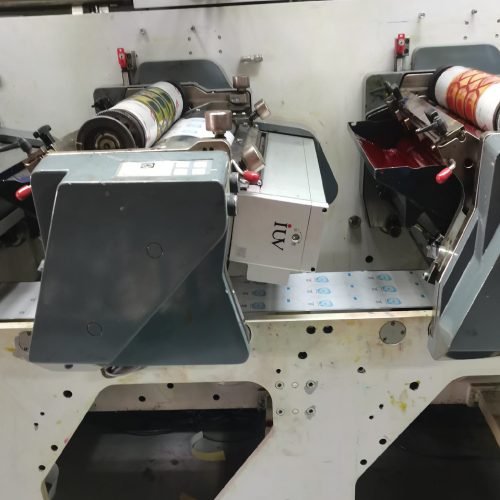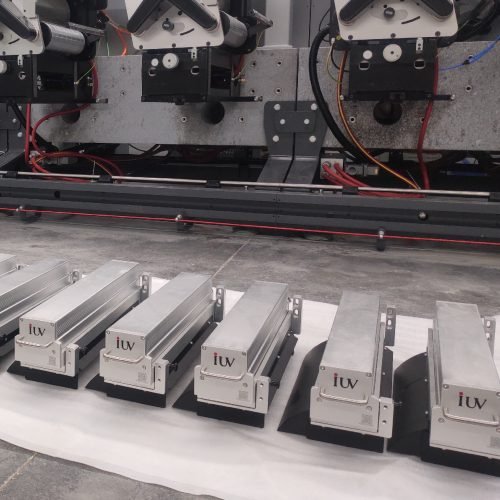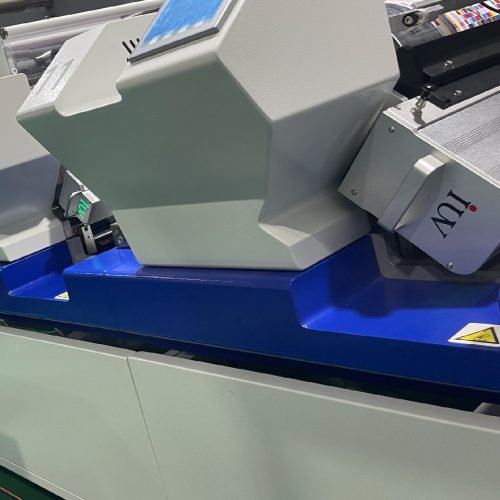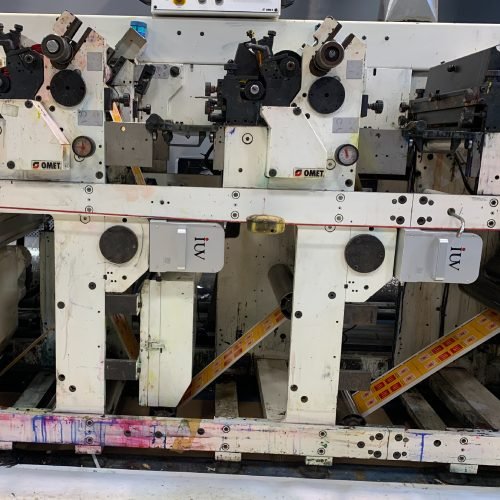
Ultraviolet curing technology in industrial printing has evolved significantly as production environments demand higher efficiency, improved substrate compatibility, and more stable curing performance. In flexographic printing, offset printing, and narrow web label production, the wavelength range of ultraviolet light directly influences curing penetration, adhesion stability, energy consumption, and production reliability.
Traditional mercury UV lamp systems and modern LED UV curing systems operate using fundamentally different spectral mechanisms. Mercury UV lamps generate broad-spectrum ultraviolet radiation covering multiple wavelength bands simultaneously, while LED UV systems emit concentrated spectral peaks such as 365 nm, 385 nm, and 395 nm. These differences create major variations in curing behavior, thermal influence, and operational efficiency.
In production environments, the selection between LED UV and mercury UV systems is not determined by irradiance output alone. Wavelength distribution affects how photoinitiators react, how energy penetrates thick ink layers, and how substrates respond under high-speed printing conditions. In practice, incomplete curing, poor adhesion, gloss inconsistency, and unstable curing depth are often directly related to spectral mismatch between the UV source and the ink chemistry.
Broad-spectrum mercury UV behavior and photochemical flexibility in industrial printing
Mercury UV lamp systems emit a wide wavelength range that typically includes ultraviolet, visible, and infrared radiation. This broad-spectrum output provides high compatibility with different ink systems because multiple photoinitiators can be activated simultaneously.
In production, mercury UV systems are often more tolerant of formulation variation. Offset printing environments using mixed coatings and hybrid ink systems frequently benefit from this spectral flexibility because curing can still occur even when photoinitiator sensitivity varies between batches.
However, broad-spectrum radiation also introduces significant inefficiency. Large portions of emitted energy are converted into heat rather than usable curing energy. In narrow web printing systems, this additional infrared radiation increases substrate temperature and creates thermal instability.
Typically observed production conditions include:
- Increased substrate shrinkage in PET and BOPP films
- Web tension instability during long production runs
- Registration variation caused by thermal expansion
Mercury UV systems also generate ozone and require longer warm-up cycles. In practice, these operational characteristics reduce process responsiveness during speed transitions and job changes.
Despite these limitations, mercury UV systems still provide advantages in applications involving:
- Thick ink layers
- Dense varnish structures
- Broad photoinitiator compatibility requirements
Their wider wavelength range allows deeper curing penetration in some coating structures, although this occurs with higher energy consumption and reduced thermal control.
Narrow-spectrum LED UV systems and wavelength precision control
LED UV curing systems operate differently because they emit concentrated spectral energy at fixed wavelength peaks such as 365 nm, 385 nm, or 395 nm. This narrow-spectrum behavior allows more precise photochemical targeting and significantly improves energy efficiency.
In production environments, 395 nm systems are commonly used because they offer high electrical efficiency and stable thermal operation. However, longer wavelengths provide lower photon energy, which may reduce curing penetration in thick or highly pigmented ink layers.
365 nm systems generate stronger photon energy and deeper curing activation. In flexographic printing applications involving white inks or multilayer varnishes, shorter wavelengths often improve polymerization depth. However, concentrated energy density may also increase localized curing sensitivity.
385 nm systems are frequently selected in narrow web label printing because they provide balanced curing behavior across PET, BOPP, coated paper, and film substrates.
Typically observed production behavior includes:
- Improved energy efficiency compared to mercury UV
- Reduced substrate deformation during high-speed operation
- Higher sensitivity to photoinitiator mismatch
Unlike mercury UV systems, LED UV curing requires tighter spectral alignment between the UV source and the ink chemistry. In practice, incomplete curing often occurs when the photoinitiator absorption range does not fully overlap with the LED wavelength output.
Irradiance behavior and curing penetration differences between UV technologies
Irradiance and curing penetration behave differently between LED UV and mercury UV systems because spectral distribution directly affects energy propagation through the ink layer.
Mercury UV lamps emit lower peak irradiance but broader wavelength penetration. This broad spectral output allows energy to penetrate deeper into certain coating structures, especially when thick varnishes or opaque inks are used.
LED UV systems produce higher peak irradiance with directional optical concentration. However, curing penetration depends more heavily on wavelength compatibility and exposure duration because narrow-spectrum energy does not scatter through the ink structure as broadly as mercury UV radiation.
In production, these differences are commonly observed in:
- White ink curing performance
- Thick coating polymerization behavior
- High-opacity packaging applications
Flexographic printing systems are particularly sensitive because ink film thickness varies depending on anilox transfer volume and substrate surface characteristics. Offset printing systems generally maintain more uniform coating thickness but still show curing variation when spectral compatibility becomes unstable.
PET and BOPP films often reveal curing differences more clearly because incomplete internal polymerization immediately affects adhesion and abrasion resistance.
In practice, LED UV systems achieve higher energy efficiency but require more precise control over irradiance stability, wavelength alignment, and exposure timing.
Thermal behavior comparison and substrate stability under high-speed production
Thermal management is one of the most significant differences between mercury UV and LED UV systems. Mercury UV lamps emit large amounts of infrared energy, while LED UV curing systems operate under low heat impact conditions.
In narrow web label printing, excessive thermal exposure can produce substrate deformation, web flutter, and tension instability. Thin film materials such as PET and BOPP are especially sensitive to thermal accumulation during continuous production.
LED UV systems reduce these risks because they generate minimal infrared radiation. In production, this improves dimensional stability and reduces registration variation during long printing runs.
Typically observed operational differences include:
- Lower substrate temperature under LED UV curing
- Higher thermal accumulation under mercury UV systems
- Improved film stability during high-speed operation with LED UV
However, low heat impact also changes curing behavior. Traditional mercury UV systems partially relied on thermal assistance to improve coating flow and leveling during polymerization. LED UV systems depend almost entirely on photochemical efficiency.
As a result, LED UV curing becomes more sensitive to:
- Ink film thickness
- Pigment density
- Exposure duration
- Photoinitiator selection
In practice, low heat impact improves substrate protection but reduces tolerance for process imbalance.
Line speed synchronization and curing stability in narrow web printing environments
Modern narrow web printing systems operate at increasingly high production speeds, reducing available exposure time for UV curing. Under these conditions, synchronization between UV energy delivery and line speed becomes critical.
Mercury UV systems respond slowly to operational changes because lamp intensity stabilizes gradually. LED UV systems provide immediate electronic response, allowing irradiance output to adjust dynamically with line speed variation.
In production, LED UV systems therefore provide improved control during:
- Acceleration phases
- Job transitions
- Variable-speed production cycles
However, this higher responsiveness also requires tighter process coordination. Incomplete curing may occur immediately if irradiance output, wavelength compatibility, and line speed fall outside the required curing window.
Typically observed production issues include:
- Adhesion loss during rapid speed increase
- Gloss inconsistency between print stations
- Localized under-curing during high-speed operation
Engineering optimization strategies increasingly include:
- Speed-linked irradiance modulation
- Real-time optical monitoring
- Substrate-specific curing profiles
- Dynamic energy density adjustment
In practice, curing stability depends on maintaining synchronization between wavelength output, irradiance distribution, curing penetration, and mechanical transport speed.
The comparison between LED UV and mercury UV systems is therefore not limited to energy consumption or lamp lifespan. It is fundamentally connected to spectral behavior, thermal management, substrate interaction, and production dynamics across the full industrial printing environment.